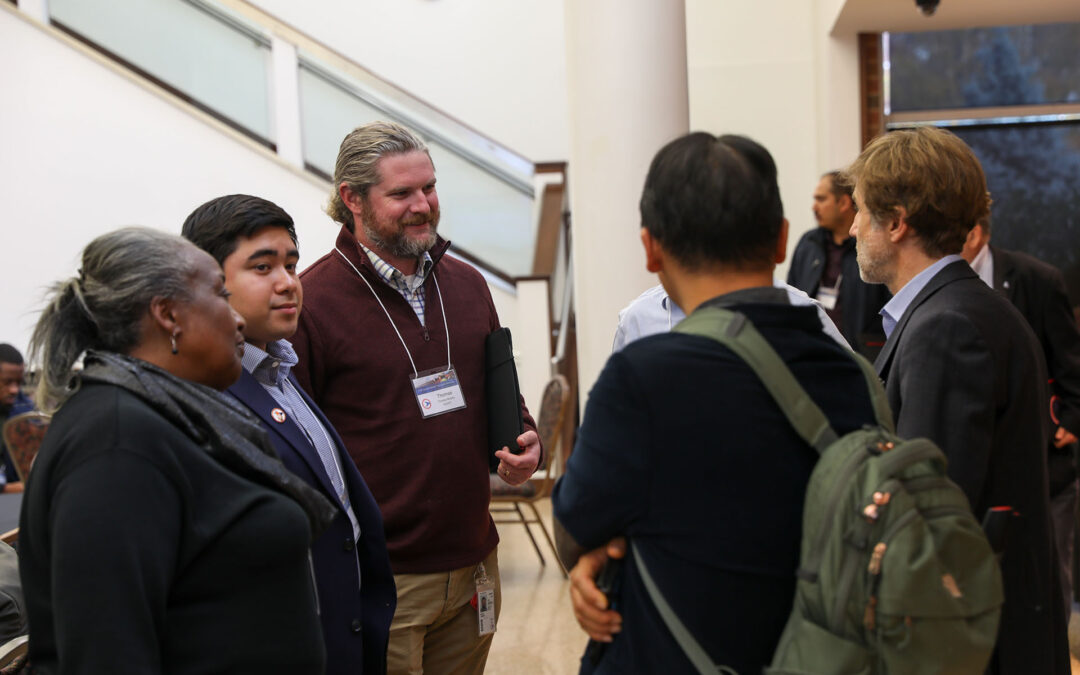
Events such as the annual NJDOT Research Showcase bring together NJDOT staff, researchers, students, and private-sector partners to exchange ideas. Source: NJDOT BRIIT

Advancing Innovation Through Shared Expertise at NJDOT

Learning from Each Other

Peer-to-peer (P2P) exchanges have become a cornerstone of innovation in state transportation agencies. Designed to share knowledge, test new approaches, and strengthen collaboration, these exchanges help DOTs tackle complex challenges while improving performance and outcomes. At the federal level, the Federal Highway Administration (FHWA) encouraged these activities through its Every Day Counts (EDC-7) and other programs, promoting the rapid adoption of proven innovations. Each state supports these efforts through its State Transportation Innovation Council (STIC), which serves as a hub for fostering cross-agency collaboration, knowledge transfer, and the adoption of new strategies.

At NJDOT, P2P exchanges do more than fulfill federal guidance—they provide a practical mechanism for advancing internal collaboration, building external partnerships, and piloting solutions that enhance safety and infrastructure resilience. Through structured exchanges with local, regional, and national partners, NJDOT has accelerated implementation of innovations ranging from rural roadway safety improvements to digital twin modeling for traffic management. These forums also create opportunities for centralized data sharing, coordinated planning, and the development of problem-solving methods that can be adapted across divisions and partner agencies.

NJDOT’s experience demonstrates how peer exchanges can translate shared knowledge into measurable outcomes, from cost savings and improved safety to more effective planning and operations. NJDOT first hosted a Peer Exchange in October 2001, aligning research management practices with department goals/policies. Additional goals include collaborating with TRB, NCHRP, and other universities (NJDOT 2001). NJDOT followed this with another Peer Exchange Report in 2006, centered on how NJDOT can better implement research findings and establish performance standards, highlighting lessons learned from states like Delaware, North Carolina, and Minnesota (NJDOT 2006). The Department went on to publish an October 2011 Peer Exchange Report, highlighting recent improvements, such as the use of the automated PROMPTS (Project Management and Progress Tracking System) system to help better track project progress from problem statement to delivery (NJDOT 2011).

In June 2014, FHWA hosted a Peer Exchange on Locally Administered Federal-Aid Projects, sharing NJDOT’s Local Aid Eligibility Assessment form as a model example. State officials also noted their desire to create a certification acceptance program with USDOT (FHWA 2014). The Department then hosted another Research Peer Exchange in October 2016, which promoted linking financial data to performance goals, and was held alongside the Annual Research Showcase to maximize stakeholder input (FHWA 2016).

Strengthen Collaboration Within NJDOT

Improving Rural Road Safety

Rural road departures—where vehicles unintentionally leave the roadway—pose a significant safety risk, often resulting in fatalities or serious injuries. In 2018 and 2019, NJDOT, in partnership with FHWA, hosted a peer exchange with Cumberland and Somerset counties to explore strategies for reducing these incidents (NJDOT BRIIT, 2020).

County engineers discussed approaches such as rumble strips, high-friction surface treatment (HFST) on curves, and improved roadway markings. By sharing their experiences and local data, participants identified which countermeasures were most effective under various conditions.

To move from discussion to implementation, NJDOT and the South Jersey Transportation Planning Organization (SJTPO) identified pilot locations on High Risk Rural Roads (HRRR).  Several roads in Cumberland County were subsequently designated HRRR and received targeted safety improvements. The exchange also brought to light implementation challenges, including a shortage of specialized contractors, high unit costs for HFST, and outdated crash data. Somerset County engineers reported using FHWA’s HFST Curve Selection & Installation Guide to prioritize projects and manage costs effectively.

High Risk Rural Roads in Cumberland County Source: Whitaker, D.W. 2019. Systemic Safety Improvements: Cumberland County Engineering Department.
High Risk Rural Roads in Cumberland County. Source: Whitaker, D.W. 2019. Systemic Safety Improvements: Cumberland County Engineering Department.

HFST improvements on five curves along a mile-long stretch of Chimney Rock Road (Somerset County) reduced annual crashes by 84 percent, falling from 73 to just 12. Other rural roads in the county experienced reductions of up to 80 percent.

Building on these results, the County is incorporating GIS-based crash mapping and the Regional Curve Inventory and Safety Assessment to identify and prioritize future high-risk locations for signage or HFST. Staff are also using FHWA guidance to help select and implement the most appropriate curve treatments.

The exchange allowed counties not only to learn new approaches but also to plan more efficiently and anticipate challenges before implementation. The collaborative process strengthened NJDOT’s internal coordination and set a model for county-level safety projects across the state.

Rebuilding Infrastructure Through Cross-Agency Collaboration

In July 2025, NJDOT partnered with the New Jersey Department of Community Affairs (NJDCA) and the New Jersey Infrastructure Bank (I-Bank) to help Seaside Park rebuild its storm-damaged boardwalk. While not a traditional peer exchange, this project illustrates the same principles of shared knowledge, aligned resources, and collaborative problem-solving (NJIB 2025).

Pedestrian view of the damaged boardwalk in Seaside Park, NJ. Source: New Jersey Infrastructure Bank, 2025.
Pedestrian view of the damaged boardwalk in Seaside Park, NJ. Source: New Jersey Infrastructure Bank 2025.

Boardwalks are essential transportation assets in coastal communities, supporting pedestrian mobility, emergency response access, and local economies. The I-Bank provided $12.3 million in low-interest financing over 30 years, while NJDCA connected local needs with available funding. NJDOT estimates the project will save approximately $5.1 million for taxpayers and support 147 direct construction jobs. Some of the project’s major design upgrades include replacing the substructure of the boardwalk to improve resiliency, and adding new ADA-compliant ramps to ensure the boardwalk can be enjoyed by all users.

Beyond financial benefits, the project offers lessons in streamlining multi-agency coordination, expediting project delivery, and applying NJDOT expertise at multiple levels. NJDOT Commissioner Fran O’Connor stated that the project is “a perfect example of how multiple state agencies can work together to deliver smart, lasting infrastructure improvements in coordination with a local government” (NJDOT LARC 2025).

Working with External Partners

Sustaining TSMO

Transportation Systems Management and Operations (TSMO) strengthens safety and mobility by using technology, data, and operational strategies to improve performance on the existing roadway.

In early 2025, the National Operations Center of Excellence (NOCoE) hosted a Sustaining TSMO Virtual Peer Exchange to share best practices nationwide. NJDOT was invited to present how it continues to elevate TSMO within the organization. Senior Director of Transportation Mobility Sal Cowan described NJDOT’s evolution from establishing a 24/7 Transportation Management Center to embedding TSMO principles across every division (NOCoE 2025).

Cowan emphasized that sustaining TSMO strategies requires long-term relationships with partners such as FHWA, MPOs, university researchers, and neighboring DOTs. These collaborations allow the Department to integrate real-time and historical data into planning, leading to coordinated roadway operations and enhanced safety outcomes across modes.

TSMO is also incorporated into long-range planning, including freight strategies and electric vehicle initiatives. NJDOT is investing $40 million in work programs focused on staff training, emerging technologies, and operational readiness. These commitments position the Department to continuously adapt to new challenges—while ensuring TSMO remains embedded in everyday practice.

One TSMO project grew directly from lessons learned through peer exchanges. In 2019, the NCHRP Management and Use of Data for Transportation Performance Management guide highlighted how NJDOT’s progress in training staff, joining probe-data user groups, and learning from agency peers already using the Regional Integrated Transportation Information System (RITIS) and INRIX platforms (NCHRP 2019).

After joining the I-95 Corridor Coalition’s Probe Data Analytics User Group, NJDOT staff observed how Maryland and other DOTs used probe data to track congestion and manage projects. That experience helped staff adopt similar in-house methods. By 2022, these lessons led to national recognition, as NOCoE awarded NJDOT “Best TSMO Project” for its U.S. Route 1 ITS Improvement Project in South Brunswick. The project reduced PM-peak travel times by 45 percent and delays by nearly 30 percent (NJDOT BRIIT 2022).

Extending Pavement Life With Balanced Mix Design

Events such as the annual NJDOT Research Showcase bring together NJDOT staff, researchers, students, and private-sector partners to exchange ideas. Source: NJDOT BRIIT

In March 2023, FHWA convened eight Northeastern transportation agencies for a peer exchange on Balanced Mix Design (BMD), a method of asphalt performance testing that reduces cracking and extends service life. NJDOT shared its use of BMD for specialty mixtures, applying AASHTO-certified testing standards to benchmark performance while maintaining volumetric testing using state and third-party labs. Sampling occurs approximately every 3,500 tons, with plans to increase frequency (FHWA 2023).

The exchange highlighted regional approaches to data management, verification, and validation. NJDOT refined testing methods, reduced quality assurance costs, and evaluated a broader range of conditions for specialty asphalt mixes. NJDOT’s BMD initiatives have extended pavement life. High-performance thin overlays (HPTO) mixes have lasted up to 13 years on higher-distress pavements, and combining Binder Rich Intermediate Course (BRIC) with stone matrix asphalt (SMA) has increased projected service life by at least 10 years compared to traditional mixtures with no BRIC. The collaboration reinforced the value of sharing technical expertise across state lines (Hajj & Aschenbrener 2021).

Planning for the 2026 World Cup

Final Report for the World Cup 2026 Mobility and Operations Peer Exchange. Source: NOCoE, 2025.
Final Report for the World Cup 2026 Mobility and Operations Peer Exchange. Source: NOCoE 2025.

With New Jersey hosting seven matches and the final for the 2026 World Cup, NJDOT engaged in extensive planning and coordination. In October 2024, the agency coordinated with NOCoE to host a peer exchange with other state DOTs and host cities to discuss large-scale event strategies. Lessons drawn from Georgia DOT’s Super Bowl LIII and Miami-Dade County’s Copa 2024 guided approaches to security, transit scheduling, and traffic management, including hard-shoulder running lanes. Locally, NJDOT is coordinating security upgrades with the New Jersey State Police, syncing transit schedules with the Port Authority, and collaborating with multiple local agencies (NOCoE 2025).

Ahead of the World Cup, NJDOT is advancing several Intelligent Transportation Systems (ITS) upgrades to support real-time traffic management. ITS includes tools such as dynamic message signage and computerized arterial traffic signals (NJDOT 2025). NJDOT has awarded $20.6 million in contracts for ITS improvements in Bergen, Hudson, Essex, and Passaic counties (NJ Office of the Governor 2025). As part of this suite of upgrades, NJDOT is developing a first-of-its-kind LiDAR 3D roadway map of the area surrounding MetLife Stadium to enhance operations and incident response. The exchange demonstrated how P2P collaboration can accelerate innovation, anticipate challenges, and enable technology-driven solutions in high-pressure, large-scale scenarios (HNTB 2025).

Applied Research and Performance Tracking

In September 2017, Montana DOT hosted a peer exchange focused on applied research, performance measure tracking, and implementation of innovative practices. NJDOT participated virtually, sharing its approach to integrating implementation into research projects (Seeber & Hirt 2018).

Participants discussed funding strategies, aligning project with FHWA criteria, and systems for tracking outcomes, such as Minnesota’s ARTS database. NJDOT drew lessons on improving internal tracking, pairing performance outcomes with reporting, and maintaining financial sustainability while adopting new practices. These insights have informed NJDOT’s approach to research integration and long-term planning.

Lessons Learned and Opportunities Ahead

NJDOT’s experience shows that structured peer collaboration advances innovation, improves safety, and leads to measurable results. Through internal and external exchanges, NJDOT has:

  • Strengthened safety on rural roads through targeted countermeasures
  • Reduced costs and supported job creation through municipal infrastructure projects
  • Enhanced operational strategies through TSMO integration and digital mapping
  • Extended pavement life using advanced asphalt design and testing
  • Improved planning and coordination for large-scale events like the 2026 World Cup
  • Refined research implementation and performance tracking for long-term planning

These efforts have helped NJDOT shift from traditional traffic and asset management toward a proactive, knowledge-driven approach. Lessons learned inform decision-making in storm resiliency, freight planning, electric vehicle strategies, and municipal collaboration.

Looking ahead, NJDOT will continue to integrate peer exchanges into long-range planning, freight operations, and EV initiatives. National resources, including the NCHRP synthesis on peer exchanges, offer further guidance for maximizing collaboration and innovation.

In March of 2025, NJDOT’s Bureau of Research, Innovation, and Information Transfer (BRIIT) participated in a peer exchange focused on research strategies, project selection, and implementation (MassDOT 2025).

Attendees to the 2025 Artificial Intelligence in State DOTs Peer Exchange. Source: Caltrans 2025.

NJDOT is also contributing to best practices for emerging technology. In early 2025, NJDOT took part in the Artificial Intelligence in State DOTs peer exchange sponsored by Caltrans (Caltrans 2025). Discussions centered on workforce readiness, data governance, ethical guidance, and real-word applications of AI in transportation. New Jersey already has a statewide AI policy, and NJDOT is applying these concepts through a staff-facing chatbot and a pilot integrating machine learning into construction cost estimation.

An October 2025 AI-focused peer exchange convened by University of Massachusetts – Amherst reinforced the importance of collaboration as states adapt to rapidly evolving technologies. NJDOT played a central role, contributing to the national dialogue and helping shape best practices. With no federal regulatory framework yet in place, states are using peer exchanges to align strategies, address challenges, and learn from each other. More broadly, peer exchanges allow NJDOT to share its experience and translate collective knowledge into practical improvements across operations, research, and technology adoption.


Resources

Caltrans Division of Research, Innovation & System Information. (2025). AI in State DOTs Peer Exchange 2025 Final [PDF]. Retrieved from https://www.dropbox.com/scl/fi/lgdkkepqv8q70nm8nswmz/AI-in-State-DOTs-Peer-Exchange-2025-FINAL.pdf?rlkey=5uuavev1qkjxskr85hznsp0lq&e=1&st=ozc4pnex&dl=0

Federal Highway Administration. (2023). Northeast Peer Exchange on Balanced Mix Design (BMD): Outcomes and summary. https://www.fhwa.dot.gov/pavement/asphalt/HIF_2023%20Northeast_Peer_Exchange_on_Balanced_Mix_Design_%28BMD%29_Outcomes_and_Summary.pdf

Hajj, E. Y., & Aschenbrener, T. B. (2021, March). Case studies on the implementation of balanced mix design and performance tests for asphalt mixtures: New Jersey Department of Transportation (NJDOT) (WRSC-TR-21-06). University of Nevada, Reno. Retrieved from https://eng.auburn.edu/research/centers/ncat/files/New-Jersey-Case-Study.pdf

HNTB Corporation. (2025) Garden State Glory: As a host to FIFA World Cup 26™ games and final, New Jersey is meticulously preparing its transportation infrastructure for global visitors while ensuring smooth mobility for locals. https://www.hntb.com/think/garden-state-glory/

Massachusetts Department of Transportation. (2025). MassDOT Research Peer Exchange 2025: Final Report. Retrieved from https://www.mass.gov/doc/massdot-peer-exchange-report/download

National Academies of Sciences, Engineering, and Medicine. (2019). Management and Use of Data for Transportation Performance Management: Guide for Practitioners (NCHRP Report 920). Washington, DC: The National Academies Press. https://doi.org/10.17226/25462

National Operations Center of Excellence. (2024, October 14–15). WC26 New Jersey peer exchange: October 14–15, 2024. https://transportationops.org/pse/wc26newjersey

National Operations Center of Excellence. (2025, March 11). Sustaining TSMO Peer Exchange Report. https://www.transportationops.org/system/files/uploaded_files/2025-03/NOCoE%20-%20Sustaining%20TSMO%20Peer%20Exchange%20Report.pdf

New Jersey Department of Transportation, Bureau of Research, Innovation & Information Transfer. (2020, March 26). How New Jersey counties are reducing rural roadway departures. NJDOT Technology Transfer. https://www.njdottechtransfer.net/2020/03/26/how-new-jersey-counties-are-reducing-rural-roadway-departures/

New Jersey Department of Transportation, Bureau of Research, Innovation & Information Transfer. (2022, June 9). NJDOT wins Best TSMO Project from National Operations Center for Excellence. NJDOT Technology Transfer. NJDOT Technology Transfer. https://www.njdottechtransfer.net/2022/06/09/njdot-wins-best-tsmo-project/

New Jersey Department of Transportation, Local Aid Resource Center (LARC). (2025, July 17). Multi-agency collaborative effort delivers first boardwalk loan to Seaside Park. https://njdotlocalaidrc.com/news/post.php?s=2025-07-17-multi-agency-collaborative-effort-delivers-first-boardwalk-loan-to-seaside-park

New Jersey Department of Transportation. (2025). Traffic engineering (ITS/ MSE) – Division of Engineering: Electrical/ITS. https://www.transportationops.org/publications/new-jersey-dot-mobility-and-systems-engineering

New Jersey Infrastructure Bank. (2025, July 17). Multi-agency collaborative effort delivers first boardwalk loan to Seaside Park. https://www.njib.gov/news/multi-agency-collaborative-effort-delivers-first-boardwalk-loan-to-seaside-park-68793024d3c4b

New Jersey Office of the Governor. (2025, July 10). ICYMI: NJDOT’s FY25 capital program delivers more than $1 billion in contracts for the 7th consecutive year demonstrating Murphy Administration’s commitment to infrastructure investment. https://www.nj.gov/governor/news/news/562025/approved/20250710b.shtml

Seeber, K., & Hirt, B. (2018, January). Montana Department of Transportation research peer exchange: Implementation, performance measures, and the value of research (Final Report No. FHWA/MT-18-001/9510-566). CTC & Associates LLC. https://www.mdt.mt.gov/other/webdata/external/research/docs/peer/2017_report.pdf

Whitaker, D. W. (2019). Systemic Safety Improvements: Cumberland County Engineering Department.  https://www.njdottechtransfer.net/wp-content/uploads/2018/06/Cumberland-Systemic.pdf

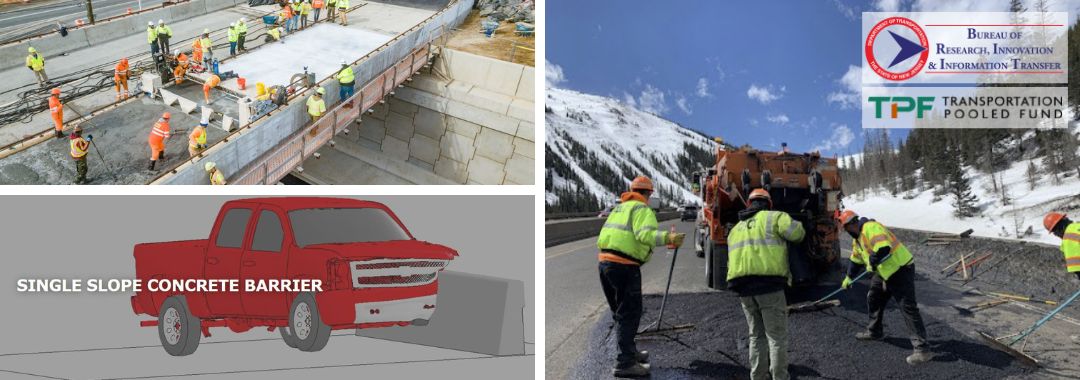
Source: UHPC SOLUTIONS North America (top left); Midwest Roadside Safety Pool Fund (bottom left); Colorado Department of Transportation (right)

NJDOT’s Involvement with Transportation Pooled Fund Program

For over 45 years, the Transportation Pooled Fund (TPF) Program has made it possible for public and private entities to combine resources for high‑priority transportation research. By pooling funds and expertise, participating organizations can support research that can lead to innovative solutions at a lower cost to agencies and extend the reach of their research budgets.

State DOTs often fund TPF Program studies using State Planning and Research (SP&R) funds, which can be applied to transportation studies as well as research, development, and technology (RD&T) transfer activities.

We spoke with Dr. Giri Venkiteela, Innovation Officer in the Bureau of Research, Innovation and Information Transfer (BRIIT), to learn about NJDOT’s recent involvement with the Transportation Pooled Funded Program.


Q. What is the primary goal of Transportation Pooled Fund (TPF) Program?

The Federal Highway Administration leads the Transportation Pooled Fund Program

A. The Transportation Pooled Fund Program, or TPF, makes it possible for state DOTs, the Federal Highway Administration (FHWA), and other organizations to partner when there is a shared interest in solving a transportation-related problem. Partners contribute funds and other resources to cost-effectively address problems through research, planning, and technology transfer activities.

The FHWA administers the TPF Program. Only the FHWA or a State DOTs may initiate and lead a pooled fund study. Local and regional transportation agencies, private industry, foundations, and institutes of higher education can partner with sponsoring agencies to conduct pooled fund projects.

Q. What is your involvement with the TPF Program?

A. I work in NJDOT’s Bureau of Research, Innovation and Information Transfer (BRIIT) and serve as the Transportation Pooled Fund Program’s project manager, or coordinator on behalf of NJDOT. Among my responsibilities, I disseminate information about new “open” solicitations for projects from sponsoring agencies to NJDOT’s subject matter experts (SMEs) to gauge their interest in participation. Sometimes NJDOT SMEs or our customers — who network with their peers at other agencies — will hear about an upcoming or worthwhile project and ask that I monitor its status so that NJDOT can join as a partner once the project is posted. Depending on the topic, I may also serve as the agency’s SME on a particular project.

Q. How does NJDOT select project topics from “open solicitations” to join through the TPF Program?

A. The FHWA pooled funded website is publicly available and anyone can view the many “open solicitations” for projects that seek funding. We have a research budget that can and does support participation in pooled funded studies, but we also must set-aside funds and commit to the projects we join for several years over the lifetime of the research. Our budget is not a static number but dynamic. The amount that we can commit depends on how many projects NJDOT is interested in joining.

BRIIT’s Research Manager works with leadership in departmental units seeking funding to ascertain the value potential of individual projects and I offer my advice during this process as a member of BRIIT.

Q. How do NJDOT staff participate in these studies, and what are the requirements for participation?

A. The NJDOT unit managers need to assign an SME for the research project study. I serve as the research program manager but we need to have an SME who is interested in being the participant. I coordinate with FHWA on our financial commitment and make sure the FHWA website is up-to-date with our participation.

Once the project receives the necessary financial commitments, the lead state is responsible for the administration of the research project, which may include the selection of universities or contractors to perform the research.

Once we all contribute the money, the project proceeds like a regular research project. The lead state holds quarterly meetings, prepares quarterly progress reports and disseminates the research. They keep the various participating agencies informed of progress. The lead state uploads progress reports to the FHWA’s website and the states will have their own websites to share project reports, latest news and other tools.

If SMEs or other researchers want to know what’s going on in any particular quarter, they can find the information that is shared. Our SMEs may also be involved in the development of a scope of work and, over the course of the project, may have specific needs that they would like for the selected research team to address — for example, such as thorough testing of materials.

Q. What are some examples of successful pooled funded studies and their outcomes that NJDOT has joined?

Researchers at Midwest Roadside Safety Facility state-of-the-art computer software, including LS-DYNA, to simulate real-life impact events. Using computer simulation, it is possible to reduce design costs and better understand system behavior. Click for examples.

A. The Midwest Roadside Safety Pool Fund program is a fantastic pooled fund study where a lot of crash testing of roadside barriers with different materials has been performed. The costs for such testing would be difficult for one state to bear so it makes sense for the states to come together so that more testing can be done. In this case, Nebraska DOT leads the research. Back in 1990, three Midwestern states started this pooled funded research effort, but it has grown to now include 22 lead and partnering states. The participating state DOTs collaborate with the Midwest Roadside Safety Facility at the University of Nebraska-Lincoln. So, if our SMEs see a new design or material that needs testing, they can put this request forward through this study.

Clear Roads Winter Maintenance Research TPF-5(353), led by the Minnesota Department of Transportation, was a 2024 Recipient of the FHWA Transportation Pooled Fund Excellence Awards.

The Clear Roads Winter Highway Operation — now in its third phase — is another great example. The Clear Roads pooled fund project began in 2004 with four members interested in snow clearance and related issues. The project performs real-world testing of winter maintenance materials, methods, and equipment and has grown to include 39 participating states. The Minnesota’s DOT leads the project, and was recently recognized with a TPF 2024 Excellence Award.

This is just a handful of examples — there are many others being driven by state DOTs, each of which have their own unique flavors.

Learn more about research on and use of Ultra-High Performance Concrete. David Hawes, Resident Engineer for Pulaski Skyway, NJDOT is featured at 2:13.

I would also like to mention one non-state DOT sponsored research project. The Structural Behavior of Ultra High Performance Concrete project is led by the FHWA itself through its Turner Fairbanks Research Center. The project conducts various experiments with UHPC. Every state wants to know what is happening with this relatively new material. The project objective is to develop knowledge on the structural performance of UHPC materials in highway bridges and structures. The test results are expected to inform proposed structural design guidance for UHPC components and support usage of UHPC by interested DOTs.

Q. How are the results and findings of these studies disseminated to the participating agencies, public or other stakeholders?

A. Some projects are ongoing like the Midwest Roadside Safety study. Information is flowing through their research hub with project reports and other materials posted on their website along with information on conference presentations, trainings, and newsletters. If you need any information, it will be conveyed through the program.

But for some pooled fund projects, they need to implement some of the tools that they are developing so that is how they would come to contact the states, such as to have something tested or looked at. The first priority would be given to the states that are participating in the pooled funded study.

For FHWA, if something new comes out of the pooled funded study, I think they may elevate the innovations into other areas such as through the Every Day Counts Program.

Recently FHWA started a pooled fund excellence awards to highlight the importance of collaboration and partnership in transportation research and encourage states to participate. Actually, I participated as a judge last year. We selected two projects for the inaugural TPF Excellence Awards. I already mentioned the Clear Roads Winter Maintenance Research project. The other award was given for an Indiana DOT project, Member-Level Redundancy in Built-up Steel Members, which led to new AASHTO Guide Specifications.

Q. How do NJDOT SMEs who are participating in the pooled funded studies share what they have learned?

A. We have started to ask that the SMEs share a short yearly progress report that reflects upon what they may be learning. Since NJDOT is obligating funding, we need to have some kind of justification for the commitment. The reporting can help us consider the benefits of the research or innovations being advanced, and to consider some of its possible implications for NJDOT practices.  

With a good and continuing dialogue with our SMEs, we should be able to determine if it makes sense to have the SMEs speak at a future NJ STIC meeting to share what they are learning and convey what is innovative about the pooled funded study’s research.

Q. Do you foresee opportunities for having selected researchers from funded projects for which NJDOT was a partner share their findings with NJDOT employees such as at a Tech Talk?

A. The SMEs are well-positioned to help us to identify whether it might make sense to invite a researcher from the study to speak. They can help identify how best to promote and disseminate the research and innovation through some other activity.

Q. Has NJDOT served as the lead organization on pooled funded research? Are there projects that NJDOT would like to lead?

A. We have not led a pooled funded research project yet, although we had some initial plans to do so before the pandemic.  At this point, we think it may be more productive to join as a participating organization. We think serving as participating organization may be a cost-effective way to direct some of our funds and have our SMEs connected to meaningful research.

Of particular note, we just joined the Northeast Transportation Research Consortium (NTRC), a pooled funded study for our AASHTO Region 1, that will support peer exchange activities. The effort seeks to enhance member state collaboration in solving our common problems. This is a pooled fund initiative that is just getting launched and is led by Vermont DOT. NJDOT is one of the six participating state DOTs in the Northeast.

Q. Are there any other projects that are you are thinking of joining at this time?

A. Yes. This is an ongoing process. There are a few projects that we are considering. Solicitations can pop up throughout the year.


Resources

National Cooperative Highway Research Program. 2023. “TPF: Transportation Pooled Fund” (website). https://www.pooledfund.org/

National Cooperative Highway Research Program. 2024. “Transportation Pooled Fund – Open Solicitations” (web page). https://pooledfund.org/Browse/open

National Cooperative Highway Research Program. 2024. “Clear Roads Phase II” (web page). https://pooledfund.org/Details/Study/604

National Cooperative Highway Research Program. 2024. “Midwest Roadside Safety Pooled Fund Program” (web page). https://pooledfund.org/Details/Study/653

National Cooperative Highway Research Program. 2024. “Structural Behavior of Ultra-High Performance Concrete” (web page). https://pooledfund.org/Details/Study/695

National Cooperative Highway Research Program. 2024. “TPF: National Transportation Research Consortium (NTRC) (website). https://pooledfund.org/Details/Study/783

National Cooperative Highway Research Program. 2024. “Member-level Redundancy in Built-up Steel Member” (web page). https://pooledfund.org/Details/Study/482

AASHTO. 2018. Guide Specifications for Internal Redundancy of Mechanically Fastened Built‑Up Steel Members. Washington, DC: American Association of State Highway and Transportation Officials.

AASHTO. 2018. Guide Specifications for Analysis and Identification of Fracture Critical Members and System Redundant Members. Washington, DC: American Association of State Highway and Transportation Officials.

How New Jersey Counties are Reducing Rural Roadway Departures

Reducing fatalities on rural roads is a key challenge for transportation agencies in the United States, where roadway departures on rural networks account for one-third of traffic fatalities. The Federal Highway Administration (FHWA) has identified safety countermeasures that are proven to improve rural roadway safety and reduce the number of traffic deaths. In the fifth round of the agency’s Every Day Counts (EDC) State-based model, FHWA identified “Reducing Rural Roadway Departures” as a proven, yet underutilized, innovation. The four pillars of the initiative are: all public roads, proven countermeasures, a systemic approach, and safety action plans. FHWA Proven Safety Countermeasures for rural roadway departures fall into three broad categories: helping drivers stay in their lane, reducing the risk of a crash with lane departures, and minimizing the severity in the case of a crash. Specifically, FHWA safety countermeasures related to rural roadway departures include rumble strips and stripes, SafetyEdgeSM, high friction surface treatment, and backplates with retroreflective borders. A recent FHWA video, Focusing on Reducing Rural Road Departures, provides information on how these low-cost measures help drivers stay in their travel lanes and reduce the potential, or minimize the severity, of rural roadway crashes.

Through EDC, FHWA seeks to support rapid deployment of identified initiatives at the State and local level, which results in cost, time, and resource savings. As of December 2019, New Jersey is in the “development” phase of the Reducing Rural Roadway Departures initiative; NJDOT is collecting guidance and best practices, while building support with partners and stakeholders to develop an implementation process. The goal is to reach the “demonstration” stage by the end of EDC-5 (December 2020), when they would begin testing and piloting the innovation.

In order to achieve this goal, NJDOT seeks to improve the knowledge of rural roadway facility owners and maintainers through training, with the assistance of the FHWA Resource Center. In 2018 and 2019, FHWA and NJDOT hosted a series of Local Safety Peer Exchanges at which engineering staff from Cumberland and Somerset counties shared their experience with implementation of countermeasures on high risk rural roads (HRRR).

FHWA’s Strategic Approach and Plan to reduce roadway departure crashes and fatalities. Photo Source: FHWA, 2019.

The Cumberland County Engineering Office manages infrastructure that includes 540 miles of county roads, 50 traffic signals and flashers, 54 bridges, and 169 minor bridges. One important source of funding for their work is the Highway Safety Improvement Federal-aid Program (HSIP). The purpose of HSIP is to achieve a significant reduction in highway fatalities and serious injuries on all public roads, using a data-driven, strategic approach focused on improving performance. The County focuses on two types of projects for HSIP: systemic projects and “hot-spot” projects. Systemic projects apply a given improvement method over a large number of applicable locations in order to deter “random” crash events and reduce risk across an entire roadway system.

Hot-spot projects need more in-depth data collection and analysis to determine appropriate site-specific improvements related to crash history. To collect data for hot-spot projects, South Jersey Transportation Planning Organization (SJTPO), the regional Metropolitan Planning Organization (MPO) for Cumberland County, worked with Rutgers University’s Center for Advanced Infrastructure and Transportation (CAIT) to use NJDOT’s Plan4Safety multi-layered decision support tool to create four network screening lists for the region. Each list provided weighted scores for a given timeframe based on a location’s number and severity of crashes. The four screening lists identify pedestrian intersection hot spots, pedestrian corridor hot spots, intersection hot spots, and HRRR hot spots.

Selecting the appropriate countermeasure is critical to project success. When using network screening lists, the countermeasure should address the particular type of crash occurring at the location, while countermeasures used with the systemic approach should address the specific geometric trait(s) that are related to the specific crash type.

Cumberland County highlighted two countermeasures at the Peer Exchange: centerline rumble strips and high friction surface treatment on horizontal curves. Centerline rumble strips reduce the risk of cross centerline crashes and are often part of a systemic approach. With the help of NJDOT’s Bureau of Transportation Data and Safety, SJTPO created a candidate list of potential centerline rumble strip locations. NJDOT’s criteria limit installation to two-lane urban or rural roadways with a 20-foot minimum pavement width, and a speed limit of 35 mph or greater. In addition, Cumberland County limited installation to asphalt roadways 10 years old or less in less dense residential neighborhoods due to the noise the rumble strips produce. Based on these criteria, the County selected approximately 150 roadway miles across 11 municipalities. Installation was performed at night to lessen the impact on traffic, improve safety conditions for construction workers and inspectors, and shorten installation time.

HFST installation at a horizontal curve. Photo Source: FHWA, 2018.

The second method, high friction surface treatment (HFST) on horizontal curves, addresses the challenges that horizontal curves pose due to the change in alignment that can cause issues for driver navigation, especially at night or in inclement weather. According to data analysis cited by SJTPO, 28 percent of fatal crashes nationwide occur on horizontal curves. HFST compensates for the high friction demand at the curves in areas where the current pavement condition does not adequately support operation speed, due to a number of factors such as sharp curves, wet conditions, polished roadway surfaces, inadequate cross-slope design, and driving speeds above the curve advisory speed. HFST are proven to reduce wet road crashes by 52 percent and curve crashes by 24 percent according to the FHWA. Additionally, these treatments are safe for all vehicle types and have high durability. However, the county engineer also noted the high unit cost and the lack of contractors within the region capable of HFST installation. When properly installed, the pavement life is equal to, our greater than, asphalt pavement but improper installation potentially limits the usefulness and life expectancy of the pavement treatment.

Locations were selected from the HRRR list, along with spots familiar to the Engineering Department based on geometry, crash history, residential input, and municipality information. Additionally, pavement condition was taken into consideration as a factor that could affect the treatment’s durability.

Cumberland County staff highlighted the importance of updating and upgrading existing safety features during the project such as size, location, spacing, and retroreflectivity of signage. They noted important considerations moving forward: data used in the network screening lists is aging; the rumble strip projects had a long delivery timeline of 22 months from application submission to construction notice to proceed; and the centralized project review process eliminated interactions with the local public agency which tends to have the most detailed knowledge of the project area.

Cumberland County High Risk Rural Roads Locations in Cumberland County. Photo Source: Whitaker, 2018.

A representative of the Somerset County Engineering Office shared their systemic safety approach to horizontal curves with high friction surface treatment. The Engineering Office manages infrastructure for 250 miles of county roads, 193 traffic signals, and 762 bridges, along with county sites, facilities, and parks. Annually, their work includes 15 miles of road resurfacing, 1.2 miles of road reconstruction, 7 bridge replacements, installation or upgrade of 10 traffic signals, and replacing more that 150 ADA curb ramps. The catalyst to pursue pavement friction treatments was the availability of crash data from the Plan4Safety crash database, which allowed Somerset County and their MPO, North Jersey Transportation Planning Authority (NJTPA), to analyze crash trends in the region in order to plan for infrastructure improvements based on need and types of issues.

Based on this analysis, the county identified and prioritized horizontal curves where they decided pavement friction treatments would be the best countermeasure. The next questions they had were: what is the correct treatment method; when is treatment appropriate; and how do they determine the length of need on the horizontal curve. Initially, the county used micro milling which provides a high friction surface to reduce “run-off’ road crashes for a low cost of installation. Downsides for the treatment include a short life expectancy, complaints from motorcyclists and bicyclists, and negative public perception associated with milling a newly paved surface.

Based on this experience, the county turned next to high friction surface treatment as an option that is safe for all vehicle types and has a longer life expectancy than micro milling. As did Cumberland County, Somerset County noted the treatment’s high cost at $35-65 per square yard and the specialized nature of the installation. Somerset County’s evaluation method for determining when HFST should be used requires the following data: centerline alignment geometry, roadway cross slope, road profile slope, posted speed limit, and posted curve advisory plate speed. The resulting evaluation produces friction ranges to guide the action taken.

Initial micro milling treatment in Somerset County. Photo Source: Bates Smith, 2017.

Somerset County found a comparison of crashes in the years prior to the treatment with crash data from the year after the treatment revealed a significant reduction in crashes, although they cautioned that there may be other factors at play. In the case of Chimney Rock Road, annual crashes dropped 84 percent from 73 to 12 for the year after HFST was applied to 5 curves on a 1-mile road segment. Looking to the future, the county plans to prioritize high crash locations for evaluation to either implement additional signage or HFST, based on data from GIS crash mapping, along with the NJ Regional Curve Inventory and Safety Assessment for the NJTPA region. They additionally highlighted important resources that have emerged, including the FHWA’s HFST Curve Selection and Installation Guide.

Cumberland and Somerset counties are just two examples of rural roadway departure safety improvements happening around the state. In the NJTPA region, Monmouth County received $2,967,000 from NJTPA’s FY 2017-18 High Risk Rural Roads (HRRR) Program for corridor improvements on Stage Coach Road in Upper Freehold Township, including the application of high friction surface treatment, safety edging, and centerline rumble strips. To help support and expand these efforts, NJDOT will be holding train-the-trainer events at DVRPC, SJTPO, and NJTPA later this year for county and municipal representatives, MPO staff, and NJDOT staff. This training will help New Jersey advance to the next stage of this EDC-5 initiative and improve safety on rural roads throughout the State.

Featured Image Source: FHWA, 2016.

Resources

Bates Smith, P. (2019). Pavement Friction Surface Treatments. Retrieved from https://www.njdottechtransfer.net/wp-content/uploads/2019/04/E_Somerset-PAVEMENT-FRICTION-surface-treatments-3-21-19.pdf

FHWA. (2019). Reducing Rural Roadway Departures. Retrieved from https://www.fhwa.dot.gov/innovation/everydaycounts/edc_5/roadway_departures.cfm

FHWA. (2020). Proven Safety Countermeasures. Retrieved from https://safety.fhwa.dot.gov/provencountermeasures/

FHWA. Focus on Reducing Rural Roadway Departures (FoRRRwD) Overview Video. (2019). Retrieved from https://www.youtube.com/watch?v=WfdBrrl0WwU&t=87s

NJTPA. (2020). Local Safety Program/High Risk Rural Roads. Retrieved from https://www.njtpa.org/localsafety.aspx

SJTPO. (2020). Highway Safety Improvement Program – Safety Infrastructure. Retrieved from https://www.sjtpo.org/hsip/

Whitaker, D. W. (2018). Systemic Safety Improvements. Retrieved from https://www.njdottechtransfer.net/wp-content/uploads/2018/06/Cumberland-Systemic.pdf

E-Construction and Partnering Peer Exchange

State DOTs presented on e-construction initiatives.

On June 11 and 12th, NJDOT hosted a Peer Exchange on e-Construction and Partnering with the support of FHWA’s designated subject matter expert and support team.  During the two-day event, representatives of five state DOTs and the FHWA NJ division office convened to highlight and share current practices, policies and procedures, funding sources, and implementation challenges (see Agenda and Final Report).

In welcoming participants, NJDOT laid out several topics of interest for the peer exchange.  NJDOT explained that it had recently completed a pilot project using mobile devices in the field.  For that pilot effort, inspectors were able to input inspection data and create reports. The pilot study demonstrated that field data should be captured as quickly as possible, rather than wait until the inspector returns to the office.  NJDOT also sought more insights on using digital signatures securely to further its objective of implementing digital processes and advancing, eventually, toward a paperless system.  The department’s e-Builder process is just getting started with a rollout for construction in the next 3-4 months. NJDOT is also currently collecting data and information about e-ticketing.  With all of this, NJDOT made clear its interest in looking to share and understand lessons learned from other state DOTs to eliminate redundancies and missteps.

NJDOT also gave an overview of its vision for e-construction and how it seeks to use its Project Management Reporting System (PMRS) with e-Builder for final plans and specifications and AASHTOware Project for bid, award, and construction.  Similarly, the participating DOT attendees — Georgia, Indiana, Ohio and Kentucky — described their agency’s experience with various e-construction systems, covering such topics as:  digital signatures; electronic approvals and signatures; cost sharing and partnering; mobile devices; and e-ticketing.

The event provided an opportunity to delve deeply into the technologies with peer agencies, exploring the major benefits, key challenges and lessons learned in implementing select systems. For NJDOT, the event led to several takeaways in relationship to implementation of e-Builder for construction; e-ticketing and data requirements; and building effective collaborative relationships with various bureaus and contractors, among other topics.

Local Safety Peer Exchanges: Summary Report

NJDOT and FHWA held a series of three Local Safety Peer Exchange events for municipal and county representatives to share best practices in addressing traffic safety.  These full-day events brought together representatives of NJDOT, FHWA, counties, municipalities, and Metropolitan Planning Organizations (MPOs) to discuss project prioritization, substantive safety, implementation of FHWA safety countermeasures, and use of a systemic safety approach.

The Local Safety Peer Exchanges Summary Report provides an overview of the event proceedings, including the presentations, workshop activities and key observations from the Local Safety Peer Exchanges held in December 2017, June 2018, and March 2019.

The Local Safety Peer Exchanges were funded, in part, though the use of a State Transportation Incentive Funding (STIC) grant.  The Local Safety Peer Exchange events are well-aligned with the FHWA Technology Innovation Deployment Program (TIDP) goal: “Develop and deploy new tools and techniques and practices to accelerate the adoption of innovation in all aspects of highway transportation.”  The focus of the Local Safety Peer Exchanges is also consistent with two of the FHWA's Every Day Counts (EDC-4) Innovative Initiatives: Safe Transportation for Every Person (STEP) which supports the use of cost-effective countermeasures with known safety benefits to address locations of fatal pedestrian crashes; and Data-Driven Safety Analysis (DDSA) that uses crash and roadway data to reliably determine the safety performance of projects.


On December 6, 2017 municipal and county representatives gathered to discuss best practices to address traffic safety. Topics discussed included NJ safety performance targets, use of Safety Voyager, substantive vs. nominal approaches to design, systemic vs. hot spot approaches to safety, and discussion of FHWA safety countermeasures.

The summary report provides documentation of the agenda, presentations, highlighted tools and model practices, and workshop activities for each of the Local Safety Peer Exchange events, including the December 2017 event.

Local Peer Safety Exchange – 3rd Event

FHWA and NJDOT held a series of three Local Safety Peer Exchanges for municipal and county representatives to discuss local initiatives that demonstrate best practice in addressing traffic safety. The third of these peer exchanges was held on March 26, 2019. Topics discussed included NJ safety performance targets, use of Safety Voyager, substantive vs. nominal approaches to design, systemic vs. hot spot approaches to safety, and discussion of FHWA safety countermeasures, among others.

Make Your Mark

Safety Voyager

Project Screening

Data-Driven Safety Analysis

Pavement Friction Surface Treatments

A Municipal Perspective

Proven Safety Countermeasures

Local Safety Peer Exchange – 2nd Event

FHWA and NJDOT are holding a series of three Local Safety Peer Exchanges for municipal and county representatives to discuss local initiatives that demonstrate best practice in addressing traffic safety. The second of these peer exchanges was held on June 13, 2018. Topics discussed included NJ safety performance targets, use of Safety Voyager, substantive vs. nominal approaches to design, systemic vs. hot spot approaches to safety, and discussion of FHWA safety countermeasures, among others. The third event will be held in Fall 2018.

Make Your Mark

Data-Driven Safety Analysis

Proven Safety Countermeasures

A Municipal Perspective

Systemic Safety Improvements

Project Screening

Safety Voyager

custom writings

Local Safety Peer Exchange – 1st Event

FHWA and NJDOT are holding a series of three Local Safety Peer Exchanges for municipal and county representatives to discuss local initiatives that demonstrate best practice in addressing traffic safety. The first peer exchange was held on December 6, 2017. Topics discussed included NJ safety performance targets, use of Safety Voyager, substantive vs. nominal approaches to design, systemic vs. hot spot approaches to safety, and discussion of FHWA safety countermeasures, among others. Two more events will be held in 2018.

Local Peer Exchange, December 6, 2017

Data-Driven Safety Analysis: Nominal vs. Substantive Safety

FHWA’s 2017 Update of the Proven Safety Countermeasures

Local Safety Peer Exchange

Pavement Friction Surface Treatments

Project Screening: Using Data-Based Analysis

Safety Voyager

Unmanned Aerial Vehicle (UAV) Peer Exchange at NJDOT

NJDOT held a Peer Exchange on Unmanned Aircraft Systems (UAS, also known as Drones) on October 3-5, 2017. Representatives of six state DOTs, FAA, the NJ State Police and the NJ Forest Fire Service met to discuss best practices, policies and procedures, current projects, research studies, funding sources, state UAS legislation, and common challenges. The meeting resulted in insights on key topics such as data management and privacy, regulation of airspace, training requirements, public education, and the continued exchange of best practice and research among state DOTs.

On October 25, 2017, UAS Coordinator, Glenn Stott spoke on the topic at the NJDOT Research Showcase. To learn more, see his presentation.