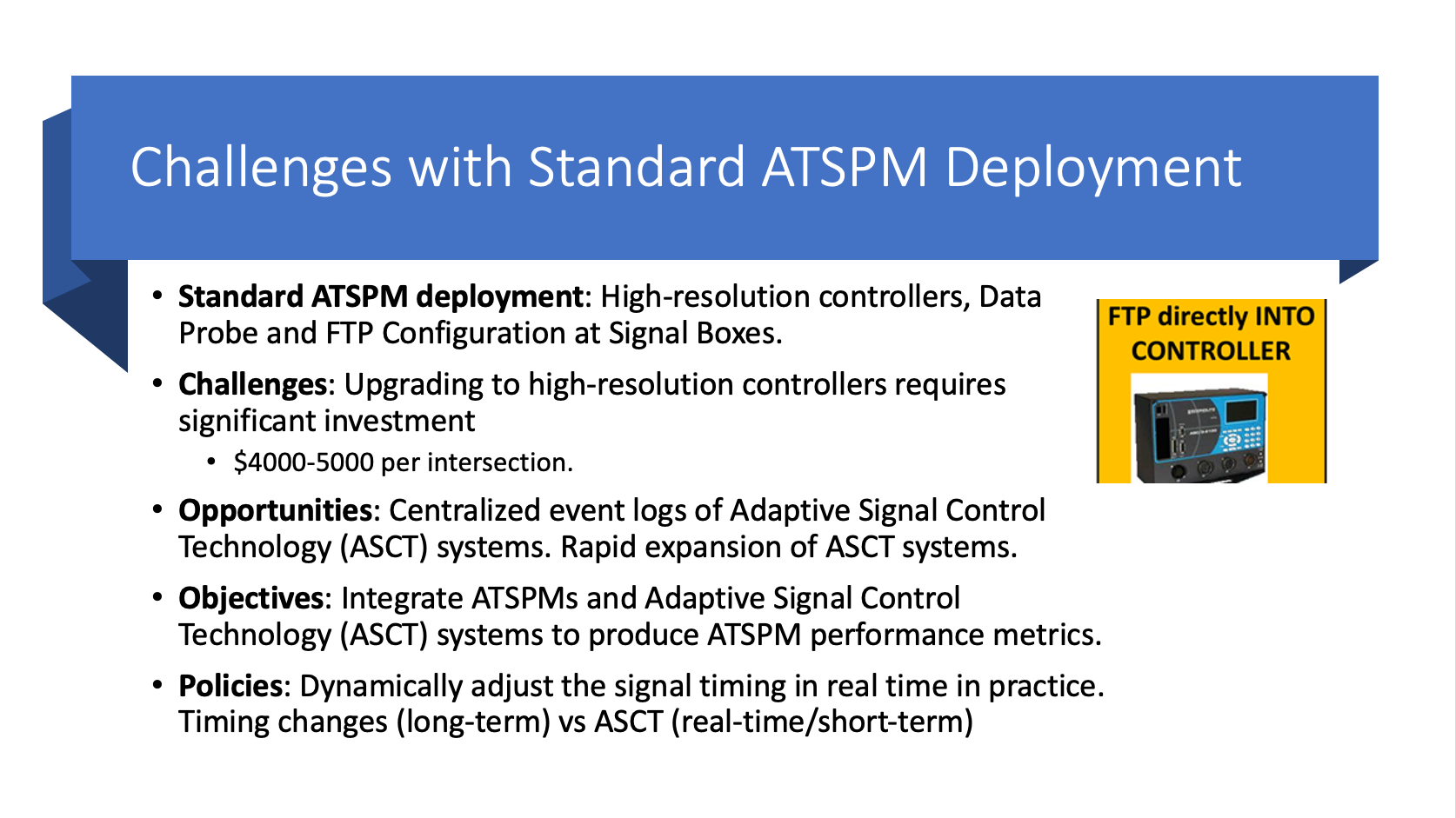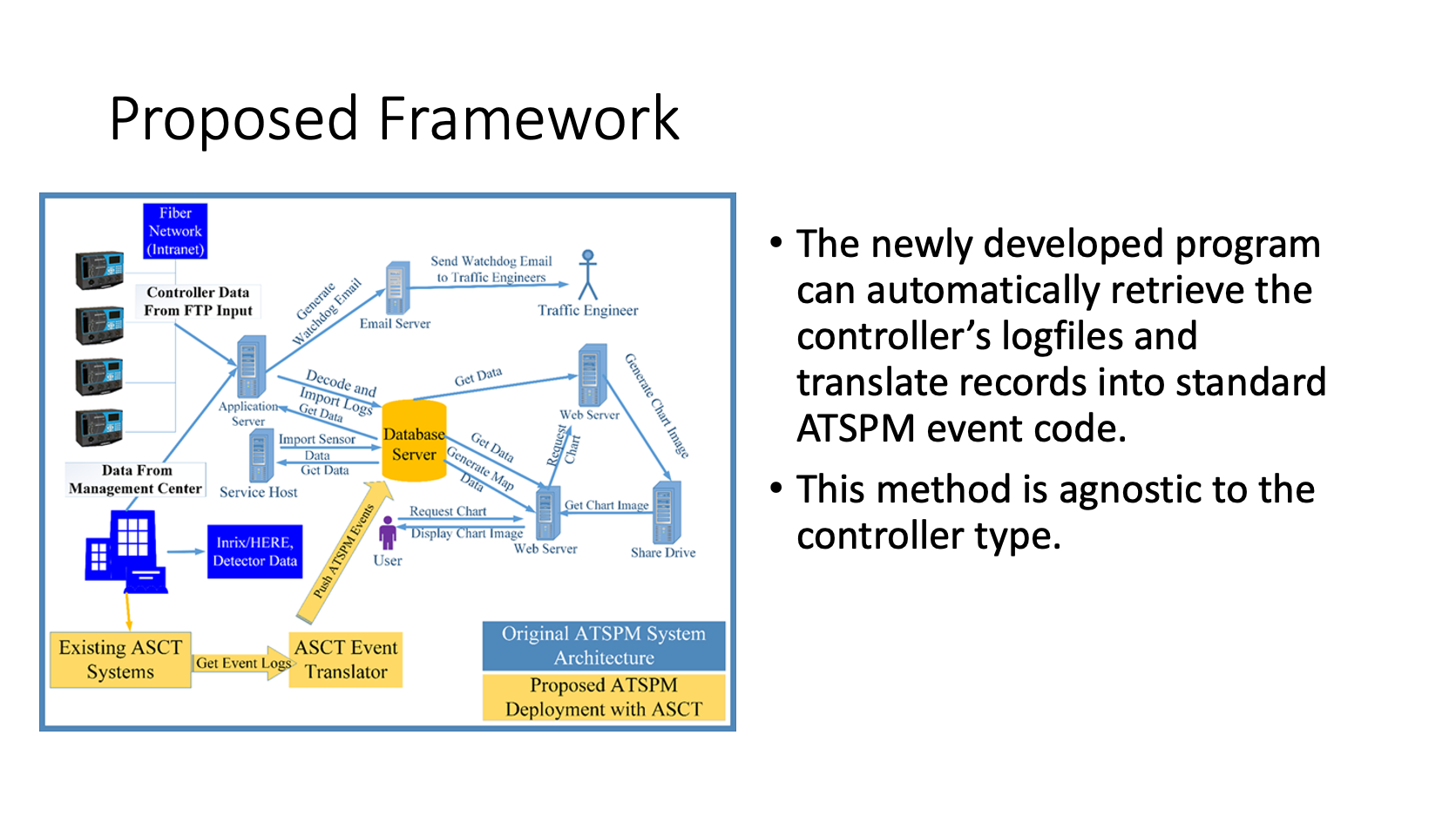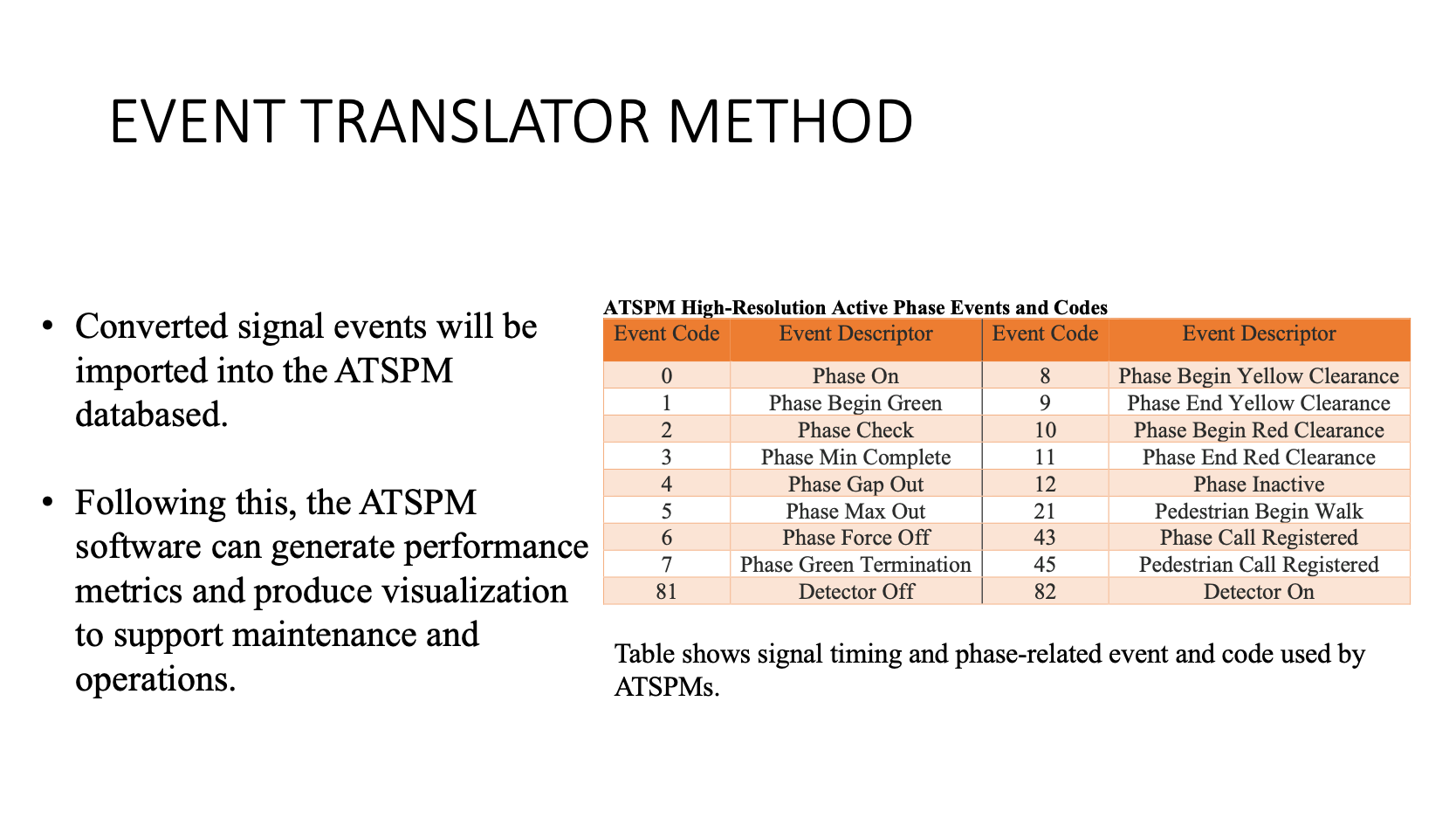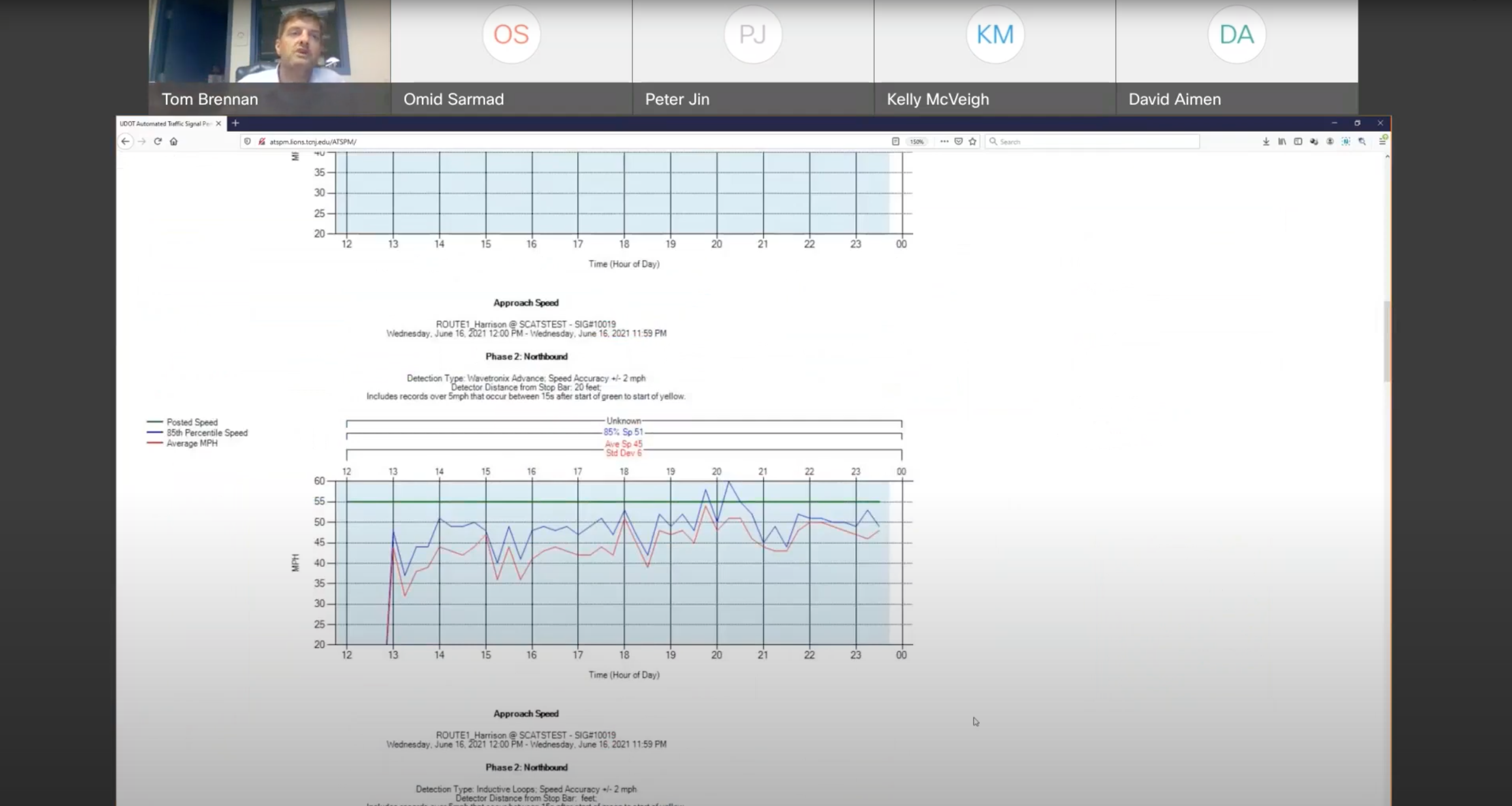
Research to Implementation: Design and Evaluation of Scour for Bridges Using HEC-18

This Research to Implementation video presents an example of NJDOT-sponsored research and the effect such research has in addressing transportation-related issues within the State.

Bridge scour is the removal of sediment such as sand and gravel from around non-tidal bridge substructures and supports caused by swiftly moving water. This water can scoop out ​scour holes​, compromising the integrity of a structure. Understanding the extent of bridge damage and prioritizing the order of repair is critical to maintaining safe bridges.

With the support of NJDOT’s Bureau of Research, researchers developed the NJ-specific Scour Evaluation Model (SEM) to prioritize bridges for repair. The SEM model was determined to be effective and is now approved by FHWA and NJDOT to evaluate scour risk. The project included training of consultants to encourage the expanded use of the SEM model in NJ.

The video promotes the benefits of funded research to increase the safety of the traveling public, reduce costs, and increase efficiency.

Image of a black car with a white electric charger plugged in to the rear left of it, next to the tail light.

VW Mitigation and Emissions Offset Funds Fuel NJ’s Clean Transportation Transformation

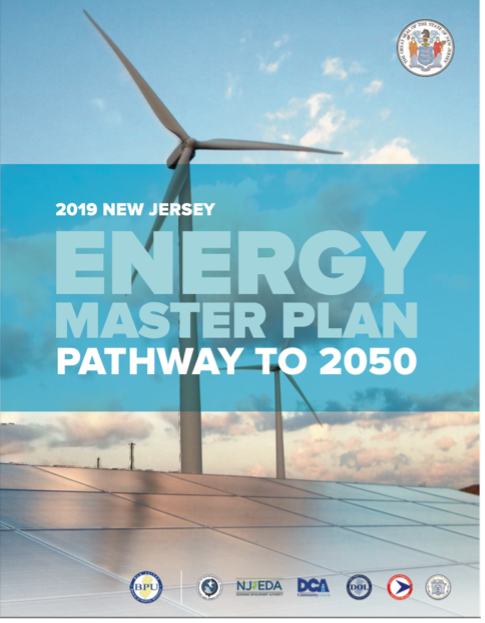
Image of Pdf cover reading 2019 New Jersey Energy Master Plan, Pathway to 2050. Behind the text is a wind turbine and a solar panel.
The 2019 Energy Master Plan, a guiding document for New Jersey’s clean transportation transformation. Courtesy State of New Jersey

In February of 2021, Governor Phil Murphy announced a historic $100 million investment in clean energy transportation vehicles and infrastructure, building on work laid out in the 2020 Energy Master Plan, which calls for a transition to 100 percent clean energy by 2050. In 2019, the State emitted 97 million metric tons (MMT) of carbon dioxide (CO2); with the implementation of the Energy Master Plan, annual emissions are projected to be dramatically reduced to 24.1 MMT of CO2. Several NJ State agencies are working to lay the foundation for this monumental transition. The $100 million commitment is only one aspect of a much larger, inter-agency undertaking.

The Energy Master Plan provided a blueprint for New Jersey’s greenhouse gas reduction goals, and the 2020 New Jersey Senate Bill 2252 (S2252), commonly referred to as the electric vehicle law, is the legislative impetus for such work. The New Jersey Department of Environmental Protection (NJDEP), the New Jersey Economic Development Agency (NJEDA), the New Jersey Department of Transportation (NJDOT), and NJ TRANSIT, among others, are now collaborating to achieve the transformation of the transportation sector, responsible for the largest share of the State’s net greenhouse gas emissions, to 100 percent carbon neutral.

Zero Emissions Vehicles (ZEVs) from Volkswagen Funds

The clean energy initiative is funded, in part, through a legal settlement negotiated between Volkswagen and the United States Environmental Protection Agency (USEPA) and the California Air Resources Board (CARB), after a court determined that the automaker had installed defeat devices that hid emissions of nitrogen (NOx) in certain vehicles models. From the resulting $3 billion settlement, New Jersey was allocated $72.2 million, which is now being administered by NJDEP for clean energy transportation projects.

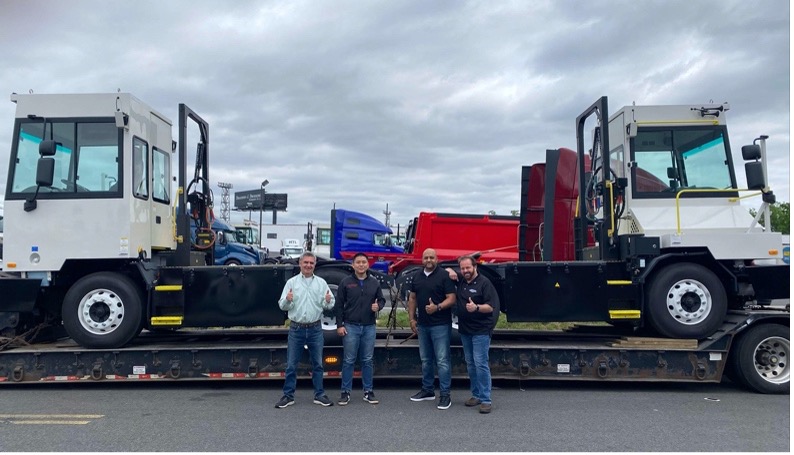
Four men stand smiling in front of a trailer with two small white truck-like vehicles on them, the electric yard tractors that were just delivered to this facility.
Two new electric yard tractors delivered to Red Hook Terminals LLC in Port Newark. Courtesy NJDEP

The first and second rounds of New Jersey’s Volkswagen Mitigation Trust proceeds were awarded to select applicants for the purchase of ZEVs. For example, $1.9 million was given to a company in Trenton for five new electric school buses, and Jersey City received $2.4 million for five new electric garbage trucks. Red Hook Terminals LLC of Port Newark (pictured at right) recently received sufficient funding to purchase ten electric yard tractors.

Without sufficient charging infrastructure, the envisioned shift to EVs will prove impossible to achieve. One oft-cited reason hindering EV adoption is “range anxiety,” a fear of not being able to refuel for lack of nearby facilities. Currently, 95 percent of state residents live within 25 minutes of a DC Fast Charger, a distance that will only decrease as new chargers are built. Stations throughout the State can be located using NJDEP’s Public Electric Vehicle Charging Locator.

For Phase 1 of the Volkswagen Mitigation Fund disbursal, NJDEP allocated $3.2 million to pay for public fast chargers. In 2019, through the It Pay$ to Plug In program, VW funds have financed 827 new charging outlets, ranging from the City of Cape May, to Rutgers—New Brunswick, to the Village of Ridgewood.

Ongoing Initiatives

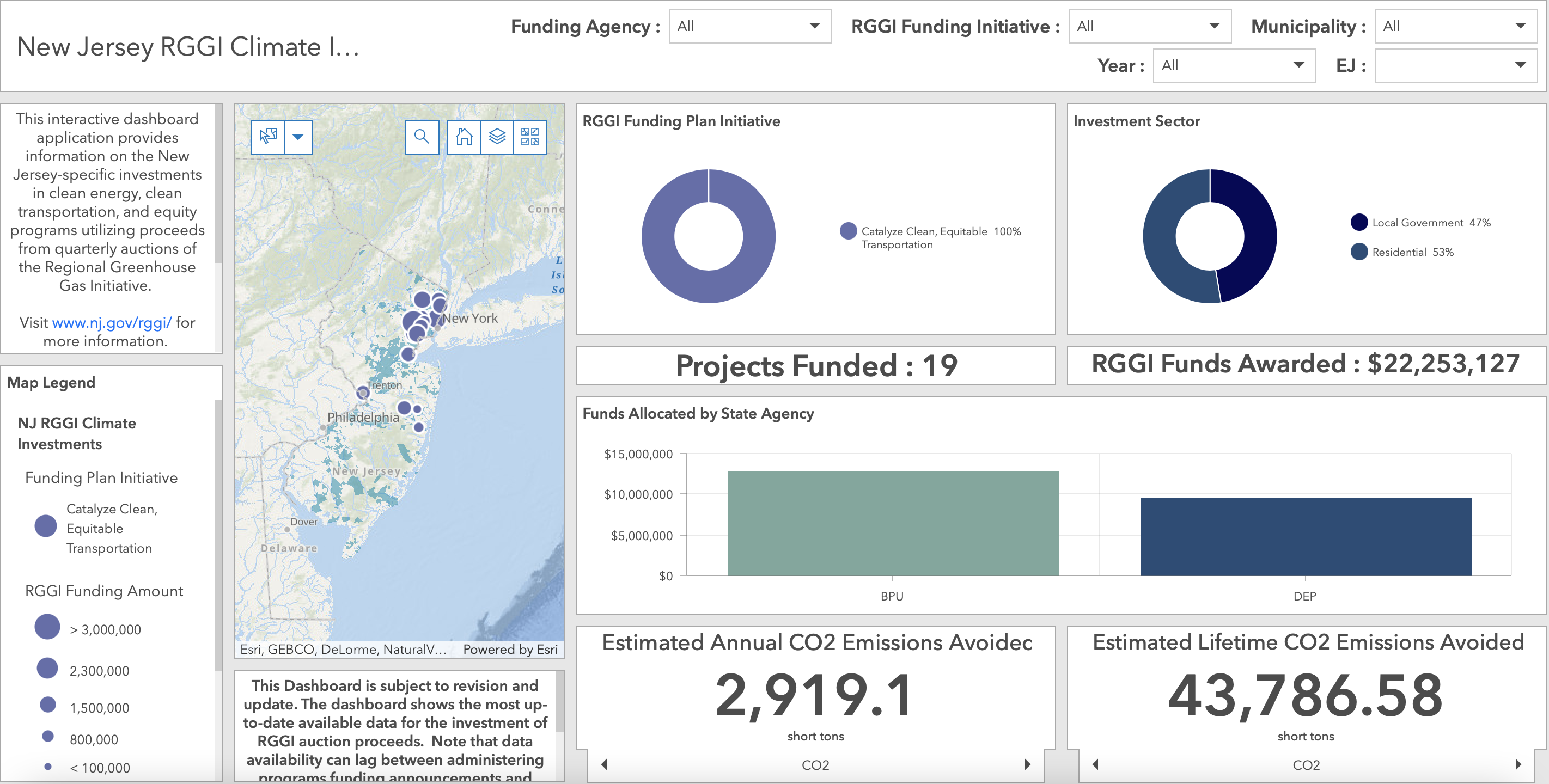
A screenshot of NJDEP's REGGi Climate Investments Dashboard. The Dashboard shows 19 projects funded, $22.25 million in funds awarded, an estimated 43,786.58 short tons of lifetime CO2 Emissions Avoided, and a map of projects across New Jersey, which shows a concentration in the northeastern section of the state.
The New Jersey RGGI Climate Investments Dashboard shows current clean energy investments from auction proceeds. Courtesy NJDEP

An important source of revenue for supporting Governor Murphy’s $100 million pledge is the Regional Greenhouse Gas Initiative (RGGI). RGGI is a multistate partnership that has set a regional cap on carbon dioxide emissions. Fossil-fueled power plants exceeding the limit must purchase extra capacity at an RGGI auction. In the first quarter of 2021, New Jersey received $27.1 million that will be invested to fight climate change according to a Strategic Funding Plan. The New Jersey RGGI Climate Investments Dashboard provides up-to-date, visual reports of progress on RGGI grants across the State. The initiative has awarded $22.2 million thus far to several municipalities, including for the purchase of two electric garbage trucks for the City of Trenton, and two electric shuttle buses for West New York.

The RGGI purchases coincide with Phase 2 of NJDEP’s Volkswagen settlement disbursal, announced in February, 2021. A further $31.7 million of funding for ZEVs from the settlement will be distributed across the state. As Passaic County receives RGGI funds for an electric shuttle bus, the City of Paterson has been allocated VW money for two electric garbage trucks. With VW funds and RGII auction proceeds, the City of Elizabeth School District purchased seven electric schoolbuses. Gradually, municipalities and companies across the state are beginning to grow their ZEV fleets.

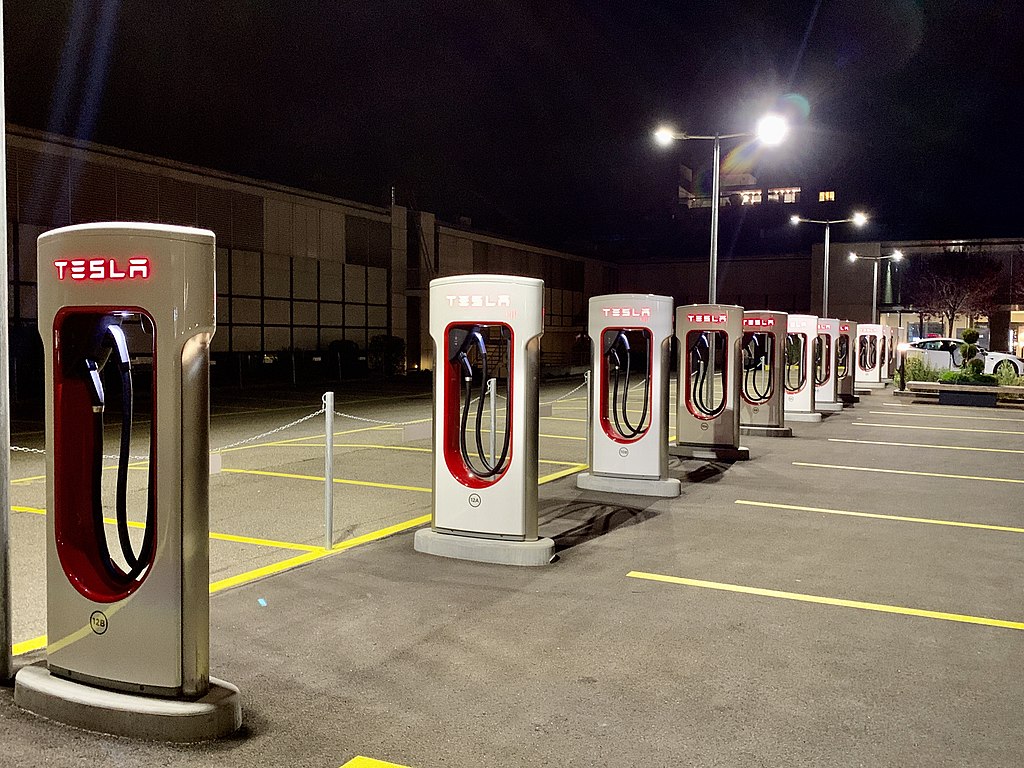
Image of a row of Tesla Superchargers in a parking lot. The chargers are rectangular with plugs resembling gas pumps inside the hollow rectangle.
Tesla agreed to install V3 Superchargers at eight service areas on the New Jersey Turnpike. Courtesy Ank Kumar on Wikimedia Commons

To complement these 2021 ZEV additions, NJDEP has proposed spending an additional $5.4 million of Volkswagen funds for charging grants. For example, the agency selected an ACME grocery store in Woodbury, a Shell station in Wayne, and a hotel in Fort Lee, among others, for DC Fast Charger grants. The DC Chargers are being prioritized in this round because of their high efficiency: a twenty-minute charge can add 60 or 80 miles of driving range.

Emissions Mitigation for Heavy Transportation

In July, 2020, New Jersey and fourteen other states and the District of Columbia signed a Memorandum of Understanding (MOU) committing to collaborate on policies to convert medium and heavy-duty vehicle fleets, such as school buses and freight trucks, into ZEVS The MOU sets a goal of 30 percent electric share heavy and medium-duty vehicles sold in 2030, with a 100 percent share by 2050. The regional approach reflects an acknowledgement that transportation emissions are an interstate issue, and that interstate collaboration is necessary to meet such goals.

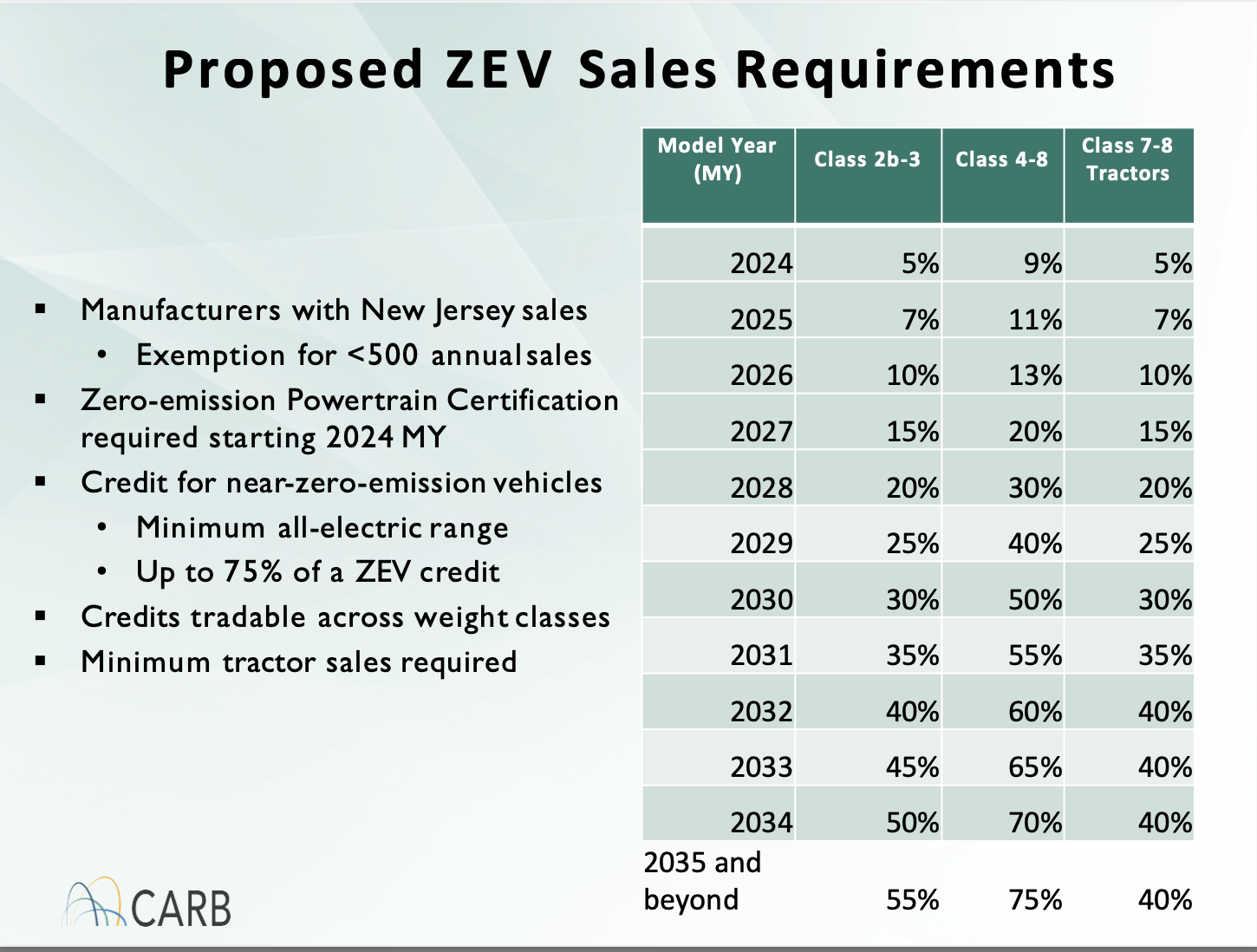
Image of a slide reading Proposed ZEV Sales Requirements, detailing how manufacturers in NJ will have to provide credits each year starting in 2024 to offset the emissions cost of the vehicles they are selling. By 2034, for example, they will have to sell (or purchase credits for) 50% of their vehicles as clean energy vehicles.
NJDEP’s proposed rules would follow California’s emissions credit/deficit system for medium and heavy vehicle sales. Courtesy NJDEP

To begin instituting this shift, NJDEP has started the rulemaking process for N.J.A.C. 7:27-31 and 33, two proposed regulations that would institute a credit/deficit program for manufacturers of trucks of over 8,500 pounds. Beginning in 2025, sellers of medium and heavy-duty vehicles would be required to generate or purchase credits to offset deficits from the sale of greenhouse gas-emitting vehicles. This offset could be accomplished by increasing sales of ZEVs, or by purchasing credits from another manufacturer. Deficits would increase every year through 2035, resulting in an increase in the number of commercial ZEVs sold in the state. This is modeled after the Advanced Clean Trucks (ACT) rule that California implemented in 2019.

For public transit, bus fleets must be converted as well. The state’s EV law, S2252, requires that NJ TRANSIT transition its new bus procurements to all-electric. New bus purchases must be 50 percent electric by the end of 2026, and 100 percent zero-emissions by the end of 2032. NJ TRANSIT, which received funds for eight new electric buses in Camden from VW Phase 1, will start testing these vehicles in service in the fall of 2021. One issue affecting the conversion is range; on certain routes, particularly in South Jersey, the required driving distance exceeds single charging capacity. NJ TRANSIT is currently exploring solutions such as building new chargers and making changes to operating routes.

Conclusion

Though $100 million is a significant investment, more resources will be needed to promote the transition from carbon-emitting vehicles. Further investment, as well as interagency and regional cooperation will be crucial to meet the Energy Master Plan’s goal of 330,000 ZEVs on New Jersey Roads by 2025.

NJDOT is working to support the efforts of agency partners to achieve the goals set out by the Energy Master Plan and mandated by the electric vehicle law. NJDOT has continued to invest in alternative mobility, increasing traffic efficiency, and the conversion of its fleet to ZEVs.  In a recent NJDOT newsletter, the Commissioner Diane Gutierrez-Scaccetti noted that the agency has worked with a team from Princeton University to determine an electric charging infrastructure implementation plan, the first step of which will be installation of equipment at the Ewing, New Jersey headquarters.

This infrastructure will be important not just for NJDOT but for the statewide fleet, which, as it transitions to ZEVs, needs centralized charging infrastructure. By law, the statewide fleet must be 25 percent electric by 2025, and 100 percent electric in 2035. NJDOT has already ordered 49 hybrid vehicles, progressing toward the department goal of 88 alternative fuel vehicles in service in the next three years.

Success will require not only committed public policy, but overwhelming public support to make use of the budding charging network, expanded subsidies, and soon-to-be converted fleets.


Resources

Higgs, L. (2021, May 26). NJ Transit Unveils Electric Bus Plan, But it Has to Compensate For Low Battery Range. https://www.nj.com/news/2021/05/nj-transit-unveils-electric-bus-plan-but-it-has-to-compensate-for-low-battery-range.html

Johnson, T. (2019, June 4). Administration Promises Almost $25M to Electrify Transportation Sector. NJ Spotlight News. https://www.njspotlight.com/2019/06/19-06-03-administration-promises-almost-25m-to-electrify-transportation-sector/

Johnson, T. (2021, February 17). NJ to Spend $100M on Green Energy, Environmental Justice. NJ Spotlight News. https://www.njspotlight.com/2021/02/nj-clean-energy-environmental-justice-electric-vehicles-murphy-100m/

NJ Car. (2021, April 26). NJ CAR Hosts Webinar On NJDEP’s It Pay$ To Plug In EV Charging Grant Program. https://njcar.org/latest-news/nj-car-hosts-webinar-on-njdeps-it-pay-to-plug-in-ev-charging-grant-program/

NJDEP. (2019, June 3). Second Round of Volkswagen Settlement Funds to Support Development of Heavy-Duty Electric Vehicles, With Emphasis on Improving Air Quality in Environmental Justice Communities. https://nj.gov/dep/newsrel/2019/19_0045.html

NJDEP (2021, June 1). NJ Public Electric Vehicle (EV) Charging Locator. https://njdep.maps.arcgis.com/apps/webappviewer/index.html?id=e41aa50dd8cd45faba8641b6be6097b1

NJDOT (2021, April). How NJDOT is Working Toward a Cleaner New Jersey. https://www.nj.gov/transportation/about/townhall/doc/ctcnews_vol21.pdf

NJ Office of the Governor. (2020, January 27). Governor Murphy Unveils Energy Master Plan and Signs Executive Order Directing Sweeping Regulatory Reform to Reduce Emissions and Adapt to Climate Change. https://www.nj.gov/governor/news/news/562020/approved/20200127as.html

Regional Greenhouse Gas Initiative. (2021, June 1). New Jersey RGGI Climate Investments Dashboard. https://njdep.maps.arcgis.com/apps/dashboards/71e62ee3de2d4a6585bf4766881406c6

State of New Jersey. (2020, January 9). NJ S2252. https://www.njleg.state.nj.us/2018/Bills/S2500/2252_U2.PDF

Tap Into Camden. (2021, 26 May). NJT Bringing Eight New Electric Buses to Camden This Fall. https://www.tapinto.net/towns/camden/sections/government/articles/njt-bringing-eight-new-electric-buses-to-camden-this-fall

United States Department of Energy. (2020). Electricity Laws and Incentives in New Jersey. https://afdc.energy.gov/fuels/laws/ELEC?state=NJ

Image is of two construction workers in neon vests sitting on a platform above freshly poured concrete, which they are working on treating.

FHWA Issues EDC-5 Final Report and EDC-6 Baseline Report

The FHWA has issued a Final Report for Round 5 of the Every Day Counts Initiative (EDC-5), and a Baseline Report for EDC-6. The reports demonstrate completed and preliminary progress on implementation of selected innovations, such as Crowdsourcing for Advancing Operations and e-Ticketing.

Since the advent of the program in 2009, FHWA has worked to standardize innovation as an industry practice. For EDC-5, which took place from 2019-2020, FHWA reports that state agencies accomplished 98 percent of their implementation goalsthe highest success rate since EDC began. The vast majority of innovative ideas have been demonstrated, assessed (in preparation for deployment), or institutionalized by the state agency.

To learn more about past projects and progress on current EDC initiatives in the region, please visit our Innovative Initiatives page.

The two reports may be viewed below, or on FHWA’s website: EDC-5 Final Report, EDC-6 Baseline Report.

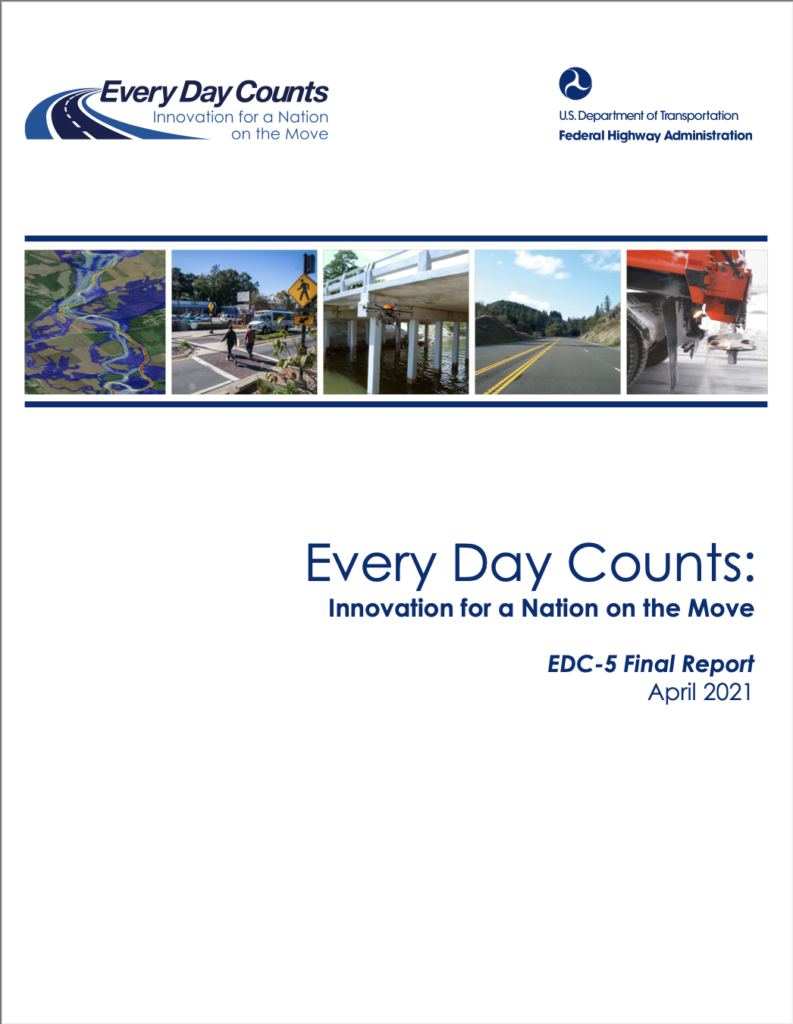
Image Reads: Every Day Counts: Innovation for a Nation on the Move, EDC-5 Final Report, April 2021
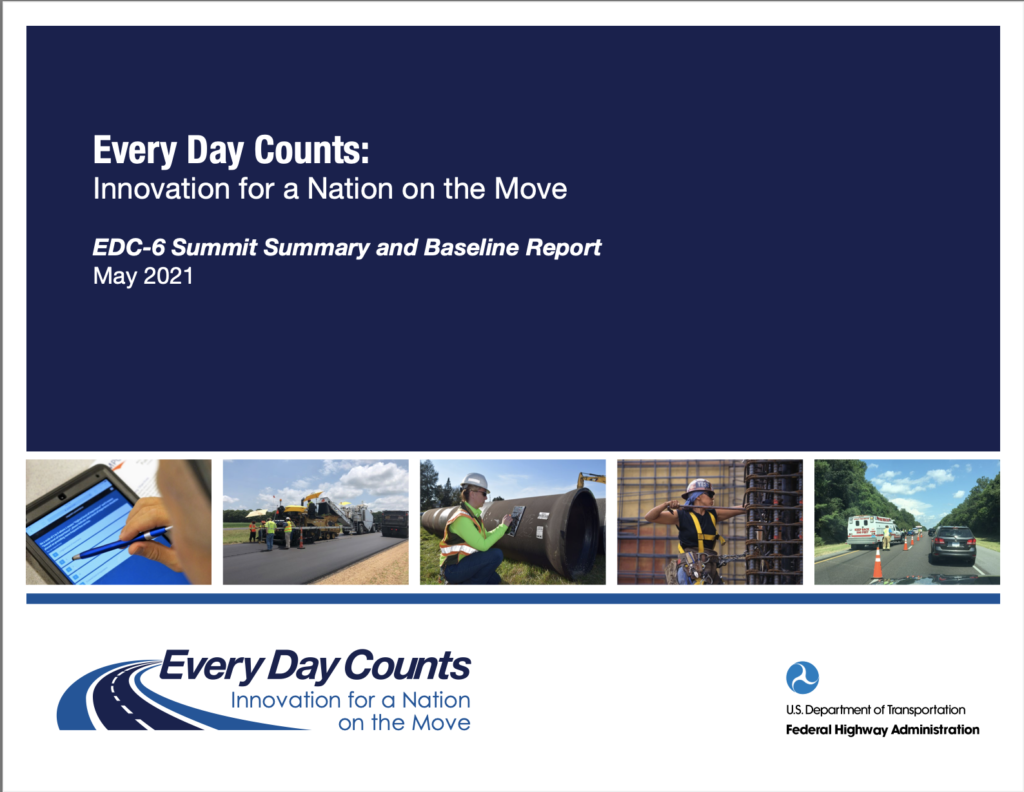
Image Reads: Every Day Counts, Innovation for a Nation on the Move, EDC-6 Summit Summary and Baseline Report, May 2021

NJ STIC Innovations Featured at EDC-6 Virtual Summit

On December 8-10, 2020 FHWA hosted the Every Day Counts (EDC) 2020 Virtual Summit.

EDC is a State-based model that promotes the identification and rapid deployment of proven, yet underutilized innovations to shorten the project delivery process, enhance roadway safety, reduce traffic congestion, and integrate automation. FHWA works with State transportation departments, local governments, tribes, private industry and other stakeholders to identify a new collection of innovations to champion every two years that merit accelerated deployment.

The Summit is an integral component of the EDC model, bringing together transportation leaders and front-line professionals responsible for the development and delivery of highway projects to learn more about the innovations. Following the Summit, the States finalize their selection of innovations, establish performance goals for implementation over the upcoming two-year cycle, and begin to implement the innovations with the support and assistance of the technical teams established for each innovation.

The EDC-6 Summit was conducted virtually and included over 3,000 attendees from state Departments of Transportation, local agencies, federal land management agencies, tribes and industry. In the EDC-6 two-year cycle, seven innovations were featured that promote strategies to increase engagement with people, new applications of products to preserve and repair infrastructure, and improved processes that can save time on project delivery and incident management.

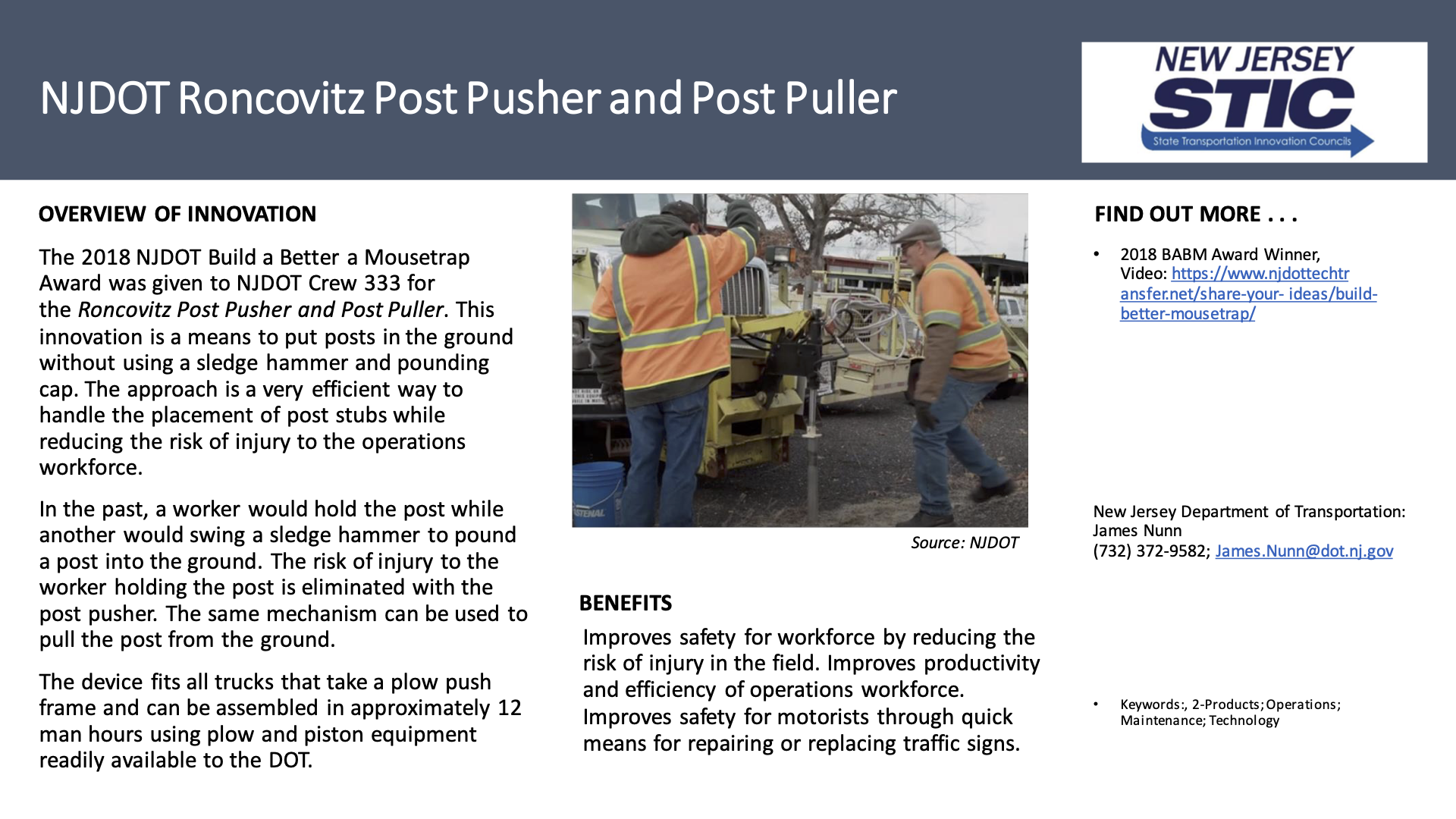
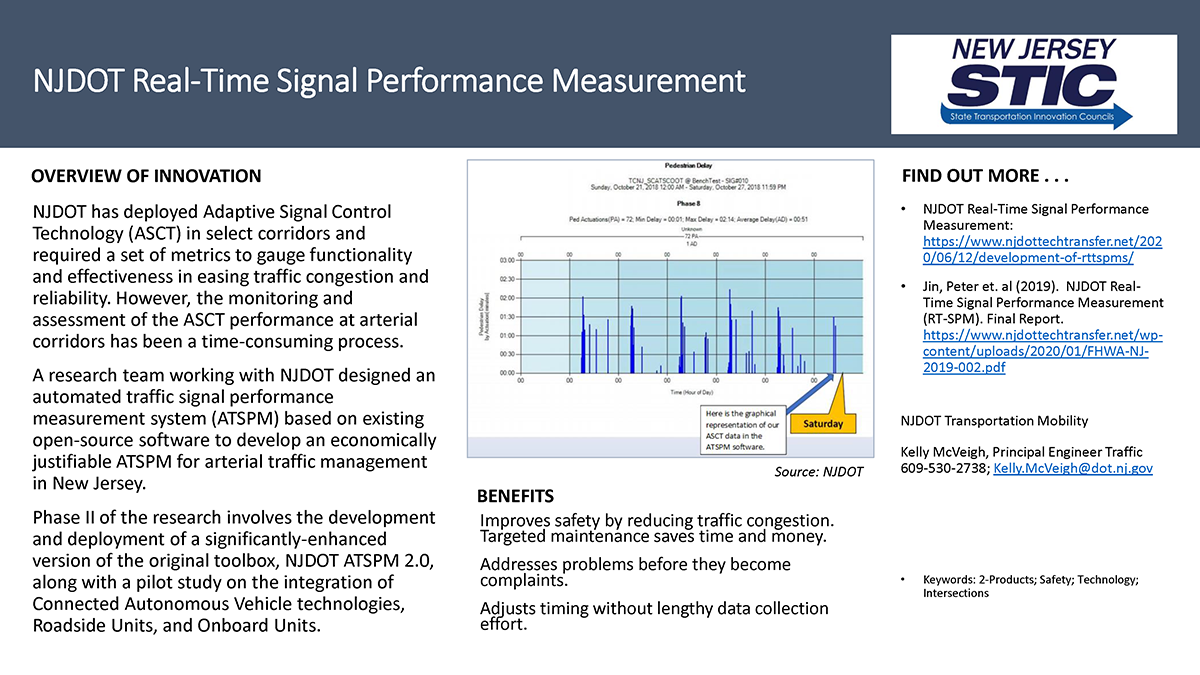
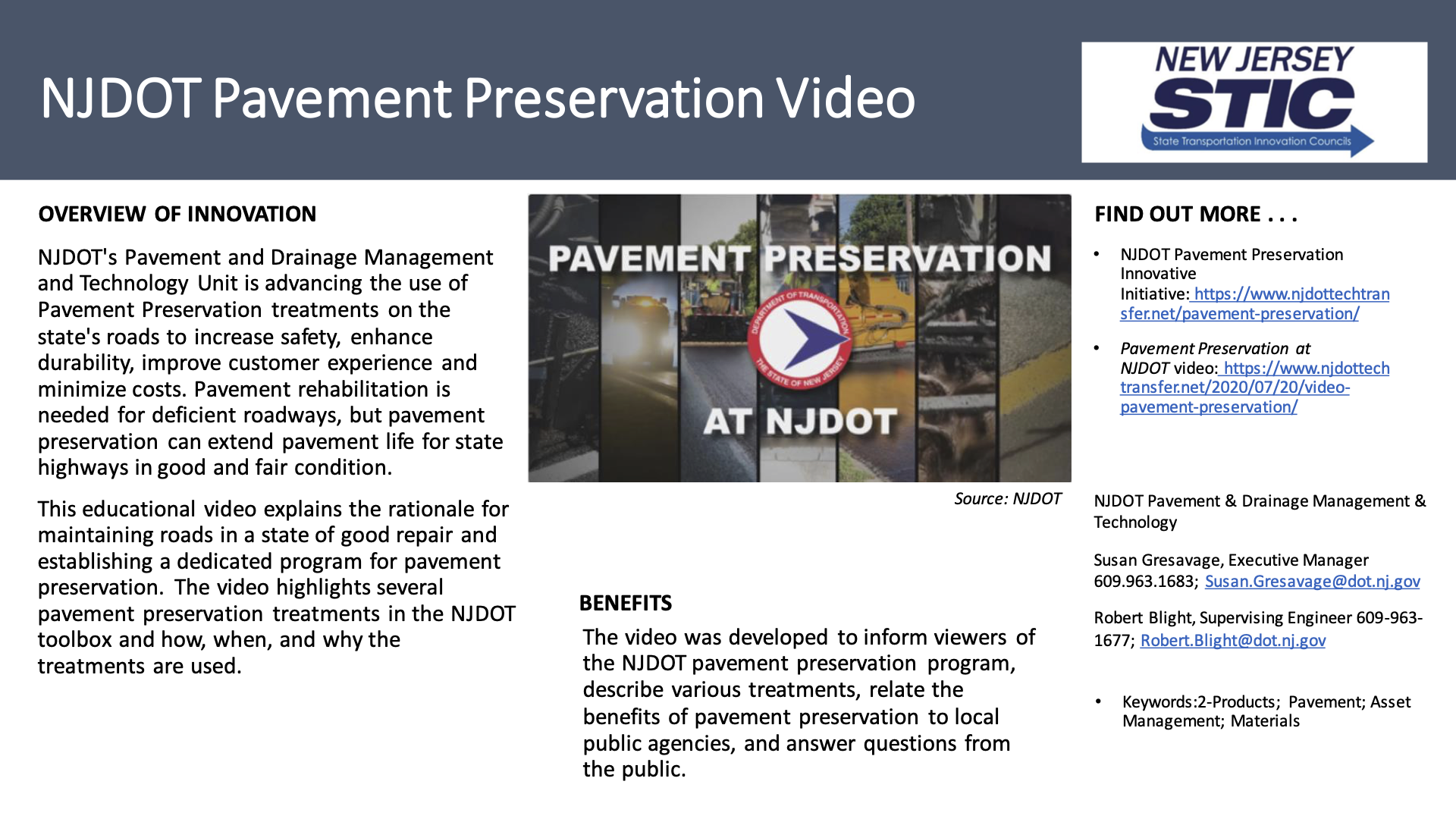
The EDC-6 Virtual summit included an exhibit pavilion to showcase home-grown innovations that State Transportation Innovation Council (STIC) members developed and implemented. The purpose of the pavilion was to celebrate and share examples of innovations that save lives, time and resources with a wider audience to expand their potential use and impact. Highlighted innovations did not need to be EDC-related, or previously funded through the STIC Incentive or AID Demonstration grant programs. Rather, exhibitors were asked to share those innovations that could benefit other state and local agencies.

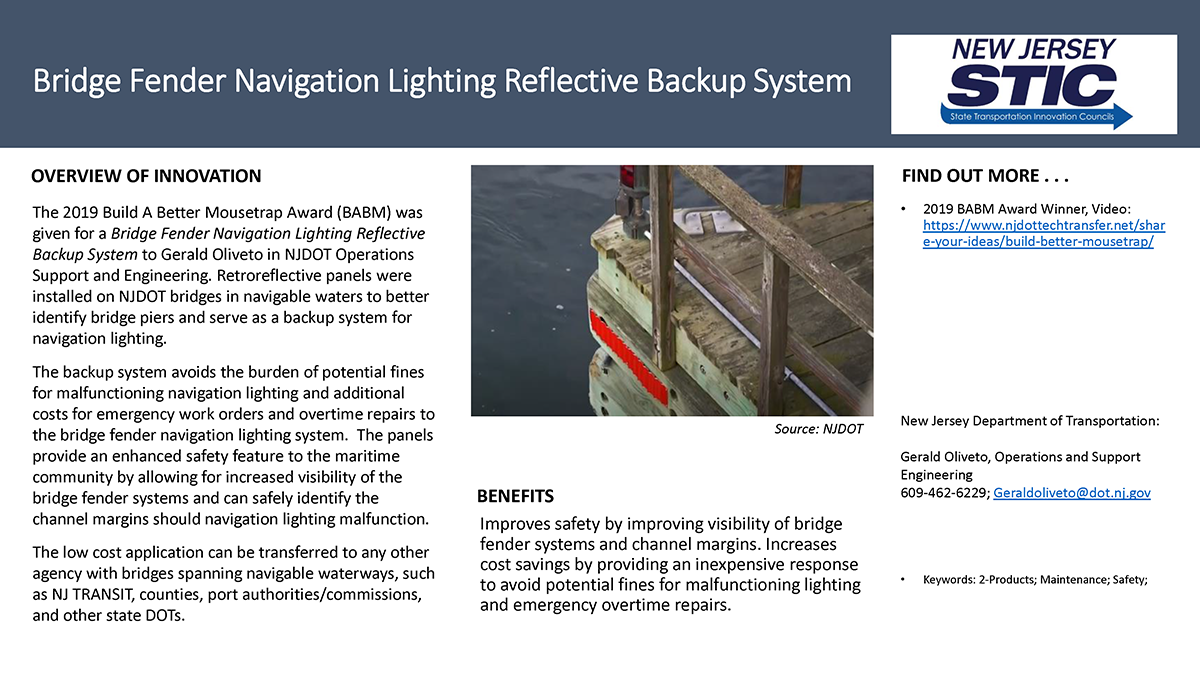
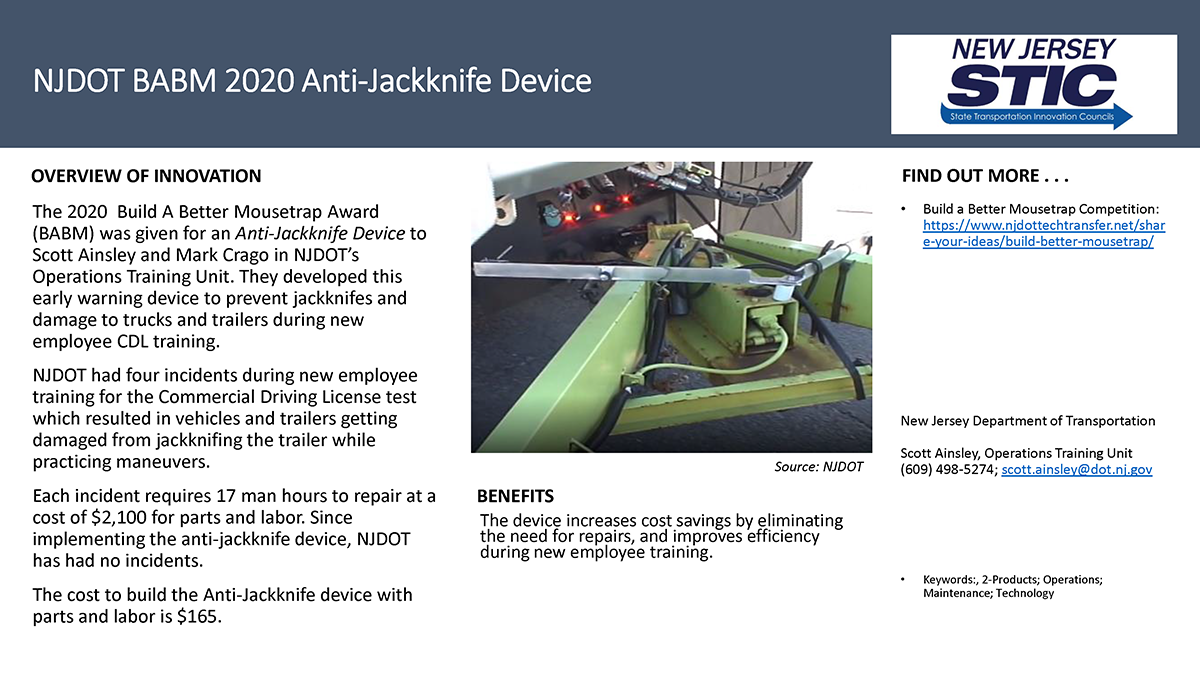
The NJ STIC selected the ten innovations shown here for the pavilion.

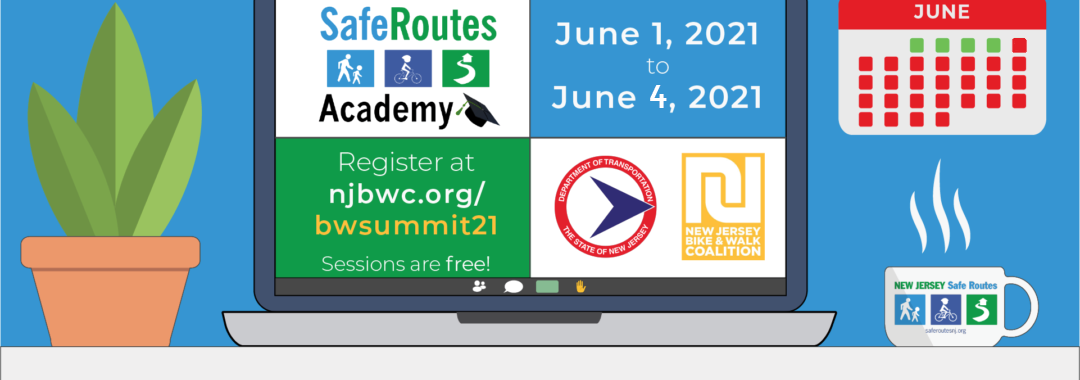
NJ Safe Routes Academy at the NJ Bike & Walk Summit

From June 1 through June 4, 2021 the NJ Safe Routes Resource Center will be offering Safe Routes Academy sessions in conjunction with the virtual NJ Bike & Walk Summit. The Academy enables and encourages safe routes to parks, transit, shops, restaurants, employment, schools and recreation through free, interactive sessions. The Safe Routes Resource Center works with New Jersey Department of Transportation’s (NJDOT) Bureau of Safety, Bicycle and Pedestrian Programs to help make New Jersey’s communities more walk- and bike-friendly for all users. The Safe Routes Academy is sponsored by NJDOT.

This year’s Safe Routes Academy sessions will discuss the New Jersey 2020 Strategic Highway Safety Plan that will guide safety programs and investments over the next five years to help reduce highway fatalities and serious injuries on public roads throughout the State. In particular, the presentation will feature the goals, objectives, and tasks of the Bicycle and Pedestrian Emphasis Area. Other sessions will feature the Transportation Management Association Safe Routes Coordinators who can help communities improve their walking and bicycling environment, tips for developing successful Safe Routes grant proposals for funding through the NJDOT Division of Local Aid, and steps that advocates can take to build local support for pedestrian and bicycle safety projects.

Find more information and a link to register here.

NJDOT Tech Talk! Webinar – Research Showcase: Lunchtime Edition

On April 22, 2021, the NJDOT Bureau of Research hosted a Lunchtime Tech Talk! webinar, “Research Showcase: Lunchtime Edition!”. The event featured three important research studies that NJDOT was not able to include in the NJDOT Research Showcase virtual event held last October. The Showcase serves as an opportunity for the New Jersey transportation community to learn about the broad scope of academic research initiatives underway in New Jersey.

The three projects examined various issues in transportation from surface transportation vulnerability to climate change, to the impacts of lighting on work zone safety, to policies that regulate overweight trucks in New Jersey. After each presentation, webinar participants had an opportunity to pose questions of the presenter.

Quantifying Impacts of Disruptive Precipitation to Surface Transportation: A Data-Driven Mitigation Approach. Raif Bucar is a third-year Engineering Management Ph.D. student at Stevens Institute of Technology, currently conducting research on surface transportation vulnerability to flood events. The study adopts a multidisciplinary approach to look at the effects of not only 100 and 500 year floods, but also more frequent events that cause local flooding to assess the impact on mobility and accessibility in Hoboken, NJ. The resulting study explores flooding impacts on the transportation system in terms of mobility and accessibility metrics and can inform the flood mitigation measures and measures to improve resilience.

The study used a traffic simulation model to look at storm magnitude and high and low tide in relation to Vehicle Miles Traveled, Vehicle Hours Traveled, and Trips Completed. Mr. Bucar described analysis of data to predict flood risk and determine areas of higher probability of flooding by year-storm and tide to determine why some areas flood more often than others. The study explored urban characteristics including land cover and topography, elevation, slope, impervious coverage, and drainage system features, and looked at the correlation of these features with flooding.

Mr. Bucar described the application of this information to determine routing information for drivers by applying machine learning to develop a “most valuable path” that adjusts travel time based on each link in the route and diverts drivers in response to changing conditions during flood events. The study findings can also be applied to guide flood resilience transportation planning. Future work will look at other models to validate this study’s assumptions, and will investigate driver behavior during flood events and how drivers respond to new information.

Following the presentation, Mr. Bucar responded to questions asked through the chat feature:Q. There is not as much research on rainfall-induced flooding. Why not?
A. There may be resistance to using interdisciplinary approaches to exploring this problem. This is an area that needs more research as the disruptive effects of flooding on transportation mobility is increasingly apparent. Q. How translatable is this approach to other cities or locations?
A. Thus far, we have not applied the framework to other areas, but should be able to apply it to other controlled study areas. A study of larger areas, such as a state, will not show local differences. There is a limit to how much we can scale this model. Q. How do you plan on factoring in driver behavior and driver knowledge of flood events in future studies?
A. We anticipate using surveys and controlled experiments.

Lighting, Visual Guidance and Age: Importance to Safety in Roadway Work Zones. Dr. John Bullough is the Director of Transportation and Safety Lighting Programs and a Course Instructor in the graduate program in lighting at the Lighting Research Center at Rensselaer Polytechnic Institute.

Work zones are complex visual environments, and particularly so at night when illumination is needed for workers to complete tasks and for drivers to see the work area and understand how to navigate around it. Roadway delineators, and steady and flashing lights used in work zones can cause glare and visual chaos that affect drivers’ ability to see well. These challenges are exacerbated for older drivers due to physical changes in the eye over time.

Dr. Bullough described the Relative Visual Performance (RVP) model used to look at the speed and accuracy of visual processing in relationship to light level, the contrast between an object and the background, the size of an object, and the age of the observer. The research compared the effects of: steady lighting; flashing lights at night and during the day; sign retroreflectivity, color, and lettering; and road delineators on younger and older drivers.

Dr. Bullough noted that, with an aging driving population, the needs of older drivers should be considered to improve road safety around work zones. Study conclusions emphasize that older drivers need higher light levels than younger adults, but warns that higher light levels can create more glare. There is a need for flashing warning light intensity specifications that reflect the needs of drivers of all ages. It was noted that higher reflectivity in sign sheeting can extend legibility distances and so assist older drivers. Dr. Bullough noted that monitoring of light levels is needed throughout their use to keep levels of glare low.

Several questions were posed to Dr. Bullough after his presentation: Q. Was the information broken down for age groups over 60 years?
A. Optical changes continue to ages 70 and 80. However, there are other potential visual problems among individuals in these age groups – for example, cataracts, macular degeneration, and glaucoma which make generalizations more difficult. Q. Does the color of light affect glare and visibility?
A. It depends on what we mean by “glare”. Red and blue lights – which we might find on police and flashing lights of highway maintenance trucks – have the same contrast-reducing characteristics regardless of color. However, people tend to be more sensitive to bluer colors; they find them much brighter, more glaring, more annoying and distracting even if they do not affect visibility any more than red or yellow lights of the same intensity. So, depending on what we mean by glare – if it’s that sensation of pain or annoyance – color matters a lot; if it is just visibility than it really comes down to candle-power, or candelas. Q. What were the overall differences between urban and rural environments?
A. Urban environments tend to be more difficult for all drivers to find key information in the visual clutter. However, the effect is still much harder for older people than young people. Q. How does eye recovery after glare differ between younger and older people?
A. Eyes in older people take twice as long to recover (3-4 seconds) after exposure to glare than in younger people.

Analysis of Overweight Truck Permit Policy in New Jersey. Dr. Hani Nassif is a professor at Rutgers, The State University of New Jersey, where he has established the Bridge Engineering Program.   Dr. Nassif introduced the study and acknowledged the contribution of the research team that worked on this study and a prior study focused on the impact of freight on pavement and bridge infrastructure.

This research study explored whether New Jersey’s scheduled permit fees for overweight trucks allow NJDOT to recover all or part of the costs of the damage imposed by these vehicles traveling on NJ roads and bridges.

In a previous study, researchers had correlated truck overweight data with damage to bridges and pavements which showed higher rate of deterioration with higher rates of use by overweight trucks. The main question for this study considered whether the permit fees were sufficient to recover the costs incurred on the infrastructure. Then, in light of these findings, what policy recommendations could be made to change permit policies.

Dr. Nassif described various data sources and methods that were used to estimate the costs of damage to roads and bridges caused by overweight vehicles, including six years of data from the NJ Overweight Permit Database, Straight Line Diagrams of the NJ roadway network, GIS and the National Bridge Inventory including bridge location and conditions.

Dr. Nassif also provided an overview of NJ Overweight Permits, explaining the various types, validity, fee schedule and weight rules.  He highlighted the challenges of effectively collecting fees for overweight trucks and use categories for which fees are not adequately collected.   If a truck weighs more than 80,000 lbs., a permit should be obtained. Although, the State issues 100,000 permits each year, 96 percent of overweight trucks are estimated to be running without permits. These are not short hauls; the trip length is, on average, 50 miles.

The study also looked at fee permitting across the country. Each state uses one of three different permit fee structures: a flat fee; an oversize, overweight fee; and a new model which combines oversize, overweight, and mileage. The study included an effort to benchmark New Jersey against other states in terms of its fee structure. NJ is fourth highest in terms of overweight fee structure.  Any revised policy must take into account these higher fees in relation to neighboring states.

Dr. Nassif noted that the study findings can inform discussion of alternative policies on trucking fees.  The State can maintain the same fee schedule, add mileage to the fee calculation, or charge a flat fee. Dr. Nassif noted that it is not the objective of the state to recoup all the damage costs but perhaps to try to have all sectors of the economy pay their share in terms of the damage to the infrastructure. He suggested that, because trucks using more than six axles cause less damage, the use of more axles could be incentivized. Fees in NJ are already high, so an increase may not be feasible. All sectors of the trucking industry should pay their fair share.  There may be greater efficiency and equity in imposing a permit fee structure that collects a greater fee for longer mileage trips. Q. What would be your recommendation for regulating overweight trucks- to change to a flat fee or a mileage-based fee?
A. A combination of overweight and mileage fees might be most appropriate in NJ for a fair distribution of permit fees. This is similar to neighboring states. The average trip length is 50 miles for a permit. If a truck travels more, the State could add $1 for each additional mile would recoup 80 percent of the damage cost. Q. Have you considered the cost of compliance in payment of fees for overweight vehicles?
We have been trying to work with the trucking association – we had a couple of workshops with stakeholders from agencies and trucking association – with the overall goal of enhancing the movement of goods. For example, the state could incentivize the use of a larger number of axles by lowering fees for these trucks. Truck weight enforcement is currently inefficient – it’s like chasing “cat and mouse”. Permits are not obtained for most overweight vehicles. Autonomous enforcement using accurate sensors along the road could result in citations and force drivers to get overweight permits. Weigh-in-Motion stations could be used as enforcement stations.

The enforcement needs to be more effective and we need more legislation; this legislation is under consideration in NY. NJ should consider this legislation to generate more revenue, and provide an equal footing for all parts of the trucking industry. Q. With regional partners working together would we see more compliance?
A. There have been some regional efforts, including the Port Authority of New York and New Jersey calling for harmonizing the permitting process across state lines. New Jersey and New York could take the lead in advancing legislation to create a unified approach from Connecticut to Delaware and Maryland.

A recording of the webinar is available here.

What Do Autonomous Vehicles Mean for Infrastructure?

PAVE April 14, 20201 Virtual Panel Highlights

On April 14, 2021, Partners for Automated Vehicle Education (PAVE) hosted a virtual panel on the timely topic of “What Do AVs Mean for Infrastructure?” Formed in 2019, PAVE is a coalition of industry, academic and non-profit institutions that focuses on educating the public and policymakers on Autonomous Vehicle (AV) technology.

The April 14th virtual panel offered a facilitated discussion among three professionals on infrastructure-related opportunities and challenges related to AV. Participants included the following:

  • Michele Mueller, Senior Project Manager Connected and Automated Vehicles, Michigan DOT
  • Avery Ash, Head of Autonomous Mobility, INRIX
  • Robert Dingess, President, Mercer Strategic Alliance

The panel shared that stakeholders are working to determine a hierarchy of infrastructure needs and priorities related to AV technology. Several infrastructure undertakings related to pavement markings that could help advance the use of AVs include the addition of dotted edge line extensions on exit ramps and expansion of roadway markings from four to six-inches. It was remarked, however, that it would be cost prohibitive for state Departments of Transportation (DOTs) to regularly update pavement markings. Thus, other strategies to help facilitate appropriate AV identification of lane markings should be investigated. As one panelist noted, AV technology needs to be adaptable to the reality that pavement markings will not always be consistent or new.

The panel discussed possibilities for using AV data to help create and monitor digital infrastructure, which could help agencies understand where to prioritize improvements, ultimately benefiting roadway users. Issues to be determined include how DOTs can best access this data and cost factors. One possibility noted by Ms. Mueller would be development of a business model that promoted a two-way data exchange among DOTs and AV data sources.

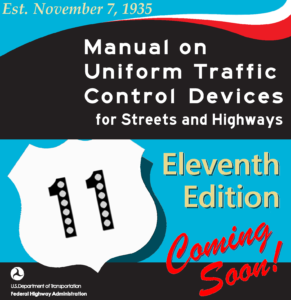
Discussion concluded with a recommendation that DOTs and other stakeholders explore the Notice of Proposed Amendments for the 11th edition of the Manual on Uniform Traffic Control Devices (MUTCD), which is available for public comment in the Federal Register. As the national standard on traffic control devices, the MUTCD plays a vital role in fostering interstate infrastructure uniformity. The recently released FHWA-proposed MUTCD updates include a Part 5 section on automated vehicles, which offers an excellent opportunity for DOTs and other interested parties to share comments and feedback on the topic of AV and infrastructure priorities and needs.


Resources

To view the 30-minute PAVE webinar, click here

To view other PAVE webinars on topics related to Autonomous Vehicle safety, technology, and accessibility, click here

To view presentations and discussion from the U.S. Access Board’s forum series on inclusive design of autonomous vehicles, click here

For more information on the Notice of Proposed Amendments for the 11th edition of the MUTCD available for public comment, click here

Innovation Spotlight: NJDOT UAS Program

The Federal Highway Administration has encouraged State Departments of Transportation to utilize Unmanned Aerial Systems (UAS), sometimes known as “drones”, to improve operations, construction, inspection, and safety by collecting data needed to design, build, and operate the highway system.

The NJDOT UAS Program has been a leader among state DOT UAS programs.  Several articles and a video have already featured the program origins, equipment and training needed to build capacity, and establish “use cases” for the integration of UAS technology within various NJDOT operations.  Glenn Stott, Program Manager, NJDOT Aeronautics & UAS, has been instrumental in standing up the UAS Program.  In this interview, we asked Glenn to provide an update on how the UAS Program has been deployed on recent projects.  Below is an edited summary of our interview and follow-up discussion.

How has the UAS Program been using its recent STIC incentive funding?

The UAS program really benefited from STIC funding at its start. The funding paid for the equipment to fly the missions and deliver regulation and procedures training to staff.  Two phases of training were devoted to legal and regulatory issues, and hands-on training, common to all state agencies. The third phase was mission-specific, exploring how drones could be used for infrastructure inspections and mapping projects. The training helped us build our agency’s capacity to work with UAS, strengthen our working relationships with other state agencies, and raise our awareness of regulatory compliance issues.

We received a second round of STIC funding to pay for equipment, but the Buy America program requirements have been a challenge to procuring equipment.  When we were defining our specifications for the new equipment, we were looking at technical capabilities, not national origin. We have also tried to stay with software similar to what we already have used for training and standardization purposes.

 Can you tell us how the UAS Program has functioned on NJDOT projects?

At NJDOT, our divisions are new to UAS and have their own methodologies that have been successful for decades. We have to find ways to merge our methodologies with theirs and assure them of a high level of success before they will agree to employ UAS.

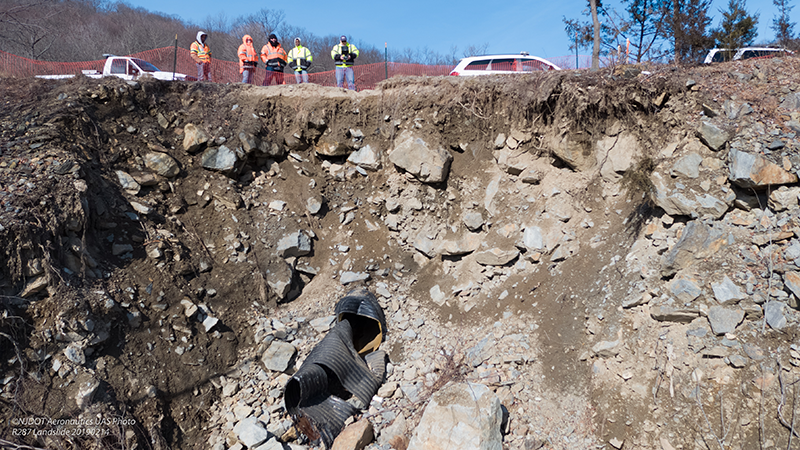
UAS Team in the field exploring the damage from rockfall along I-287

UAS Team in the field exploring the damage from rockfall along I-287

UAS has played an in-house consultant role on many projects, including several rockfall projects. There are 400 rockfall areas along NJ roadways. NJDOT’s Geology and Capital Program Management (CPM) have been working diligently to analyze the areas and come up with viable solutions and prevent incidents. We flew 49 different sites along Route 15 to gather rockfall data and supported several projects along I-80.

I think we were particularly effective on the I-80 project in the vicinity of the Delaware Water Gap, a national park.  Outside consultants were unfamiliar with federal regulations, and the National Park Service (NPS) representatives were concerned about the use of drones on park property. We are not able to fly a drone from national park property. In this case, the drone was taking off from, and landing on, state property next to the highway. Although the NPS had no formal authority over airspace in this case, we wanted to be good neighbors and address any concerns they might have, particularly related to wildlife areas, and elicit their help in developing the mission profile. With our regulatory experience and knowledge of aviation laws, we developed a mission profile that complied with regulations and was acceptable to all parties.  A consultant flew the mission and we were onsite.

Along I-80, we had particularly challenging conditions in which to work.  In this case, the road has three lanes in each direction with a concrete median, no ditch and no right of way, and rock walls on both sides of the road. We do not fly over active roadways. We had to shut down the left lane in one direction and fly from the left lane. We knew this work had the potential to create road congestion and a distraction for drivers. We coordinated with our NJDOT Bureau of Safety to come up with a flight plan, a take-off and landing area, position of staging vehicles, and plan for support of safety vehicles. These types of projects take a lot of coordination. A consultant flew the mission but NJDOT UAS staff were on site. Although we want to be in the forefront of UAS development, we do not want to risk safety. The Department needs to be comfortable with the comprehensive process of developing the mission profile.

For NJDOT Multimodal, we have assisted with a number of rail projects funded through our rail freight assistance grants program. We fly our own UAS for project management to document existing conditions pre-construction, monitor during construction, and document post-construction to show how taxpayer money has been used. One project, about six months ago, was an NJDOT grant to work with Conrail on the Waverly Loop rail construction project. The Waverly Loop is intended to allow trains to reverse direction by following a teardrop track.

Conrail could not find a consultant to fly the project. The location is challenging as it lies across the NJ Turnpike from Newark Airport and was in the front yard of the state prison, and involves several environmental, wind, and traffic concerns.  We needed to coordinate with the FAA [Federal Aviation Administration], but we are familiar with their concerns and have operated in Newark Class B airspace many times. The agency has a Certificate of Authorization (COA) with all controlled airports in the state as well as with the Philadelphia International Airport.  In this case, we also needed to coordinate with the NJ Department of Corrections. We need to know the players and the regulations. On this project, NJDOT was the consultant and our UAS staff flew the project. We had to ensure that the mission profile and plan met regulatory requirements, the restrictions of the COA, Conrail and Multimodal objectives, and kept all the parties satisfied and informed. We are just one piece of making the project come together.

We have done a lot of work with the NJDOT Office of Maritime Resources, for pre-, during, and post-construction on dredging and other projects. Recently, we flew drones to make sure pipelines were not disturbed during construction in the marshlands near Atlantic City. We also had to prove compliance with NJDEP wetland restrictions when electrical poles were placed by helicopter in this area because dozers and heavy equipment cannot be used.

How has UAS been used for transportation planning and environmental projects?

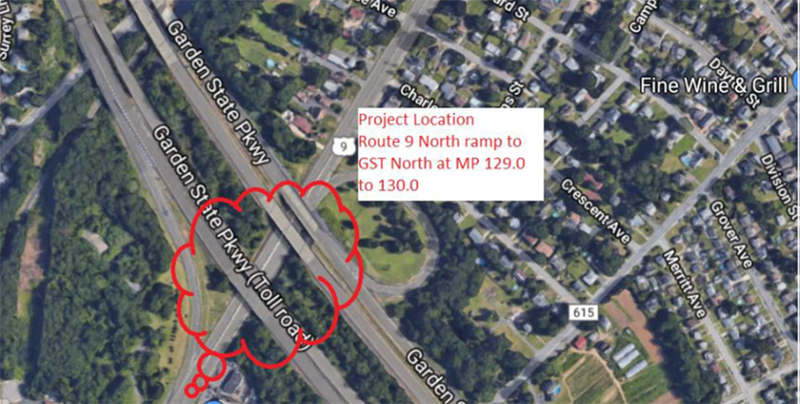
Drones were used to inform a Concept Development Study of traffic congestion on Route 9 Northbound at the ramp to the Garden State Parkway.

Drones were used to inform a Concept Development Study of traffic congestion on Route 9 Northbound at the ramp to the Garden State Parkway

Two years ago, we worked with construction project management to help them address congestion along Route 9 at the entrance to the Garden State Parkway North to address commuter complaints. Usually, a crew would go out to the site to monitor traffic flow over a period of time. We scouted locations for take-off and landing and suitable vantage points to capture images of the entire road segment. We sent two drones up to take video footage. Reviewing the video, the project management team could quickly determine the source of the congestion. The project manager appreciated that the “eye in the sky” saved a lot of time in determining the problem, and the video helped to explain the issue to contractors and NJDOT supervisors.

We still need the right equipment to demonstrate how drones can support bat counts under bridges. There are nine species of bats in the state that are either federally-protected or state-protected. DEP regulations state that we cannot interfere with them during certain life stages such as migration and hibernation. Coordination with US Department of Fish and Wildlife and NJ Division of Environmental Protection was needed to address concerns about the potential negative effect of drones on the bats. We had to take a course with NJDEP and US Fish and Wildlife before participating in this use case. Bats wedge themselves deep within the cracks under the bridge. Our current drones could not get close due to proximity sensors, and illumination was insufficient. Cameras need to get relatively close to the bats and have good illumination to get quality photography. We have held two field trips to determine if the noise of the drone rotors would bother the bats and see what kind of photos we could get.  We discovered that the rotor noise was nothing compared to traffic noise. With the second STIC grant we hope to purchase equipment to improve illumination and image resolution, and allow us to get closer to the bats.

How many NJDOT staff from other divisions have been trained?

Ten staff members have been trained, and one of those has left. Only UAS program staff actively fly the missions, but trained staff members from other units have flown missions with UAS staff.  Although they do not fly frequently enough to be current and proficient, their knowledge of the UAS program helps their divisions with use case development – for example, in Traffic Management, CPM, and Multimodal. The intent of the STIC-funded training was to leverage our knowledge into the divisions. For example, when we confront a traffic issue for a project, I draw on the trained personnel in the traffic division to bring their colleagues into the conversation. They are our champions for the integration of UAS technology.

With our COAs, we are required to have night training.  With the regulations and procedures grant, we developed a NJDOT night-training video. We developed a PowerPoint training presentation with audio presented in a video format to be delivered to NJDOT UAS pilots. Not only initial training, but recurrent training is needed to renew certification and keep current. We have no active night missions with NJDOT at the moment but would like to do training missions in order to be prepared for an emergency response.

In our trainings and interactions with the divisions, we stress the importance of pre-flight preparation and coordination. A violation of regulations or inadequate coordination could set the program back years and other state DOT programs as well.

Have there been challenges to aspects of the program due to COVID-19?

Aeronautics is  currently understaffed with one of three inspector positions filled. I am the Program Manager for both Aeronautics and the UAS program so I am busy. The pandemic has affected our operations. In particular, coordination is more difficult without face to face meetings.

To what do you ascribe the success of the program?

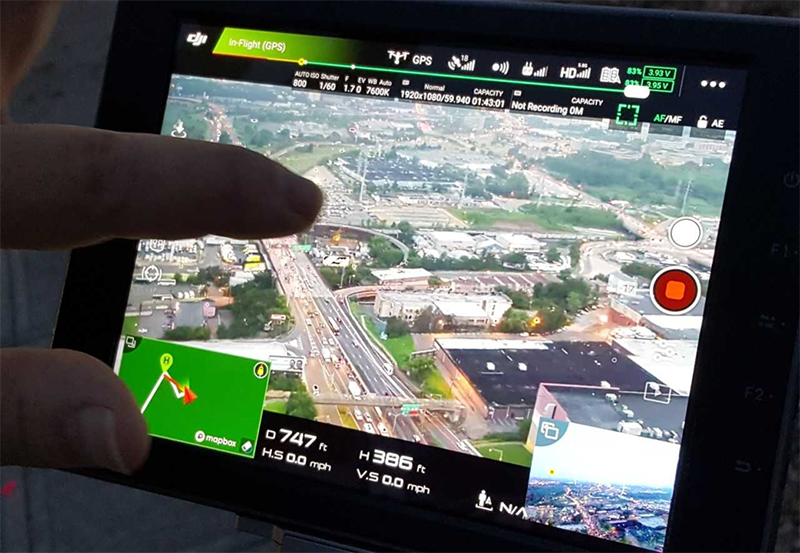
For the I-495 project, live stream videos from drones were shared with traffic operations and command posts to assess traffic congestion during construction.

For the I-495 project, live stream videos from drones were shared with traffic operations and command posts to assess traffic congestion during construction

Lots of other state DOTs have UAS programs with more funding, resources, and staff but NJDOT’s program has been more successful because of our drive, determination, our champions, and relationships. The champions in NJDOT divisions have worked hard to successfully integrate UAS into their programs.

We have the confidence and experience to collaborate with federal agencies and other state agencies including FAA, airports, Secret Service, Homeland Security, NJ Department of Corrections, and state parks. During the Route 495 project, we had to deal with presidential temporary flight restrictions in Class B airspace. We had the confidence and the relationships with agencies, including Secret Service, to get through roadblocks. Homeland Security loaned us a staff person and a vehicle for several weeks to help support the Route 495 project. It is a collaborative effort; they bounce ideas off of us and we off of them.

Other state UAS programs have not pursued the relationships with these agencies or with divisions within their agencies.  We coordinate with NJDEP, for instance, for filming the NJDOT Winter Road-E-O which is held in a state park. We cannot take off and land in state parks but we can work with the state park to align our objectives with their requirements and regulations. Maritime missions in state parks are difficult to coordinate. However, with our contacts and our awareness of their concerns, we can streamline some of the approvals and fly the missions within the timelines we are given. The relationships are intangibles but a big part of the success of the NJDOT UAS program.


Resources

Drone Technology at NJDOT (Video resource)

Drone Program Takes Off in Bureau of Aeronautics 

Drone Program Reaches New Heights, Seeks to Go Higher

EDC-5 Initiative: Unmanned Aerial Systems

NJ STIC Mobility & Operations: Unmanned Aerial Systems (UAS) Fact Sheet

FHWA EDC-5 Innovative Initiative: Unmanned Aerial Systems (UAS)

Unmanned Aerial Vehicle (UAV) Peer Exchange at NJDOT

Spotlight on Innovation: Unmanned Aerial Systems (UAS) High Mast Light Pole Inspections Comparative Analysis (Infographic)

Center for Local Aid Support (CLAS) On-Line Trainings

The FHWA’s Center for Local Aid Support has developed a series of self-paced online training courses for local agencies and tribal communities. The addition of these courses demonstrates the agency’s commitment to empowering transportation professionals with the skills necessary to deploy new innovation that keeps transportation moving into the future.

The courses are conducted 100% online and are on-demand, allowing users to learn at their own pace and on their own time.

The training courses focus on Every Day Counts initiatives such as:

  • Safe Transportation for Every Pedestrian (STEP)
  • Geosynthetic Reinforced Soil – Integrated Bridge System (GRS-IBS)
  • Gravel Roads Construction and Maintenance
  • Construction Inspection of Rockeries
  • Project Bundling: (1) Fundamentals Event, (2) Staging the Bundle Event, and (3) Creating and Contracting the Bundle Event

CLAS will continue to develop training that will keep transportation moving into the future. These courses can be accessed on the CLAS website. Additionally, access to previous and upcoming webinars by CLAS can be found here.

Bike-Friendly Resurfacing in the DVRPC Region

The Delaware Valley Regional Planning Commission (DVRPC) is advancing the development of bike-friendly infrastructure in coordination with road resurfacing projects in the Pennsylvania portion of the agency’s region. DVRPC is a metropolitan planning organization that includes nine counties in two states: Bucks, Chester, Delaware, Montgomery, and Philadelphia in Pennsylvania; and Burlington, Camden, Gloucester, and Mercer in New Jersey. Sarah Moran, Manager, DVRPC Mobility Analysis and Design, and Jesse Buerk, Manager, DVRPC Capital Project Development discussed the Bike-Friendly Resurfacing program in four Pennsylvania counties.

What is the program?

The DVRPC Bike-Friendly Resurfacing Program identifies roads for potential investment in bike-friendly improvements as part of regularly scheduled Pennsylvania DOT (PennDOT) resurfacing projects. DVRPC, PennDOT, the four suburban counties, and the Bicycle Coalition of Greater Philadelphia are working together to provide resources to local municipalities to improve the biking environment. PennDOT began the PennDOT Connects program to involve municipalities early in the planning process for state-sponsored transportation projects. The Bicycle Coalition of Greater Philadelphia is an advocacy group that works on the local level to inform municipalities about the program and connect residents with the counties and DVRPC. The Coalition also contributes information on local bicycling routes and route conditions.

PennDOT’s five-year resurfacing program for four suburban counties (Montgomery, Delaware, Chester, and Bucks) establishes the planned repaving schedule for state-owned roads. The Bicycle Coalition of Greater Philadelphia created an interactive Google map of the paving projects for each year in the 5-Year Resurfacing Plan Map organized by county.

How does the program work?

To encourage more municipal interest in bicycle facilities, PennDOT District 6 worked with DVRPC, planners from the four southeastern Philadelphia suburban counties, and the Bicycle Coalition of Greater Philadelphia to get regional support. PennDOT, DVRPC, the counties, and the Bicycle Coalition evaluate which segments on the resurfacing schedule are good candidates for bike-friendly improvements. DVRPC then reaches out to the municipalities to tell them about the opportunities and see if they are interested. Although PennDOT pays for the design and installation of the improvements, the municipalities need to comply with the bike improvement maintenance requirements set by PennDOT. The Bicycle Coalition of Greater Philadelphia helps make the case for new bike facilities to municipal decision makers on an as-needed basis.

How are road segments prioritized?

DVRPC developed an online interactive Bicycle LTS and Connectivity Analysis map. It measures both levels of traffic stress (LTS) and connectivity of road segments. LTS is a bicycle comfort index for streets and paths that was initially developed by Peter Furth at Northeastern University expressed in the Mineta Institute publication, Low-Stress Bicycling and Network Connectivity. LTS as a classification scheme ranges from 1-4. LTS 1 identifies roads that are relaxing and suitable for most riders; LTS 2 roads are comfortable for most adults; LTS 3 roads are comfortable for confident bicyclists; and LTS 4 roads are not suitable for bicycle riding. (see Figure 1) The Bike-Friendly Resurfacing Program  prioritizes LTS 3 roads for improvement because they present the greatest opportunity to make them comfortable for more riders. (Figure 2 shows the web map made by DVRPC for multi-layer analysis.) The existing LTS layer classifies the road condition for the Delaware Valley Region, including the Greater Philadelphia area and four counties in New Jersey.

The connectivity analysis looked for the shortest path between any two census blocks within five miles. Improvements along the roads identified as priorities within this area would be most beneficial to build out a bicycle network by enabling the most low-stress bicycle connections(Figure 3). The bigger the role a road plays in connecting to multiple census tracts, the greater the chance it will be selected for bicycle improvements.

DVRPC is working to improve the Bicycle LTS and Connectivity Analysis by adding an equity analysis component.  DVRPC considers which communities the route passes through and who lives there, based on analysis of nine indicators of potential disadvantage, such as minority populations, low-income populations, and persons with disability. Every geography is given an overall score. Areas with an above average score have a higher proportion of these traditionally disadvantaged populations and this value is assigned to routes.

DVRPC is working to build this information into the connectivity analysis in order to prioritize places with more need.  DVRPC updates the Bicycle LTS and Connectivity Analysis map on a regular basis to address errors in the network, new trails, and changes in the equity analysis. Another pending improvement is consideration of slope.

The county transportation planners review every segment scheduled to be repaved in a given year for potential connections. Every segment that is identified as a priority by any of the partners goes to the next step for more analysis related to characteristics such as road width, speed, traffic volumes. Every county has a sense of priorities, including knowledge of county and municipal plans, so this process is not limited to just a technical analysis.

Figure 1. Levels of Traffic Stress, a bicycle rider comfort index, rates roads and paths from 1 to 4
Figure 2. DVRPC map shows existing conditions map for Levels of Traffic Stress
Figure 3. Regional map showing concentrations of connectivity between census blocks

When were the first projects implemented?

The first municipal projects were implemented in 2018 after an initial trial run of this program. In 2019, DVRPC started looking at all projects in relation to the five-year resurfacing plan. Currently, the process includes working one year ahead to build up a pipeline of projects for each coming year. There are many variables that affect how many projects can be completed, such as budget, weather, and shifting priorities. Municipal engagement takes time to establish and depends on local resources.

How is the program funded?

Congestion Mitigation and Air Quality (CMAQ) funds identified in the regional Transportation Improvement Plan (TIP) cover the design costs for these bicycle improvements on state highways scheduled for resurfacing. All the counties had to agree to this, even though the county of Philadelphia is not using these funds. The City of Philadelphia has a parallel program, as the City has the ability to design its own striping plans. PennDOT pays for the actual implementation of the improvements, and municipalities are responsible for the cost of maintenance.

The exact number of projects that are able to be implemented varies from year to year. DVRPC generally aims to complete two to three projects per county per year. It can be difficult to complete projects in rural areas, due to the program’s restrictions, such as being limited to the existing cartway width. However, DVRPC tries to look ahead for opportunities to even out the distribution of funding between the counties. As of now, six bike resurfacing projects have been completed and nine projects are in the pipeline.

What challenges has the program faced?

There are some challenges in getting municipalities to make the formal request to PennDOT. They have varying resources, and procedures for approval tend to be different for each community. In some cases, success comes down to finding the right contact to promote the project benefits to the community. Municipalities may lack equipment for stenciling and painting the road between resurfacings, and ongoing maintenance can be a challenge for them to take on.

All projects are limited to what can be implemented with paint. There are road segments that are too narrow to add bike facilities but at this time, it is not possible to widen or re-crown roads through this program. DVRPC keeps a list of projects that would require larger capital investments. The hope is to find ways to address these more complicated projects with other funding sources.

Why does the program work and will it work elsewhere?

Coordination and communication are key to the success of the program. Other regions could follow the process with or without the LTS analysis. Even without the technical analysis, it would be possible to establish a simple database for tracking.  DVRPC developed FAQs and other communications for municipalities, which also have general applicability. The connectivity analysis guides decision-making, but innovative technical tools only go so far. Relationship building and cooperation are needed to identify good projects and to see them through to implementation.

[1] https://www.dvrpc.org/Newsletters/DVRPCNews/2020/November/


Resources

DVRPC. (2020). “APA-PA Awards DVRPC for its PennDOT Connects Bike-Friendly Resurfacing Project.”  Newsletter. Retrieved at: https://www.dvrpc.org/Newsletters/DVRPCNews/2020/November/

DVRPC. (u.d.). Bike Friendly Resurfacing Program. Website. Retrieved at:  https://www.dvrpc.org/Transportation/Bicycle/BikeFriendlyResurfacing/

DVRPC. (u.d.) DVRPC Bicycle LTS and Connectivity Analysis. Map. Retrieved at: https://www.dvrpc.org/webmaps/BikeStress/

Mekuria, M., Furth, P., and Nixon, H. (2012). Low-Stress Bicycling and Network Connectivity. Report. CA-MTI-12-1005. Retrieved at: https://transweb.sjsu.edu/sites/default/files/1005-low-stress-bicycling-network-connectivity.pdf