NJ STIC 2025 1st Triannual Meeting

The NJ State Transportation Innovation Council (NJ STIC) convened virtually for its first Triannual Meeting of 2025 on April 30. The meeting provided an opportunity for attendees to learn from the Core Innovation Area (CIA) Teams about their progress on the Every Day Counts Round 7 (EDC-7) initiatives and to view a featured presentation on High Performance Internally Cured Concrete (HPIC) from NJDOT’s Samer Rabie and Jess Mendenhall.

Welcome Remarks

Eric Powers, Assistant Commissioner of NJDOT Statewide Planning, Safety, and Capital Investment, welcomed attendees. Mr. Powers offered his gratitude to the NJ STIC community, emphasizing that the strength of STIC lies in the creativity and impact of its members. He concluded his remarks by stressing the meaningful contributions that CIA teams make in New Jersey, and officially opened the session.

FHWA Updates

Christopher Paige, Innovation Coordinator and Community Planner at the FHWA NJ Division Office, shared several key updates. He reminded attendees that final EDC-7 progress reports and STIC Incentive project reports should be directly submitted to him by May 9, 2025. Mr. Paige also announced that he will temporarily serve as the FHWA Co-Lead for the Infrastructure Preservation CIA team in collaboration with Shivani Patel, as well as on the Planning & Environment team with Simon Nwachukwu. Looking ahead, he stated that the FY25 STIC Incentive Funding Request applications are due by July 1, 2025, but encouraged early submissions. Applicants should include a project summary, schedule, and budget, and submit the application to Christopher Paige and NJDOT Innovation Officer Giri Venkiteela. Those interested in learning more about the application process for STIC funding should visit the STIC Incentive Funding Grant page on the NJDOT Tech Transfer website.

Mentimeter Engagement Activity

After the FHWA Updates, Giri Venkiteela, Innovation Officer at the NJDOT Bureau of Research, Innovation, and Information Transfer (BRIIT), hosted a Mentimeter Engagement Activity to learn the makeup of attendees, gauge their involvement with advancing innovation, and gather feedback on their current EDC initiatives. Questions included:

  • Which agency type do you represent?
  • What comes to mind when you think of innovation?
  • Is your organization or unit implementing or planning to implement any of the EDC-7 innovations?
  • What challenges are you facing in implementing innovations?

At the end of the survey, Mr. Venkiteela encouraged attendees to contact BRIIT staff if they had an innovation or research idea that they would like to propose to NJDOT.

Core Innovation Areas (CIA) Updates

The Core Innovation Area (CIA) Team leaders shared updates on progress toward achieving deployment goals for their respective innovation initiatives. CIA Team leaders from the NJDOT and FHWA discussed EDC-7 initiatives under the five CIA Teams: Safety, Planning and Environment, Infrastructure Preservation, Mobility and Operations, and Organizational Support and Improvement. Each team presented detailed reviews of their ongoing projects and outlined implementation activities, accomplishments, and challenges experienced in meeting the innovation’s deployment goals. A brief overview of team updates is included below:

Safety

Backplate with retroreflective tape on traffic signal indications

Pedestrian Scale Lighting Research and Resource. Researchers at the Alan M. Voorhees Transportation Center at Rutgers University and Rowan University continue to finalize a resource on best practices for pedestrian scale lighting. The Safety Team stated that the guide, designed for county and local governments, still needs additional edits and review from NJDOT SMEs before it can be released as a final deliverable. Additionally, in January, FHWA delivered an in-depth, two-day lighting workshop in Bordentown to an audience of NJDOT, MPO, and municipality staff. Workshop topics included visibility, human factors, safety, cost-benefit analysis,

Nighttime Visibility for Safety. The Safety Team reported progress on developing traffic signal pole and mast arm details for signalized intersection installations based on 2015 AASHTO LRFD requirements. The Division of Traffic Engineering continues to install backplates with retroreflective tape on existing signal indications where feasible, and the design consultant for the initiative is coordinating with fabricators on manufacturing options.

Planning and Environment

Congestion Mitigation and Air Quality Improvement Program (CMAQ). NJDOT is actively approving new projects based on their alignment with CMAQ goals and federal air quality targets; the process includes a cost-effectiveness analysis, where projects must demonstrate potential to reduce congestion, mitigate environmental impacts, and advance the adoption of low emission technologies. Project types include: public transit expansion, intersection modernization, intelligent transportation systems, and low-emission vehicle incentives.

Carbon Reduction Program (CRP). The Planning and Environment Team also announced that the CRP has transitioned from the planning stage to full-scale implementation. Key strategic advancements made by NJDOT include the deployment of battery-electric buses, the development of Complete Streets initiatives, and partnerships with municipalities for the transition to green fleets. NJDOT evaluates the effectiveness of CRP projects using performance indicators like reductions in CO2, increased transit ridership, and improved air quality. The next steps for NJDOT are to accelerate CRP-backed projects, integrate AI-based traffic management systems to optimize traffic flow, and continue collaboration with MPOs, industry leaders, and research institutions.

Infrastructure Preservation

The twin bridges that will be studied to compare performance between HPC and HPIC

Enhancing Performance with Internally Cured Concrete (EPIC2). The Infrastructure Preservation Team has made progress on several initiatives to advance the EPIC2 program since the last STIC meeting. NJDOT’s Division of Procurement has posted the Request for Proposal (RFP) for a centrifuge apparatus and is currently awaiting bids. Verification testing for the High-Performance Internally Cured Concrete (HPIC) mix is underway on the program’s first pilot bridge in East Orange. In addition, six more pilot projects are in the final design stage, including a twin bridge pilot where one structure will use a traditional concrete mix as a control, while the other will incorporate the HPIC mix. Looking ahead, the team plans to complete a Final Design Submission for candidate bridges, begin scoping additional projects, and purchase the centrifuge apparatuses. Plans are also underway to host an EPIC2 workshop and a webinar, with dates to be determined.

Mobility and Operations

Weather Savvy. The Weather Savvy pilot has expanded from 24 to 45 vehicles since December 2023, with 44 currently active. The team has prioritized installations in plow trucks to allow for data collection during winter weather events. Hardware is now housed in a sealed junction box with a Plexiglas lid to prevent tampering and environmental damage. The team is also testing a new configuration that would enable data to stream directly from sensors to servers, improving the system’s efficiency.

An example of a Portable DMS, which will be installed near the Harding rest area.

Truck Parking Pilot. The Harding and Kearny Point locations continue to collect real-time truck parking data using cameras, remote traffic microwave sensors, and in-pavement micro radar sensors. The Mobility and Operations Team will soon install a portable dynamic message sign (DMS) five miles from the Harding rest area to inform drivers of available spaces. Additionally, NJDOT plans a third truck parking pilot site in Knowlton; the Mobility and Operations Team visited the Knowlton site on May 1.

Drivewyze Alerts. The Mobility and Operations Team also provided an update on the Drivewyze alert pilot. During the first round of testing in 2024, NJIT researchers received accurate static alerts, but no congestion alerts, prompting NJDOT and NJIT to conduct a second round of testing in April to verify the accuracy of the real-time congestion and slowdown alerts provided to drivers. The team awaits results for this phase of testing.

Vaisila GroundCast. NJDOT has installed Vaisala GroundCast, a wireless in-ground sensor system that provides long-term environmental data, at three locations (on NJ-29 and NJ-12) to measure road temperature and the amount of residual treatment material. The team is in the process of finalizing an additional location for installation.

Organizational Support and Improvement

Contractor Compliance Unit Collaboration. NJDOT continues to explore internal and external funding opportunities, including potential partnerships with the New Jersey Department of Labor and Workforce Development (NJDOL). NJDOL programs offer customizable transportation-related training and counseling services that could support NJDOT workforce needs. In March 2025, NJDOT met with the Contractor Compliance Unit to discuss union engagement, apprenticeship programs, strategies to address the aging workforce, and methods to increase membership. Upcoming outreach activities include an open house for individuals interested in working with NJDOT, and a contractor industry meeting scheduled for May 9.

Feature Presentation: High Performance Internally Cured Concrete (HPIC)

Samer Rabie and Jess Mendenhall, co-leads of the SME teams for both the EPIC2 EDC-7 initiative and the UHPC for Bridge Preservation and Repair EDC-6 initiative, delivered a comprehensive feature presentation explaining the principles of HPIC, demonstrating its significance for New Jersey, and highlighting NJDOT’s ongoing efforts to implement the use of this material.

Example of cracking on an HPC bridge deck

Under current specifications, NJDOT utilizes high performance concrete (HPC) and ultra-high performance concrete (UHPC) for bridge decks. Both HPC and UHPC contain a low water-cement ratio and large amounts of supplementary cementitious materials (SCMs), which enhances durability but also increases the risk of shrinkage cracking. This early-age cracking undermines the improved durability and requires frequent and costly sealing.

FHWA launched the EPIC2 EDC-7 initiative in response to decades of research showing that HPIC effectively targets and mitigates shrinkage cracking in HPC and UHPC, resulting in low-permeability concrete with enhanced durability. HPIC employs internal curing, in which water is supplied from within the concrete using pre-wetted lightweight fine aggregate (LWFA). The absorbed water remains in the LWFA during mixing and until the concrete sets, leading to improved water distribution throughout the concrete and reducing the risk of cracking.

To date, internal curing has been implemented and institutionalized by more than 15 states and transportation agencies, and used in over 150 bridge decks. New York Department of Transportation (NYSDOT), an early adopter of HPIC, has mandated internal curing for all continuous bridges and bridges in New York City, reporting no additional cost compared to using conventional HPC or UHPC alone. In May 2024, Samer Rabie and Jess Mendenhall attended a New York State Peer Exchange for the EPIC2 initiative held in Albany, NY.

States that have deployed and implemented HPIC

NJDOT’s implementation plan for HPIC has involved a long process of researching, drafting specifications, evaluating risk, coordinating internally, obtaining buy-In from manufacturers, launching pilots, and training staff. As part of this effort, NJDOT secured a $125,000 STIC Incentive Grant to support HPIC implementation. The funding will fund the purchase of testing equipment, staff training on the new equipment, and third-party lab assistance for concrete sampling and testing during construction. Additionally, the NJDOT BRIIT awarded Rutgers RIME a project focused on internal curing. Mr. Rabie stated the Infrastructure Preservation team plans to foster close collaboration with the Rutgers researchers going forward.

NJDOT will source LWFA from suppliers located in North Carolina and New York, with the material pre-soaked at the concrete facilities using sprinklers, then allowed to drain to achieve uniform moisture content. LWFA moisture testing is currently performed using the paper towel method, an accessible but less precise technique. A more accurate alternative, the centrifuge method, requires specialized equipment. To enhance testing reliability, NJDOT will use STIC Incentive Grant funding to procure centrifuge equipment. Once implemented, the centrifuge method is expected to supplement the paper towel test in future guide specifications.

Implementing HPIC will follow similar procedures as HPC and UHPC, including consistent placement, finishing methods, and external curing durations. However, the pilot projects for HPIC will initially require additional expenses to verify new mix designs and conduct trial batches and test slabs, and thus may face higher unit prices for concrete production. NJDOT expects these raised unit costs to decline once HPIC becomes standardized, as seen in New York following NYSDOT’s standardization.

The first pilot project – North Munn Avenue over I-280 in East Orange – has completed the mix design, verification batching, and most verification testing. The next milestone is the trial batch and test slab, which must be completed before bridge deck construction begins. Early challenges for implementation include high upfront costs, limited supplier buy-in due to restrictive specifications, scale-related inefficiencies, and a general lack of awareness among industry stakeholders.

To address these challenges and support broader implementation, NJDOT plans to conduct concrete supplier outreach and HPIC workshops in summer 2025, followed by centrifuge training in the fall. The Department will also evaluate pilot project performance, identify lessons learned, and refine specifications for future projects.

If you are interested in learning more about HPIC and EPIC2, read the NJDOT Tech Transfer Q&A article with Samer Rabie and Jess Mendenhall.

Announcements and Reminders

EDC Progress Reports. Dr. Venkiteela reminded CIA teams to submit their final EDC progress reports to Christopher Paige by May 9.

Research or Innovative Ideas. Dr. Venkiteela encouraged attendees to submit innovative or research ideas to BRIIT’s Manager Pragna Shah at pragna.shah@dot.nj.gov

Next Meeting. The NJ STIC 2025 2nd Triannual Meeting is scheduled for Wednesday, August 6 from 10:00 AM to 12:00 PM. The Organizational Support and Improvement CIA Team will deliver the feature presentation.

A recording of the NJ STIC 2025 1st Triannual Meeting meeting is available here. The day’s presentations can be found here, as well as, in the sections, below.

Welcome Remarks & FHWA Updates
CIA Team Update: Safety
CIA Team Update: Infrastructure Preservation
CIA Team Update: Organizational Support & Improvement
CIA Team Update: Planning & Environment
CIA Team Update: Mobility & Operations
Featured Presentation
Reminders and Announcements

Q&A: Update on EPIC2 in New Jersey

In early 2024, we spoke with Jess Mendenhall and Samer Rabie from the New Jersey Department of Transportation (NJDOT) about the Enhancing Performance with Internally Cured Concrete (EPIC2) initiative, part of the Every Day Counts (EDC-7) program. They explained the benefits of internal curing, its methods, and its potential for New Jersey. At that time, NJDOT had identified eight bridges as candidates for a pilot project using internally cured High Performance Concrete (HPC) bridge decks, but had not yet secured approval or funding.

That changed in October 2024 when NJDOT initiated its first pilot project—an internally cured HPC bridge deck on the North Munn Avenue bridge over Route 280 in East Orange. This milestone marks a significant step in advancing the department’s efforts.

Additionally, NJDOT secured a $125,000 STIC Incentive Program grant to support further implementation. The funding will cover the purchase of testing equipment and construction materials, staff training on the new equipment, and third-party lab assistance for concrete sampling and testing during construction. To build on this momentum, NJDOT plans to continue collaborating with concrete suppliers, acquire additional testing equipment, and update High-Performance Internal Curing (HPIC) specifications.

With these developments underway, we’re reconnecting with NJDOT for an update on the department’s ongoing EPIC2 projects and its future plans.


Q. Can you provide a brief description of the EPIC2 Initiative, and how internally curing concrete can benefit construction projects?

The difference between conventional and internal curing

A. The EPIC2 initiative, part of the Federal Highway Administration’s (FHWA) EDC-7 innovations, focuses on Internally Cured Concrete (ICC), a proven yet underutilized technique that significantly enhances concrete durability by addressing shrinkage cracking, especially in mixes with a low water-to-cement ratio. Internal curing involves providing water from within the concrete itself, utilizing pre-wetted lightweight fine aggregates (LWFA) to supply moisture during the curing process. This approach is particularly beneficial for low permeability concrete mixes, where traditional external curing methods are less effective.

ICC offers numerous advantages for construction projects. It reduces the likelihood of shrinkage cracking, both autogenous and plastic, thereby decreasing the need for rehabilitation. Furthermore, it enhances the hydration of cement and the reaction of supplementary cementitious materials (SCMs), resulting in reduced porosity and improved durability. This method also allows for the incorporation of natural and recycled SCMs without compromising performance.

Our Bureau of Research, Innovation, and Information Transfer (BRIIT) is actively investigating internal curing in collaboration with Rutgers University, ensuring that we remain at the forefront of this innovation.

Q. At the December 2024 NJ STIC meeting, the Infrastructure Preservation CIA team mentioned that NJDOT has secured a $125,000 STIC Incentive Program grant for the EPIC2 initiative. How will the grant help NJDOT advance its goals for internally cured concrete?

A. The grant will enable the acquisition of centrifuge apparatuses and auxiliary equipment for the Bureau of Materials and the three construction regions. This equipment will allow NJDOT inspectors to conduct more accurate tests for determining moisture content in pre-wetted lightweight aggregations than our currently used paper towel method, which is crucial for producing high-quality ICC. The grant will also facilitate the training of NJDOT personnel to effectively use the centrifuge apparatus. During the transition period, NJDOT will conduct testing using both the centrifuge and paper towel method, ensuring a smooth adoption as inspectors become proficient with the new equipment.

Additionally, the grant will support the development of specifications, create training opportunities, and enable the preparation of lessons-learned reports during the assessment phase. These efforts will contribute to refining our processes and enhancing the overall quality of our specifications and implementation plan.

Q. Can you go into more detail describing the centrifuge apparatus and how it will provide more accurate measures for determining moisture content?

Centrifuge Apparatus

A. The current test we use, implemented and standardized by the New York State Department of Transportation (NYSDOT), is called the paper towel method ASTM C1761. In this method we take a representative sample of the pre-wetted aggregate, take the initial weight, and lay it out in a pan to extract the surface moisture using industrial-grade paper towels until the paper towels come out dry. Then we take the weight again to determine the surface moisture. Lastly, we oven dry the sample and weigh it again to find the absorbed moisture.

The centrifuge can determine the moisture of an aggregate in a single device by spinning the sample until all the moisture is extracted. Research studies comparing the paper towel method and the centrifuge have found that the centrifuge produces more accurate results with a lower margin of error at a significantly faster rate.

Q. Can you describe the pilot project for an internally cured High Performance Concrete (HPC) bridge deck at North Munn Avenue over Route 280 in East Orange? What steps will be involved in completing the project?

A. Our first pilot project, the superstructure replacement in East Orange, is underway with construction starting in March 2025 and we have several more projects in the pipeline. To ensure a cohesive approach, we started the pilot by organizing a coordination meeting involving the Bridge, Construction, Materials, and Project Management divisions. This meeting served to introduce the concept of internal curing and outline our implementation strategy. Concurrently, we engaged with concrete plants near the project sites and LWFA material suppliers to ensure their readiness. We then circulated draft specifications for internal review, and obtained feedback from NYSDOT, the individual project designers, and the FHWA Resource Center’s EPIC2 team.

A key component of introducing ICC into a pilot project involves incorporating project-specific special provisions. Our pilots use a performance specification similar to our current HPC specification, where the contractor submits a mix design and performs the necessary off-site laboratory testing, such as for compressive strength and durability properties. The contractor is permitted to develop a new ICC mix or convert an existing mix using ASTM C1761 procedures. If the mix meets the specification limitations and verification testing requirements, it will be accepted by NJDOT. The verification and acceptance testing align closely with current HPC specifications, with some exceptions to accommodate the unique aspects of internal curing.

Q. Will the pilot project require specialized training for NJDOT staff or contractors?

A. The production process for High Performance Internally Cured Concrete (HPIC) closely resembles that of conventional High Performance Concrete (HPC), with the key difference being the inclusion of LWFA. This aggregate requires pre-soaking and precise moisture adjustments to achieve optimal performance. Despite these modifications, HPIC mixtures maintain similar concrete properties and offer constructability comparable to HPC.

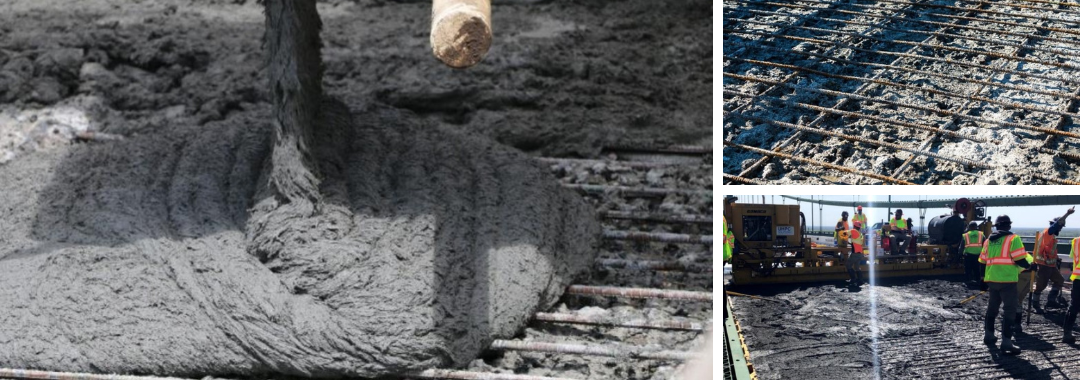
Workers installing an HPIC overlay

For our pilot projects, conducting a trial batch and test slab is crucial. This phase allows the concrete supplier and contractor to become familiar with the handling of LWFA, as well as the batching and placement of the HPIC mix. The trial batch and test slab are meticulously designed to replicate the conditions and processes of actual slab production.

Most of the work involved in producing HPIC happens at the batch plant, where the adjustments for LWFA take place. As a result, contractors and inspectors casting the deck are unlikely to notice substantial differences from standard HPC procedures.

Q. What key factors are considered when identifying candidate bridges for future projects?

A. We carefully evaluate active Capital Program Management projects to identify suitable candidates. Our selection criteria focus on projects with a limited scope in the Concept Development or Final Design phase, specifically targeting deck and superstructure replacements. We prioritize projects where Final Design Submissions have not yet been prepared and where timelines allow for integrating special provisions. Projects with cast-in-place or conventional decks are considered, while pre-cast decks are excluded to reduce design and constructability risks. We aim to select non-complex or major structures, targeting the implementation of HPIC on 10–15 bridge decks before institutionalization.

Q. In what ways do you think the pilot projects and new STIC funding could affect NJDOT policy going forward?

A. Our goal is to address the cracking we routinely observe in new HPC bridge decks by refining the HPC mix design in our standard specification to include internally cured provisions. If the pilot project is successful, we will collaborate with the Bureau of Materials to determine the next steps for advancing HPIC specifications for NJDOT projects. Ultimately, we aim to enhance the durability of bridge decks and other concrete components in New Jersey by incorporating new HPIC specifications.

As of 2024, only 104 ICC bridge decks are in service in the United States

Q. What do you think are the principal barriers, if any, to the adoption of internally cured concrete on bridge projects as the new standard?

A. Lack of Awareness and Education: Many engineers and decision-makers may not fully understand the benefits and techniques of ICC. This knowledge gap, coupled with concerns about potential impacts on construction schedules and quality, can lead to hesitation in adopting new methods.

Initial Cost Concerns: While ICC can lower long-term costs by improving durability and reducing maintenance, the higher upfront expenses, such as LWFA and the need for additional storage bins at batch plants—may discourage early adoption.

Technical Challenges: Precise moisture control and mix design adjustments can be technically challenging and require specialized training, which could pose a barrier for some organizations transitioning to ICC.

Supply Chain Limitations: The availability of materials like LWFA and the need for pre-soaking facilities may be limited, especially in certain regions.

Economies of Scale and Standardization: As seen with NJDOT’s HPC implementation in the early 2000s, achieving consistent production of specialty concretes is critical for efficiency. If pilot projects succeed, NJDOT plans to standardize ICC mixes for all bridge decks, which will require larger production quantities. This increased demand could drive greater industry investment in materials and production infrastructure, further supporting widespread adoption.

Q. What are the current approaches you are using to address the lack of awareness of the benefits and techniques of ICC?

NJDOT attended a peer exchange event in Albany, NY, on the EPIC2 Initiative.

A. We have engaged in extensive internal discussions with construction material staff, project management, and decision-makers to familiarize them with ICC and FHWA recommendations. We have also coordinated with concrete suppliers through the Utility and Transportation Contactors Association to gauge project feasibility. Additionally, in collaboration with Rutgers, we distributed questionnaires to multiple concrete plants, our consultants, and designers to gather insights and address concerns. Our primary approach has been open communication with all key stakeholders to ensure a well-informed transition to ICC.

Q. What are the current economic benefits of ICC given the barriers you described previously, and how do you expect this to change in the future?

A. Currently, with data from only one project, ICC carries higher initial costs due to factors like contractor-perceived risk and limited material availability. However, we are seeing substantial fine hairline cracking in conventional HPC decks, raising concerns about long-term durability. Addressing these cracks with sealers adds significant costs, and without frequent upkeep, leads to deterioration overtime. While HPC may have lower upfront costs, ICC has the potential to last much longer and require less maintenance, ultimately reducing lifecycle expenses.

Our implementation plan includes using ICC on at least 10 to 15 bridge decks, signaling to batch plants that we are serious about ICC. Once suppliers recognize this increased demand, they can expand production, improving efficiency and cost-effectiveness. This mirrors what happened when HPC was introduced around 25 years ago—initial costs were higher, but as adoption grew, economies of scale helped bring costs down. We anticipate a similar trend with ICC as it becomes more widely implemented.

Q. Are there any other recent developments or lessons related to EPIC2 that you would like to highlight?

Twin bridges that will be studied to compare performance between HPC and HPIC

A. As we are still in the early stages of implementing the EPIC2 initiative, we eagerly anticipate the upcoming deck castings, which will undoubtedly provide valuable lessons and insights. One particularly noteworthy upcoming project involves a pair of twin bridges, where we will use traditional HPC for one bridge deck as a control and HPIC for the other. After the deck placement, both bridges will undergo thorough surveys to assess early-age shrinkage, allowing us to directly compare performance and further refine our approach.

Resources

Extend Service Life of Concrete Bridge Decks with Internal Curing. 2023. https://rip.trb.org/View/2292366

Federal Highway Administration. 2023 Internally Curing Concrete Produces EPIC2 Results. https://www.fhwa.dot.gov/innovation/innovator/issue98/page_01.html

Federal Highway Administration. 2023. Enhancing Performance with Internally Cured Concrete. https://www.fhwa.dot.gov/innovation/everydaycounts/edc_7/docs/EDC-7FactsheetEPIC2.pdf

Federal Highway Administration. (2018, June). Concrete Clips: Internal Curing. https://www.youtube.com/watch?v=b6WREFmacaM

New York State DOT Standard Specifications (2021). Standard Specifications. New York State DOT. https://www.dot.ny.gov/main/business-center/engineering/specifications/busi-e-standards-usc/usc-repository/2021_9_specs_usc_vol2.pdf

National Concrete Pavement Technology Center Internal Curing Resources. (2022). Internal Curing. Iowa State University. https://cptechcenter.org/internal-curing/

Internal Curing. (2020). Oregon State University. https://engineering.oregonstate.edu/CCE/research/asphalt-materials-performance-lab/materials-research-concrete-materials/Internal-Curing

Pacheco, Jose. (2021, October). USDOT Workshop Report, Bureau of Transportation Statistics. Wisconsin Department of Transportation. https://rosap.ntl.bts.gov/view/dot/62607

Q&A: What’s EPIC2 about Internally Cured Concrete? (2024) https://www.njdottechtransfer.net/2024/02/07/internally-cured-concrete-qa-2/

Wang, Xuhao. (2019). Extended Life Concrete Bridge Decks Utilizing Internal Curing to Reduce Cracking. Ohio Department of Transportation. https://rosap.ntl.bts.gov/view/dot/62339

Weiss, Joseph. (2015, July). Internal Curing Technical Brief. Federal Highway Administration. https://www.fhwa.dot.gov/pavement/concrete/pubs/hif16006.pdf

Did You Know? TRID Searches, Lighting, and Recent NJ Research

The NJDOT Technology Transfer Research Library offers valuable resources, including the TRID database, which helps researchers access transportation publications by topic, keyword, or geographical area. TRID can serve as a valuable tool to expand knowledge on innovations in topics such as lighting, or to learn more about local research.


The NJDOT Technology Transfer Research Library page features a “Did You Know” page that provides key information about the library, transportation research resources, as well as newly released publications available through AASHTO and the ASTM COMPASS Portal. Additionally, the site hosts a TRID Searches page, offering a list of recent publications indexed in the Transport Research International Documentation (TRID) database, categorized into 37 subject areas. The TRID database features specialized search options allowing researchers and other interested parties to locate publications using geographical, subject area, and key term identifiers.

An emergency response truck that has a detachable and extendable lighting tower equipped on the back of the vehicle.
Example of the tower lighting equipped on NJDOT emergency response vehicles. Courtesy of NJDOT

NJDOT frequently advances innovative transportation projects across various research topics, including lighting initiatives under the FHWA’s Every Day Counts (EDC-7) program. In one example, NJDOT collaborated with Rutgers-VTC, and Rowan University to produce a pedestrian lighting draft report, as part of the Nighttime Visibility for Safety initiative. The research team determined optimal lighting levels and designed pedestrian lighting infrastructure to improve safety. The researchers presented project findings at the 2024 NJDOT Research Showcase, with a full report expected in 2025. Additionally, NJDOT advanced innovations in nighttime traffic incident management through the procurement of lighting towers and LED flares for emergency response vehicles, as part of the EDC-7 Next-Generation Traffic Incident Management (NextGen TIM): Technology for Saving Lives initiative.

As NJDOT advances its lighting innovations, the TRID database can serve as a valuable resource to explore similar lighting-related research and initiatives both nationally and within New Jersey. A search of the TRID database using the keyword “lighting” uncovers hundreds of recent transportation studies that focus on or incorporate lighting. One such study explored ways to enhance the safety of winter road maintenance vehicles, such as snowplows, by identifying the most effective vehicle lighting to improve reaction times. Another examined racial and poverty-level disparities in pedestrian nighttime crashes, highlighting the increased crash risk in low-income and minority communities due to inadequate lighting and pedestrian infrastructure.

A work vehicle installing steel electrodes to a length of road in New Jersey.
Installation of steel electrodes in the asphalt assessment. Marath. A., A. Saidi, A. Ali, and Y. Mehta. (2024)

In addition to researching specific topics, the TRID database can be used to locate publications by geographical area. Using “New Jersey ” as a keyword uncovers studies that focus on local transportation research and innovations. For instance, one study evaluated the performance of conductive asphalt pavements in the state, finding that a high-performance thin overlay (HPTO) asphalt mixture with graphite and carbon fibers offered the best cracking resistance. Another study, sponsored by NJ TRANSIT, examined factors contributing to the decline in bus ridership, identifying major contributors like infrequent service and a lack of direct connections to key destinations.


TRID Database

Lighting-Based Research

Lighting-based research can be found on the TRB TRID database. Below are several recent national transportation research articles on lighting:

Belloni, E., C. Buratti, L. Lunghi and L. Martirano. (2024). A new street lighting control algorithm based on forecasted traffic data for electricity consumption reduction. Lighting Research and Technology. Vol. 56. https://trid.trb.org/View/2248974

Dubey, S., A. Bailey, and J. Lee. (2025). Women’s perceived safety in public places and public transport: A narrative review of contributing factors and measurement methods. Cities. Vol. 156. https://trid.trb.org/View/2447605

Kidd, D., L. Riexinger, and D. Perez-Repela. (2024). Pedestrian automatic emergency breaking responses to a stationary or crossing adult mannequin during the day and night. Traffic Injury Prevention. Vol. 25. https://trid.trb.org/View/2452794

Li. H., L. Wang, and M. Yang. (2025). Collaborative effects of vehicle speed and illumination gradient at highway intersections exits on drivers’ stress capacity. Accident Analysis & Prevention. Vol. 209. https://trid.trb.org/View/2447380

Mwende, S., V. Kwigizile, and J. Oh. (2024). Investigating Racial and Poverty-Level Disparities Associated with Pedestrian Nighttime Crashes. Transportation Research Record: Journal of the Transportation Research Board. Vol. 2678. https://trid.trb.org/View/2361845

Ouyang, H., P. Liu and Y. Han. (2025). Exploring Factors Contributing to Pedestrian Injury Severity in Pedestrian-Vehicle Crashes: An Integrated XGBoost-SHAP, Latent Cluster, and Mixed Logit Approach. Journal of Transportation Engineering, Part A: Systems. Vol. 151. https://trid.trb.org/View/2479744

Rangaswamy, R., N. Alnawmasi, and Z. Wang. (2024). Exploring contributing factors to improper driving actions in single-vehicle work zone crashes.: A mixed logit analysis considering heterogeneity in means and variances, and temporal stability. Journal of Transportation Safety & Security. Vol. 16. https://trid.trb.org/View/2399835

Van Beek, A., Y. Fang and D. Duives. (2024). Studying the impact of lighting on the pedestrian route choice using Virtual Reality. Safety Science. Vol. 174. https://trid.trb.org/View/2345069

Vidal-Tortosa, E. and R. Lovelace. (2024). Road lighting and cycling: A review of the academic literature and policy guidelines. Journal of Cycling and Micromobility Research. Vol. 2. https://trid.trb.org/View/2334660

Wong, A. D. Sharma, F. Momeni, and S. Wong. (2025). Naturalistic Experiment for Surface Transportation: A Study of Snowplow Lighting Under Winter Conditions. Journal of Transportation Engineering, Part A: Systems. Vol. 151. https://trid.trb.org/View/2464993

New Jersey-Based Research

New Jersey-based research can also available through the TRB TRID database. Below are several recent articles on New Jersey transportation research:

Assaad, H., M. Mohammadi, and G. Assaf. (2024). Determining Critical Cascading Effects of Flooding Events on Transportation Infrastructure Using Data Mining Algorithms. Journal of Infrastructure Systems. Vol. 30. https://trid.trb.org/View/2373908

Devajyoti, D., and C. Wang. (2024). An investigation into the potential use of information and communication technologies by trip-deprived older adults in New Jersey. Transportation Research Part A: Policy and Practice. Vol. 188. https://trid.trb.org/View/2415346

Devajyoti, D., and Z. Liu. (2024). Who stopped riding buses and what would motivate them to return? A New Jersey case study. Case Studies on Transport Policy. Vol. 15. https://trid.trb.org/View/2343481

Hasan, A.S., M. Jalayer, S. Das and M. Bin Kabir. (2024). Application of machine learning models and SHAP to examine crashes involving young drivers in New Jersey. International Journal of Transportation Science and Technology, Vol. 14. https://trid.trb.org/View/2162338

Keenan, K. (2024). The transportation policy elite and their ladder of citizen participation: Problems and prospects around communication methods in New Jersey. Cities. Vol. 145. https://trid.trb.org/View/2309380

Khameneh, R., K. Barker, and J. Ramirez-Marquez. (2025). A hybrid machine learning and simulation framework for modeling and understanding disinformation-induced disruptions in public transit systems. Reliability Engineering & System Safety. Vol. 255. https://trid.trb.org/View/2465146

Marath. A., A. Saidi, A. Ali, and Y. Mehta. (2024). Assessment of mechanical performance of electrically conductive asphalt pavements using accelerated pavement testing. International Journal of Pavement Engineering. Vol. 25. https://trid.trb.org/View/2487585

Najafi, A., Z. Amir, B. Salman, P. Sanaei, E. Lojano-Quispe, A. Maher, and R. Schaefer. (2024). A Digital Twin Framework for Bridges. ASCE International Conference on Computing in Civil Engineering 2023, American Society of Civil Engineers, pp 433-441. https://trid.trb.org/view/2329319

Patel, D., R. Alfaris, and M. Jalayer. (2024). Assessing the effectiveness of autism spectrum disorder signs: A case study in New Jersey. Transportation Research Part F: Traffic Psychology and Behaviour. Vol. 100. https://trid.trb.org/View/2293015

Zaman, A., Z. Huang, W. Li, H. Qin, D. Kang, and X. Liu. (2024). Development of Railroad Trespassing Database Using Artificial Intelligence. Rutgers University, New Brunswick, Federal Railroad Administration, 80p. https://trid.trb.org/view/2341095 

DYK: National Transportation LibGuides

Did you know…

National Transportation LibGuides

Librarians from the National Transportation Library (NTL) and members of the National Transportation Knowledge Network (NTKN) produce research e-guides called “National Transportation LibGuides” from time-to-time. These LibGuides provide introductions, summaries, resources, and contact information for various transportation research topics.

Some examples include: Bicycle and Pedestrian Injuries by Type of Vehicle, Knowledge Management in Transportation, Life Cycle of Pavement, Practical Design, and Unmanned Aerial Vehicles. Additionally, some LibGuides cover general research information such as Accessibility, Citation Guides, Digitization, and Research Tools.

In addition to the currently published LibGuides, there are other LibGuides that the National Transportation Library has assigned as private. These guides cannot be found at the above link, but they can still be accessed on the LibGuides website through this document.

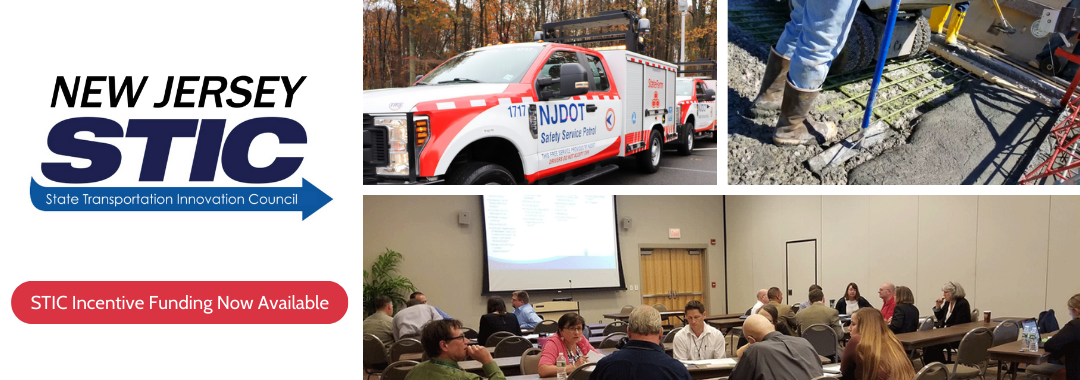
STIC Incentive Program Funds Are Available


Watch the video to learn more about NJ STIC Incentive Grants.

The Federal Highway Administration (FHWA) offers STIC Incentive Funding, as well as technical assistance, to support the standardization and advancement of innovative practices. The NJ STIC receives $125,000 each year and state and local public agencies in transportation are eligible to apply.

To be eligible, a project or activity must have a statewide impact in fostering a culture for innovation or in standardizing an innovative practice, and must align with FHWA’s Technology Innovation Deployment Program goals.  The NJ STIC will prioritize funding projects and activities that advance innovations such as the Every Day Counts (EDC) innovations that are being promoted by FHWA.  

NJ STIC solicits ideas for funding of proposed innovation projects each federal fiscal year. Selected projects are then submitted to the Federal Highway Administration (FHWA) for approval. The request submittal does not guarantee funding nor award of funding.

The NJDOT Bureau of Research, Innovation and Information Transfer (BRIIT) is ready to answer your questions and assist applicants. For more information on eligibility, proposal requirements, past funded projects, and more, please visit: the New Jersey STIC Incentive Fund Requests webpage.


NJDOT Collaboration on UHPC Overlay TechNote Report from FHWA

Click on the image to read the report.

At the NJ STIC 2024 3rd Triannual Meeting on December 2024, the Infrastructure Preservation CIA Team announced the publication of an FHWA TechNotes reports, which drew lessons from NJDOT, among other transportation agencies and stakeholders. The report, Experiences from Early Implementation of UHPC Overlays, summarized the experiences of five different entities with their recent installations of UHPC overlays.

FHWA interviewed Samer Rabie and Jess Mendenhall from NJDOT, as well as individuals from the Delaware River & Bay Authority, Federal Lands Highway, the Iowa Department of Transportation, and Buchanan County in Iowa, to discuss the lessons learned and future recommendations from their previous experiences.

According to the report, ultra-high performance concrete (UHPC), part of the sixth round of the Every Day Counts (EDC-6) initiative, offers many qualities beneficial to overlay applications, including very low permeability, good freeze-thaw resistance, good abrasion resistance, high strength and stiffness, and good bond strength. Despite higher initial costs during the construction process, UHPC factors such as superior durability and improved life-cycle cost can also reduce costs over time compared to traditional methods.

UHPC Overlay surface after grinding and grooving.

The implementation of UHPC overlays differs from traditional overlays, requiring additional planning, expertise, and methods, especially for larger projects. The feedback provided by the transportation agencies on UHPC overlays in the FHWA report includes information on project selection, project planning, surface preparation, UHPC mixture design, UHPC mixing, UHPC placement, constructions joints, UHPC finishing, and UHPC removal and repair.

Read the report here.

In addition to the FHWA TechNotes report, NJDOT has previously highlighted UHPC research projects from New Jersey’s Institutes of Higher Education partners, and the agency’s own experiences with implementing UHPC. Some examples include presentations at the annual NJDOT Research Showcase, Q&A interviews with NJDOT’s SMEs focused on the innovation’s implementation, and previous projects with FHWA. Most recently, NJDOT has been a participating funding agency for the Structural Behavior of Ultra High Performance Concrete project, led by FHWA, as part of the Transportation Pooled Fund (TPF) program. To learn more about UHPC research and implementation in New Jersey, read through the resources section below.

Resources:

FHWA. Experiences from Early Implementation of UHPC Overlays. (2025). [Report]

NJDOT’s Involvement with Transportation Pooled Fund Program. (2025). [Article]

Ultra High-Performance Concrete (UHPC) Applications in New Jersey – An Update. (2024). [Article].

Advanced Reinforced Concrete Materials for Transportation Infrastructure. (2023). [Webinar].

Bandelt, M., Adams, M., Wang, H., Najm, H., and Bechtel A., Shirkorshidi, S., Jin, F. (2023). Advanced Reinforced Concrete Materials for Transportation Infrastructure. (2023). [Final Report].

Bandelt, M., Adams, M., Wang, H., Najm, H., and Bechtel A., Shirkorshidi, S., Jin, F. Advanced Reinforced Concrete Materials for Transportation Infrastructure. (2023). [Technical Brief].

Presentation: Design, Construction, and Evaluation of UHPC Bridge Deck Overlays for NJDOT. (2022).  [STIC Presentation]

Stronger, More Resilient Bridges: Ultra High-Performance Concrete (UHPC) Applications in New Jersey. (2021). [Article]

Ultra-High Performance Concrete for Bridge Preservation and Repair: NJDOT Example Featured. (2021).  [Article]

NJDOT Research Showcase Posters and Presentations

Ghahsareh, F. Life-Cycle Assessment of Ultra-High Performance Concrete (UHPC) Beams Using Advanced Monitoring Technologies. (2024).  [Presentation]. {Video}

Gucunski, N. Evaluation of Performance of Bridge Deck with UHPC and LMC Overlays through Accelerated Structural Testing. (2024). [Presentation]. {Video}

Shirkhorshidi, S., Bandelt, M., Adams, M., and Reif J. Corrosion Performance of Ultra-High Performance Concrete in Uncracked and Cracked Beams. (2022). [Presentation]. {Video}

Meng, W. Design and Performance of Cost-Effective Ultra-High Performance Concrete (UHPC) for Transportation Infrastructure. (2018). [Presentation]

Interview with 2024 Research Showcase “Best Poster Award” Winner

We had the opportunity to speak with Swathi Malluru, a PhD candidate at Rowan University and recipient of the 2024 NJDOT Research Showcase Best Poster Award. Her research focuses on sustainable pavement rehabilitation, including the Full-Depth Reclamation (FDR) and Cold In-Place Recycling (CIR) processes that were the subject of the performance evaluation recognized with the Best Poster Award. In this interview, Ms. Malluru discusses her journey in transportation engineering, from her background in sustainable materials to her work optimizing stabilizers for FDR and CIR. She hopes that her research can provide economic and environmental benefits and shares how it could shape future NJDOT policies.


Q. Congratulations on receiving the Best Poster Award at the 2024 NJDOT Research Showcase. Could you tell us about your prior educational and research experience, and how you came to be a PhD student at Rowan University?

A. First of all, I would like to thank you for your time. I pursued my master’s in Transportation Engineering from the Indian Institute of Technology. At the university, I learned about pavement materials, specifically pavement rehabilitation techniques and pavement design analysis. Then, I worked on a steel slag aggregates project. In this project, I completely replaced the conventional natural aggregates with steel slag aggregates in hot mix asphalt mixture and evaluated the performance to understand if slag could function as an alternative to the conventional natural aggregates. This motivated me to do further work in sustainability and that’s how my research journey started.

What drew me to Rowan University was the Center for Research and Education in Advanced Transportation Engineering Systems (CREATES), which deals with diverse research projects, and has a lot of facilities for conducting research on pavement materials. CREATES provides facilities where we can conduct our laboratory tests and evaluate the performance of various mixes. In the laboratory, we do everything in controlled conditions that may not exactly simulate field conditions but provide a good opportunity for a researcher to understand the behavior of a particular material and mix under different circumstances. CREATES also facilitates test sections and conducts Accelerated Pavement Testing (APT) using the Heavy Vehicle Simulator (HVS) to evaluate the field performance of the asphalt mixtures.

Q. What sparked your interest in sustainability related to pavement materials and rehabilitation?

A. I come from an industry background. After my master’s, I worked in construction for Larsen & Toubro and later as a highway designer for Jacobs. I worked on the geometric design of Texas Department of Transportation (TxDOT) projects. Based on my experience, I found that, especially in developed countries, roads have mostly been constructed. The future is in widening, rehabilitation, and maintenance of the existing roads. Additionally, we see that transportation is the largest global contributor to carbon emissions. These factors convinced me to focus on researching environmentally friendly and cost-effective pavement materials for sustainable development.

Q. The research in your poster focused on Full Depth Reclamation (FDR) and Cold In-Place Recycling (CIR). Can you describe some of the environmental or economic benefits that these processes provide?

Asphalt Milling Machine.

A. This project was funded by NJDOT Pavement Support Program (PSP) and led by Dr. Ahmed Saidi from CREATES, Rowan University. Cold In Place Recycling and Full Depth Reclamation are two rehabilitation techniques of deteriorated asphalt pavements. In the conventional process, whenever the pavement is highly distressed, we completely remove the materials and lay a new pavement stretch in that particular location. This process utilizes a Hot Mix Asphalt (HMA) mixture that requires asphalt, high mixing temperatures and large amounts of energy consumption, producing emissions. Production of HMA also involves a lot of volatile organic compounds, which can significantly impact the environment.

By replacing the process with a FDR or CIR, we can conserve the materials and reduce emissions. In FDR, the existing pavement is milled up to the unbound soil layers (at a depth up to 14 inches) and then laid into a single layer through pulverization and stabilization with additives. CIR involves reclamation of asphalt layer (at a depth up to 4 inches) and stabilization with additives. In this scenario, we see very little emissions, and it is also very quick. In our few trial stretches, which included some NJDOT projects, we observed that we could save $10,000 to $50,000 per mile. This is a huge achievement in cost savings and time savings, and is environmentally friendly. These are the benefits we get from implementing FDR and CIR.

Q. For the first two tasks in the research project, you conducted a literature review and a survey of different state DOTs. What did you find through these two tasks, and how did it prepare you for the lab tests?

A. We went through the various guidelines of different state DOTs and other state agencies. From this literature review, we observed that early on, state guidelines mentioned only the usage of cement for the FDR. But some states like Pennsylvania and Illinois started implementing the use of bituminous stabilizers to improve the performance of FDR. Through the state DOT literature review and the survey questionnaire, we learned more about the properties of emulsions and cement, the properties of RAP gradation, the types of cement that we have to select, and also how to cure and compact samples. We learned all these aspects of FDR and CIR from the literature review and the survey questionnaires, and then we tried to incorporate all these elements.

Q. You concluded with the research that 5 percent cement, or 3 percent emulsion, 1 percent cement and 3 percent water worked best for FDR, and 2 percent emulsion, or 1.5 percent foamed bitumen for CIR. How many different combinations did you try and how significantly did these combinations outperform the alternatives?

A. Based on the performance criteria from the literature review, we tried to understand what the optimum dosage should be. We considered three different stabilizer material types for FDR: a section with only cement varying from 4 to 5 percent with a 0.5 increment; a mix consisting of emulsion varying from 3 to 5 percent; and foamed bitumen varying from 3 to 5 percent. We decided to utilize these dosages based on the literature review. From the laboratory test, we observed that the 3 percent emulsion gave less rut depth and better fatigue performance compared to alternatives. Similarly, when we added 5 percent cement or 3 percent emulsion, we found it gave an equal performance.

Q. Did you experience any challenges during the lab tests?

A. Based on what we learned in the literature review, we were able to match the results and confirm it. Emulsions, and the inclusion of bituminous additives, can improve the performance of these mixtures. The challenges were during the mixing and compaction, but we managed to rectify those challenges over time.

Q. What additional research do you think should be conducted based on your findings from this project?

A. We have to conduct further work on the impact and performance of FDR and CIR and also evaluate any other alternatives that can be used as stabilizers. Currently, we are proposing FDR and CIR guidelines for minor roads, but maybe, if we try to improve and enhance its performance, we can extend it to the interstate highways and roads of higher priority. That is a major area for future research.

Q. What kind of impact do you hope this research will have on NJDOT construction and design policy moving forward?

A. I hope it helps NJDOT optimize cost savings, reduce labor, and construction time and, especially, aid in NJDOT becoming more environmentally friendly. This will help reduce emissions compared to using the conventional overlay method and help NJDOT achieve its sustainability goals.

Q. Moving toward your personal research, is there any kind of research that you specifically want to focus on going forward, or would it be something similar to this as you progress through your doctoral path?

A. After this, I want to try to conduct a test trial to evaluate the performance of FDR and conduct a life cycle assessment. And try to test the impact of low temperatures on the performance of FDR. Will there be a low temperature cracking effect from freezing? I would also like to work on developing design guidelines for the implementation of FDR and CIR throughout NJDOT.

Q. What are your career goals and aspirations for after you complete your PhD?

A. After my PhD, I would like to work in the industry, so I can implement my research and work to find solutions for major problems.


Join the 2025 Build a Better Mousetrap Competition!

New Jersey’s Build a Better Mousetrap Competition is currently underway!

NJ 2025 Build a Better Mousetrap Competition is underway!

The competition provides a great opportunity to share your ingenious and implemented solutions in transportation with others in New Jersey and across the country. These innovations can range from the development of tools and equipment modifications to the implementation of new processes that increase safety, reduce cost, and improve efficiency of our transportation system.

We are looking for submissions from employees of any local, county or state public agency, including the New Jersey Department of Transportation and NJ TRANSIT that have developed new solutions to problems or found better ways of doing things.

Winners will be chosen in two categories: Operations and Organizational Improvement. This competition is sponsored by the Federal Highway Administration’s Local Technical Assistance Program and Tribal Technical Assistance Program, and local public agency winners will be entered in the annual National LTAP/TTAP Conference.

A state winner in each category will also be selected and presented at the Annual NJDOT Research Showcase later this fall. The deadline for submissions is May 1st, 2025.

2024 Winner: Replacing Inlet Curb Pieces in Existing Concrete Barrier Curb, Bishoy Abdallah, NJDOT

The New Jersey 2024 Build a Better Mousetrap Award was given to Bishoy Abdallah, a Senior Engineer in the Transportation Roadway Design (Group-1) at NJDOT, for his Replacing Inlet Curb Pieces in Existing Concrete Barrier Curb project.

There is still time to share your ingenious solutions! Past examples of NJ’s recognized BABM award winning entries can be found here. More information about how to enter the competition and to download an entry form can be found here.


Call for Ideas for the Eighth Round of Every Day Counts (EDC-8)

Every two years, FHWA works with state transportation departments, local governments, tribes, private industry, and other stakeholders to identify and champion a new collection of innovations that merit accelerated deployment through the Every Day Counts initiative (EDC). In preparation for the next EDC phase, FHWA has announced a Call for Ideas seeking suggestions for market-ready innovations to deploy in 2026 as part of the eighth round of Every Day Counts (EDC-8).

FHWA is interested in submissions for innovations that describe how the innovation will address the following areas:

  1. National Impact: How will it benefit the transportation system nationally?
  2. Game Changing: How is it transformative in making our transportation system adaptable, sustainable, resilient, equitable, and safer for all?
  3. Urgency and Scale: How will it positively impact the environment, safety, congestion, freight movement, construction techniques, contracting methods, project costs, maintenance, preservation, or emergency response?
  4. Locations: Where has the innovation been deployed?

The submission deadline for this Call for Ideas is February 4, 2025. For more information on the Every Day Counts initiative and how to submit suggestions, visit here.

The innovations championed during the seventh round of Every Day Counts include Enhancing Performance with Internally Cured Concrete, Environmental Product Declaration for Sustainable Project Delivery, Integrating GHG Assessment and Reduction Targets in Transportation Planning, NextGen TIM: Technology for Saving Lives, Nighttime Visibility for Safety, and Strategic Workforce Development. To learn more about innovative initiatives promoted in previous rounds of Every Day Counts and the status of their deployment in New Jersey, visit here.

NJ STIC 2024 3rd Triannual Meeting

The NJ State Transportation Innovation Council (NJ STIC) virtually convened for its 3rd Triannual Meeting of 2024 on December 18, 2024. The meeting provided an opportunity for attendees to learn from the Core Innovation Area (CIA) Teams about their progress towards Every Day Counts Round 7 (EDC-7) goals and to view a featured presentation on the Safe System Approach (SSA) from the NJDOT Bureau of Safety, Bicycle and Pedestrian Program’s Jeevanjot Singh.

Welcome Remarks

Eric Powers, Assistant Commissioner of NJDOT Statewide Planning, Safety & Capital Investment, greeted those in attendance and opened the third and final Triannual Meeting of 2024. Mr. Powers shared his excitement for the featured presentation on the SSA as a necessary step towards increased safety on New Jersey roadways. He noted that the presentation aligns well with the recently published Complete Streets Policy, released by NJDOT in October. He reminded those in attendance that safety will continue to be a critical component and focus for the department going forward.

FHWA Updates

Christopher Paige, Innovation Coordinator and Community Planner at the FHWA NJ Division Office, provided FHWA updates and thanked the CIA Teams for submitting their EDC-7 progress reports on time. Mr. Paige announced the “Call for Ideas” for Round 8 of the Every Day Counts Initiative (EDC-8) that will run through February 4, 2025. Those interested in submitting market-ready innovations to deploy in 2026 as a part of EDC-8 can learn more here. Additionally, Mr. Paige reminded the audience that STIC incentive applications are open for Year 2025 and encouraged prospective applicants to send in a description of the proposed work, a project schedule, and a budget by July 1, 2025. Those interested in learning more about the application process for STIC funding should check out the NJDOT Tech Transfer’s STIC Incentive Funding Grant webpage

Core Innovation Areas (CIA) Updates

The Core Innovation Area (CIA) Team leaders shared updates on their progress toward achieving the deployment goals for their respective innovation initiatives. CIA Team leaders from the NJDOT and FHWA discussed EDC-7 initiatives under the five CIA Teams: Safety, Planning and Environment, Infrastructure Preservation, Mobility and Operations, and Organizational Support and Improvement. Each team’s presentation detailed their ongoing projects and outlined implementation activities, accomplishments, and challenges experienced so far in meeting the deployment goals for the innovations. A brief overview of team updates is included below:

Planning and Environment

GHG Emissions Reductions Strategies. The Planning and Environment CIA Team established GHG targets for 2024 to support New Jersey’s carbon reduction goals. To achieve these emissions targets, the Team has collaborated with MPOs, NJ TRANSIT, and PATH, ensuring the alignment of strategies between various transportation stakeholders. The Team also plans to develop and implement a ranking system for carbon reduction projects based on GHG emissions impacts, enabling NJDOT to prioritize projects that best contribute to state objectives.

Safety

Status of Pedestrian Scale Lighting Research and Resource project

Pedestrian Scale Lighting Research and Resource. The Safety Team at NJDOT collaborated with the Alan M. Voorhees Transportation Center at Rutgers University and Rowan University to develop best practices for pedestrian lighting solutions. The team is finalizing a pedestrian-scale lighting resource that includes information on types of lighting, luminaire placement, strategies to reduce fatalities and serious injuries, collaborations with utility companies, and environmental considerations. The team expects to complete the project soon.

Nighttime Visibility for Safety. The Safety Team also updated the STIC on progress made toward the installation of retroreflective tape on the backplates of intersection lights and signage. Subject matter experts are currently reviewing the finished draft, which outlines traffic signal poles and mast arm details for signalized intersection installations. At the same time, the Division of Traffic Engineering continues to install retroreflective tape on backplates where and when feasible. The Team also announced that FHWA will host a lighting training on January 28 and 29.

Infrastructure Preservation

Enhancing Performance with Internally Cured Concrete (EPIC2). The Infrastructure Preservation Team has secured a STIC Incentive Program grant to purchase specialized testing equipment, train NJDOT staff, and hire a third-party lab to conduct tests for the EDC-7 EPIC2 innovation project. The project’s next major initiative is the implementation of New Jersey’s first high-performance concrete (HPC) bridge deck at North Munn Avenue over Route 280 in East Orange, which received funding in October 2024. Construction on the bridge project is scheduled to begin in Fall 2026. The Team is also preparing final design submissions for additional candidate bridges and scoping other potential projects. In the coming quarter, they will continue collaborating with concrete suppliers, purchasing new testing equipment, and updating the High-Performance Internal Curing (HPIC) specifications to incorporate centrifuge apparatus elements. NJDOT plans to host an EPIC2 workshop in April 2025 to further advance the project.

Graphic demonstrating the difference between conventionally cured concrete and internally cured concrete

Additionally, the Federal Highway Administration (FHWA) recently released a publication on the early implementation of UHPC overlays, which will contribute to ongoing efforts in concrete innovation. The Team is working to expand the use of internally cured HPC in New Jersey and potentially New York, aligning with best practices in the concrete industry. The FHWA publication mentioned during the presentation is available here: “Experiences from Early Implementations of UHPC overlaps”.

Environmental Product Declarations (EPDs) for Sustainable Project Delivery.  The Infrastructure Preservation Team has also made progress on phase 1 of their EPDs project goals. Since August, the Team has coordinated with the New Jersey Asphalt Paving Association for guidance to create an EPD for Bottom Rich Base Course or BRBC mix asphalt.

The Team has also researched and collaborated with other state DOTs including PennDOT and DelDOT to learn how these agencies will implement EPDs. PennDOT will begin data collection in 2025 and institutionalize EPDs by 2028. While DelDOT seeks to reduce carbon in construction materials as a part of the statewide climate solutions initiative. The agency plans to achieve this through incentives and disincentives. Both agencies selected asphalt as the first material for EPDs and are working with their state’s asphalt paving association to ensure industry support. In the upcoming quarter, the CIA team will analyze data benchmarks and collaborate with industry partners to advance the adoption of EPDs.

Mobility and Operations

Weather Savvy. The Mobility and Operations CIA Team has made progress on multiple projects over the last quarter. In collaboration with researchers from NJIT, the team advanced the Weather Savvy pilot, which installs weather sensors, laptops, and cameras in vehicles to receive improved data during winter weather events. The project that started in December 2023 has expanded from 24 vehicles to 45 vehicles, and the team has decided to prioritize installations in plows because they stay on the road during weather events. The team indicated that sensors and hardware are now being installed in a junction box, which is a more secure location that will keep water, dirt and salt away from the technology.

Data gathered from cameras, remote traffic microwave sensors, and in-pavement micro radar sensors (a.k.a., Pucks) at the pilot parking location are visible on a NJIT web portal.

Truck Parking Pilot. The team was excited to share its progress toward installing portable Direct Messaging Systems (DMS) signs five miles away from the pilot Harding parking lot located on I-287 and I-78. These signs will inform drivers prior to arrival about parking availability. The team may expand the pilot project to Knowlton in 2025.

Drivewyze Alerts. Mobility and Operations updated the STIC on the Drivewyze alerts effort, a program purchased through ETC to notify commercial vehicle drivers of sudden slowdowns, congestion, and static warnings. To evaluate the efficacy and accuracy of these alerts, the CIA Team deployed NJIT researchers to drive two different loops along frequently congested highways. While results showed that static alerts were 95% accurate, drivers did not receive any congestion-related alerts. Discussions with a Drivewyze representative revealed that congestion had not been selected as an alert type among the program settings. The representative assured the issue would be corrected, and NJDOT plans to conduct another test in the near future.

EDC-7 Next Generation TIM. Finally, Mobility & Operations announced that a newly written article, “NJDOT Deploys Advance Warning Messages for Truck Drivers” will be submitted to FHWA HQ as a potential EDC innovation spotlight.

Organizational Support and Improvement

Contractor Compliance Unit Collaboration. The Team announced that the FHWA funding approved in November 2024, would support hiring a consultant in-house to advance NJDOT’s EDC-7 Strategic Workforce Development efforts. The Team also highlighted its recent collaboration efforts with the Office of Federal Contract Compliance to identify best practices for larger-scale projects. These efforts aim to design effective informational sessions on workforce development, training, and collaborating with unions. On December 2, 2024, the Team participated in an industry meeting where attendees discussed concerns about declining union membership and involvement in apprenticeship programs, trends tied to an aging labor market. Participants brainstormed strategies to increase membership and strengthen engagement. The next meeting, scheduled for January 2025, will prioritize including more unions in the discussions to enhance collaboration and address these challenges.

Feature Presentation: Safe Systems Approach in New Jersey

Jeevanjot Singh, Safety Program Manager at the NJDOT Bureau of Safety, Bicycle, and Pedestrian Programs delivered a feature presentation highlighting the practicality and necessity of incorporating the safe systems approach into New Jersey roadways.

The Safe System Approach is built on five key elements and six guiding principles:

Five Elements

  1. Safe Road Users
  2. Safe Vehicles
  3. Safe Speeds
  4. Safe Roads
  5. Post-Crash Care

Six Guiding Principles

  1. Death and serious injury are unacceptable
  2. Humans will make mistakes, so systems should be designed to accommodate and reduce harm
  3. Humans are vulnerable, and roadways should be designed to minimize kinetic energy transfer in crashes
  4. Responsibility for safety is shared among all stakeholders
  5. Safety is proactive and it is imperative to use risk-based mitigation measures
  6. Redundancy is key, with systems designed to support each other and prevent fatalities if one safety effort fails

Ms. Singh urged all attendees to reflect on the importance of Safe Systems Approach (SSA) and the responsibility that we as planners and engineers share in this effort. This responsibility is urgent, as New Jersey recorded over 600 fatalities on its roadways in 2024, far exceeding the FHWA’s 2024 target of 494 fatalities. Achieving the goal of zero fatalities by 2025 will require intentional, sustained efforts to reduce fatalities. She noted that NJDOT is making significant strides in implementing the Safe System Approach, including the updated statewide Complete Streets Plan, efforts to improve of dangerous intersections through safer engineering, and educational awareness programs, among other initiatives. While the list of efforts is extensive, she highlighted two recently implemented programs which are outlined below.

Plan for the NJDOT Route 129 SSA project in Mercer County

One example is the Wrong Way Driving Detection System. NJDOT conducted a systemic analysis to identify ramps with a high risk of wrong-way driving incidents and subsequently installed a system of dynamic flashing warning lights activated by wrong way drivers. This system was paired with additional signage and pavement markings. During the presentation, Ms. Singh shared a video that demonstrated the successful prevention of a wrong-way incident using this approach. Another example of SSA implementation by NJDOT is the Route 129 project in Mercer County, which includes pedestrian and bike safety improvements, traffic calming measures such as chicanes and raised crosswalks, and autonomous crosswalk detection warning lights that activate when a pedestrian enters the road. Although still in the early stages of development, Singh sees potential in expanding the project to include other corridors.

She concluded her presentation by outlining resources from FHWA that can support STIC members in learning more about the Safe Systems Approach. She highlighted the Safe System Road Design Hierarchy, a tool that guides road design through a four-tier decision-making system, and the Safe System Project-Based Alignment Framework, which offers another decision-making system tool for designers. She also announced that a multi-agency collaboration will host an upcoming SSA workshop, providing professionals with an opportunity to learn more about SSA alignment in New Jersey.

Announcements and Reminders

NJ Transportation Ideas Portal. Dr. Venkiteela encouraged attendees to participate in the NJ Transportation Ideas Portal, which invites public submissions of future research ideas and implementation studies. The Innovation Advisory Team evaluates these proposals for feasibility and potential future actions. He highlighted that the portal continuously accepts new research and innovation ideas for consideration for future collaborative efforts and investments. The deadline to submit research ideas for the next round of funding is December 31, 2024.

EDC-8 “Call for Ideas.” Dr. Venkiteela reminded attendees that the deadline to submit ideas for EDC-8 is February 4, 2025. FHWA is seeking suggestions for market-ready innovations to deploy in 2026. Learn more here.

NJDOT Low-Carbon Material Transportation Grant Program. In November 2024, NJDOT secured a $27.85 million grant for the Low-Carbon Transportation Material (LCTM) Program. BRIIT will lead the program’s implementation from 2025 through 2031. Dr. Venkiteela congratulated all those who contributed to the successful application.

Next Meeting. Dr. Venkiteela reminded attendees that the 1st Triannual Meeting of 2025 will occur on April 30, 2025 at 10 a.m., featuring a presentation from the Infrastructure Presentation Team.

Acknowledgment: Dr. Venkiteela concluded the meeting by thanking Amanda Gendek for establishing a solid foundation for STIC meetings in her previous role as BRIIT Manager. Dr. Venkiteela also thanked current BRIIT Manager Pragna Shah for her continued guidance and support.

A recording of the NJ STIC 2024 3rd Triannual Meeting meeting is available here. The day’s presentations can be found here and, in the sections, below.

NJ STIC 2024 3rd Triannual Meeting
Welcome Remarks & FHWA Updates
CIA Team Update: Safety
CIA Team Update: Infrastructure Preservation
CIA Team Update: Organizational Support & Improvement
CIA Team Update: Planning & Environment
CIA Team Update: Mobility & Safety
Featured Presentation: Safe System Approach in New Jersey
Reminders and Announcements